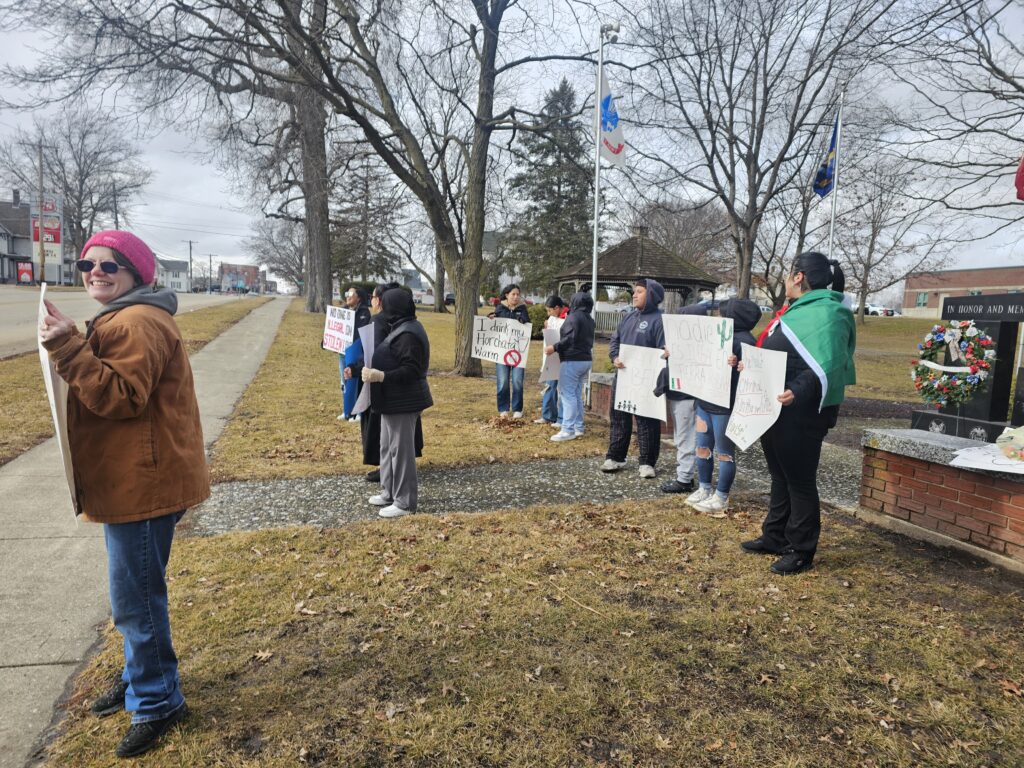
Shortly after noon on Saturday, a late-model van turned the corner onto South Vine Street off Third. As the van made the turn, the window rolled down and an older man thrust out his arm. His hand was balled up into a fist and he shook it in the air, shouting “go back home.”
For the crowd of over 30 that had gathered in front of City Hall at Veterans Park that day, they are home. Many of them are birthright citizens born in the United States and for some, Kewanee is the only home they had ever known. Some protesters were allies that had come to show their support.
“We’re supposed to be in this together,” said Brandi Lashbrook, holding a sign. “There’s too much hate. I have lots of friends who are Hispanic.”
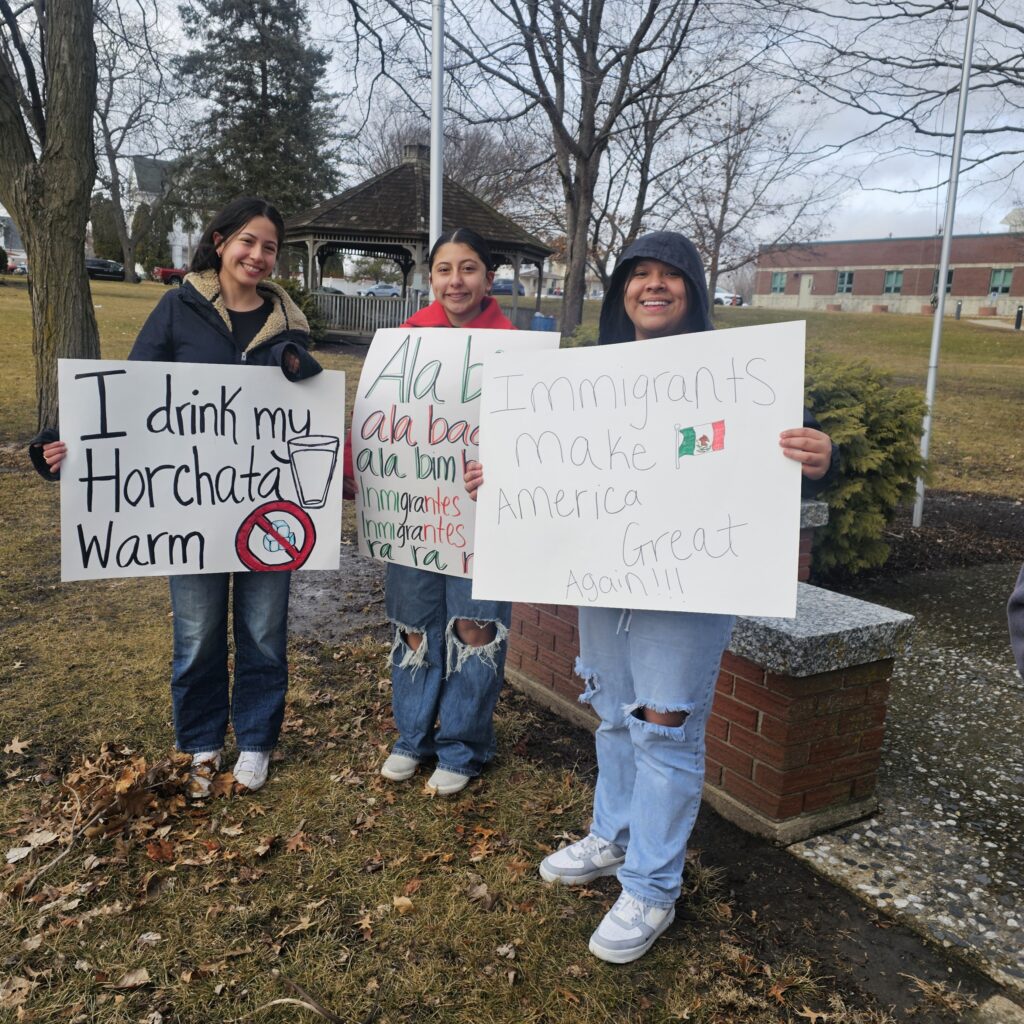
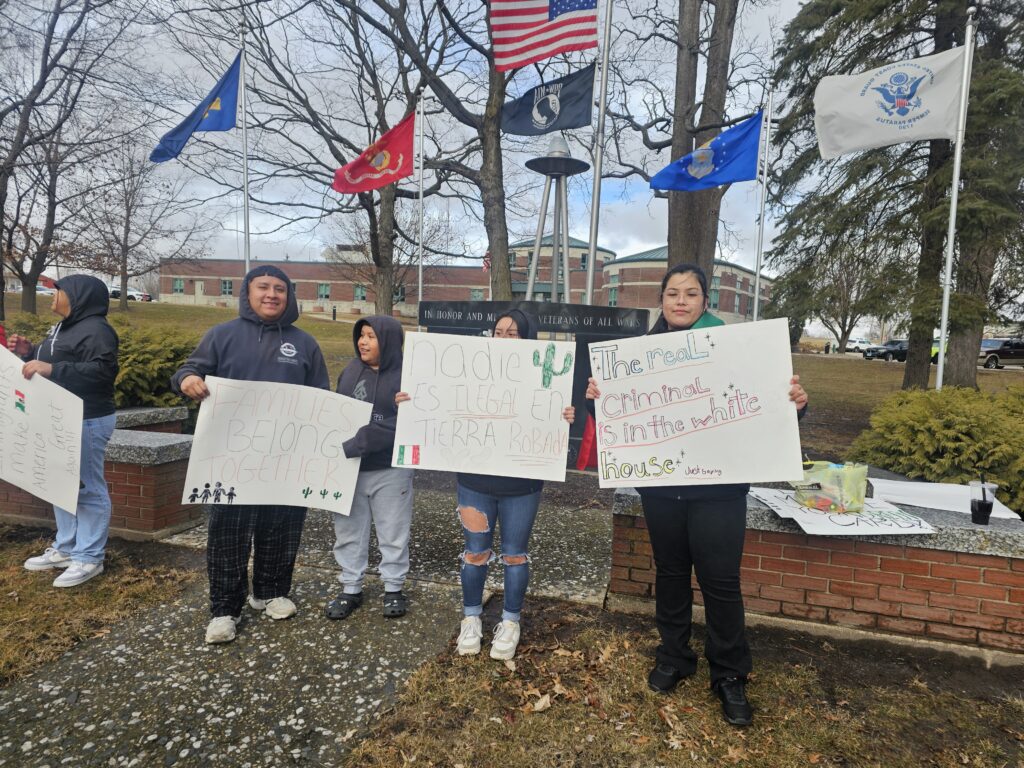
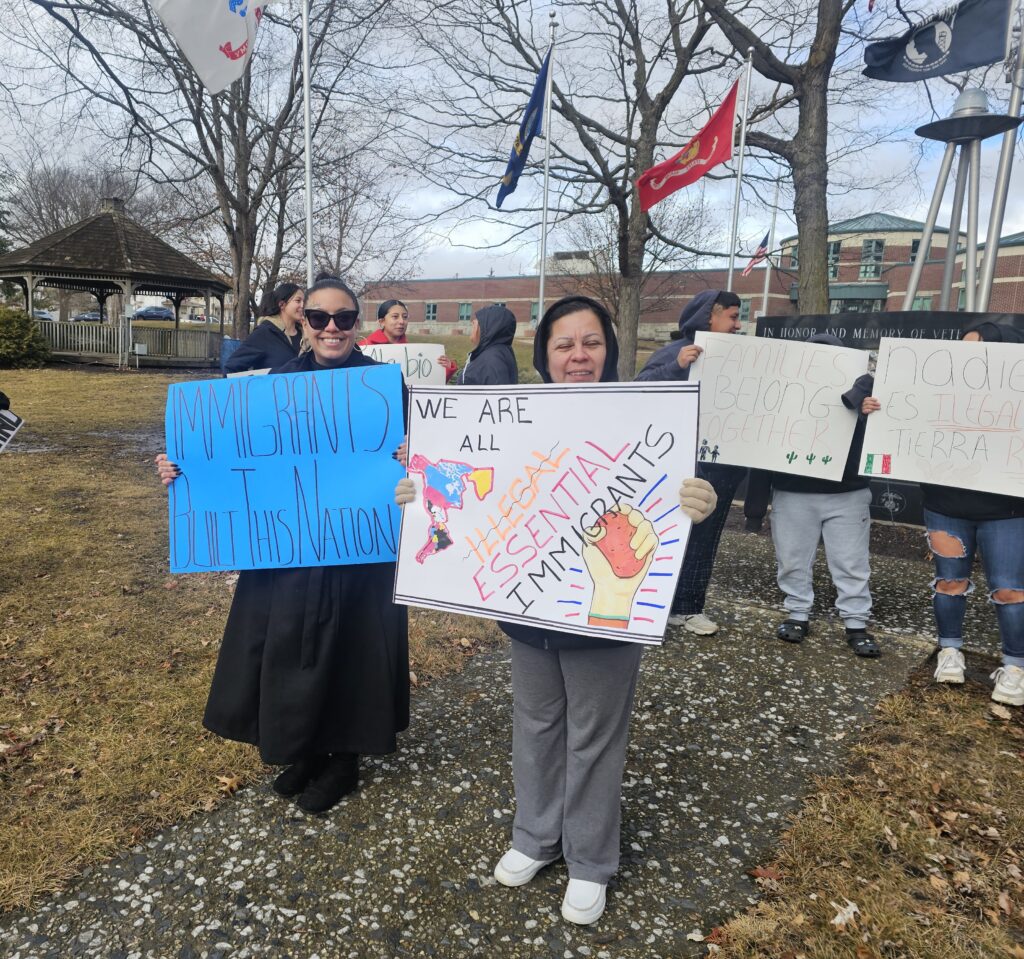
The protest was organized by two Hispanic women whose hope is to raise awareness of the Kewanee’s Hispanic population and the fear gripping many of them.
“A lot of people can’t speak or are afraid to speak, people who have been here 20 plus years in this country,” said protest organizer Dulce Maria Contreras.
Several weeks ago, Contreras and Adrianna Landeros began thinking of ways to help Hispanic people in the community who may be afraid and unsure of what to do.
Contreras, who is a U.S. citizen, said Hispanics in the community are scared.
“Even us documented people are scared,” she said. “We are being targeted because of the color of our skin.”
Hispanics, she said, are worried about ICE coming to Kewanee, a community with a population of 12,500 made up of roughly 12-15 percent Hispanic residents.
There have been reports of ICE in town, with several people claiming to have seen vehicles or men dressed in all black at people’s homes, although the Kewanee Police have not confirmed the reports, but the concern is real, Contreras said.
And Contreras is uneasy about both the local police and the city government.
“The only reason I am skeptical is that no statements have been made,” she said. “You see it on the news, but nobody is talking about it. Where’s the mayor and police chief?”
Contreras said that even if the mayor is not in support of what is happening in the community, she would like him to make a statement to let them know where his mind is on the issue.
“It’s giving us reassurance, a piece of mind. I’m not against ICE coming and taking the violent criminals,” she said. “But why come for the working people who are hurting nobody and minding their own business?”
“When you think about ICE deporting people, why are they raiding places looking for criminals? They are raiding all these fields, restaurants, schools. What are they doing at workplaces and schools?”
Contreras said she knows many families in town are worried about their children because “a lot of people are being profiled even though they are documented,” she said.
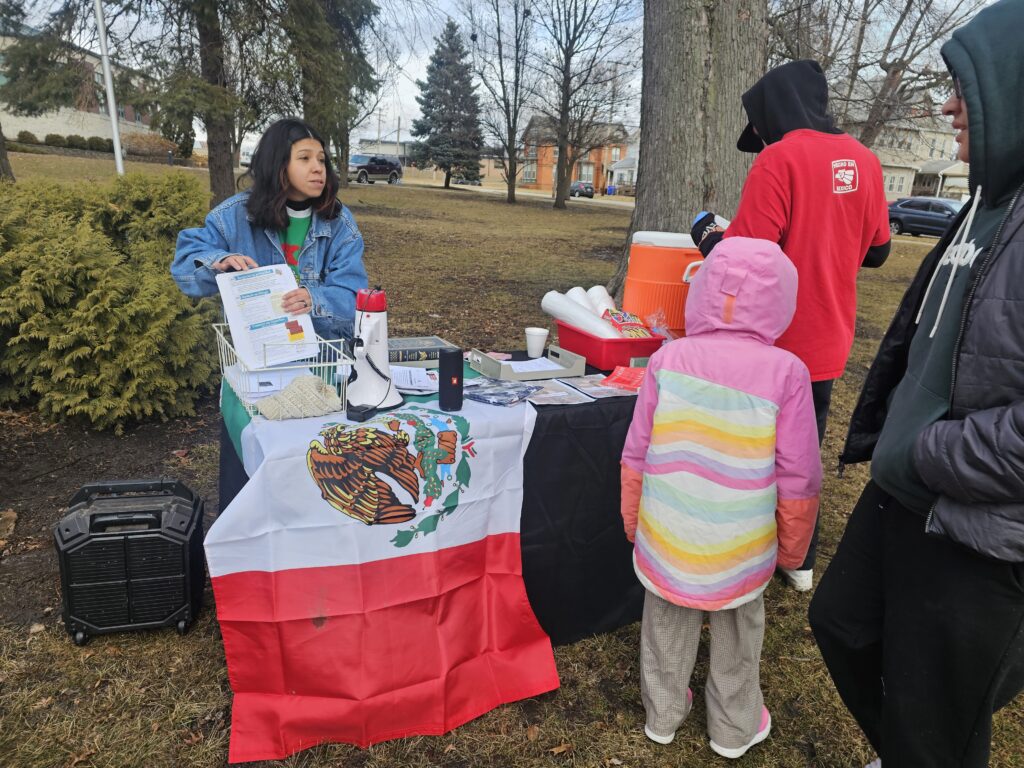
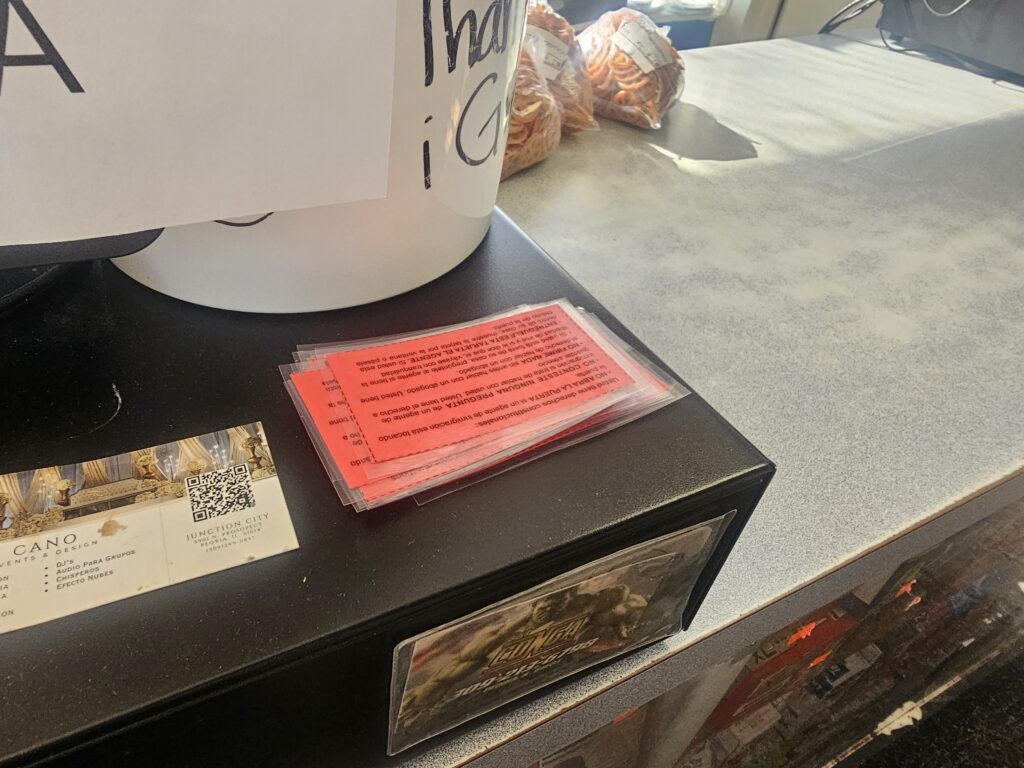
When she was trying to come up with a way to alleviate people’s fears, she did an internet search and came across the “red card,” a card that in simple terms lays out the civil rights afforded under the 14th Amendment. She and Landeros decided to print up the cards and place them at the local Mexican grocery store.
“It lets them know they have rights. It gives them a voice,” she said.
Contreros said the hope is to instill calm and peace in Hispanics feeling overwhelmed at the current state of affairs.
“A lot of people don’t believe (what’s happening). It’s so hard to believe,” she said. “They are fearful that ICE could come to town and take them.”
And while some residents have publicly expressed skepticism about ICE coming to a rural town like Kewanee, Contreras isn’t so sure.
“They’ve definitely been spotted in Chicago and Elgin,” she said.
Landeros assisted Contreras with the red cards and the protest and said she knows the struggles that Hispanics in the community are going through.
“The fear is not just coming from the undocumented,” she said. “Even people who are citizens are scared.”
Born in California, Landeros has a Ph.D. in cell biology. As a citizen, she still wonders if she needs to carry paperwork to protect herself.
“I worry about my family and friends,” she said.
She has lived in Kewanee on and off and said both the red cards and the protest were ways she felt she could help out in the community.
Among the protesters that gathered in the park on Saturday were children whose birth in the United States makes them citizens. At schools, one counselor said she is dealing with the fallout of the recent election.
“Never in a million years,” said one area school counselor who asked not to be named. “ I am in my 50th year of education. I am just sick. It worries me.”
By law, seniors have to fill out FAFSA as a graduation requirement, she said. The forms require that students and parents fill it out.
“Not all are documented but there’s no deterrent for financial aid. By current law, we have to admit them and educate them,” she said.
The problem comes when a parent or guardian with the financial responsibility for the child is undocumented. There’s no place on the form to mark their undocumented status and because of that, students are prevented from moving forward in the process.
The counselor said one student came to her with this issue. She was able to use the McKinney-Vento Homeless Assistance Act, a law that requires states and school districts to remove barriers to the identification, enrollment, stability, and success of children and youth experiencing homelessness. By getting the student declared homeless, she was able to assist the student at completing her FAFSA paperwork, the counselor said.
This particular student is living with an undocumented father who is staying under the radar. Her mother is in Mexico, unable to return to Kewanee after a trip to visit her parents. The student has been relying on financial assistance from an older sibling. But since the older sibling is not her legal guardian, he’s unable to fill out the paperwork.
“I lose sleep over this. Our students are worried, some more than others, especially the ones with undocumented parents. They are worried they’ll lose their parents,” said the counselor.
She has been offering guidance on how to set up a guardianship for a child if parents become displaced by providing them information and links.
“This is surreal. This is third world stuff. This is not here,” the counselor said.
A Hispanic resident who doesn’t want to be identified, asked to go by the name Ale. She is worried about her younger siblings and her undocumented parents.
Ale and her siblings are birthright citizens and were born in the U.S. Her parents have been in the U.S. for almost three decades.
In 2016, Ale was too young to vote. Still in high school, she recalls the day after the election when she went to school only to be taunted by some students telling her she “could go back to your country now.”
“I was uncomfortable. I was a minority,” she said, adding that what added to her humiliation was that some faculty shared a laugh at her expense.
She has worked many jobs since she was very young and recalls the racism that she faced at each of them. People asked frequently about her ethnicity and where she was from.
“You hear about racism, then you learn about it and then you experience it,” she said. “I kind of felt singular. Around school, I felt left out and pushed to the side.”
One of Ale’s younger siblings is a “darker-skinned” Hispanic and she is afraid for her. The concern was so great that it prompted Ale to call the school and inquire about the school district’s policy if ICE should attempt to raid the school.
One of her siblings called her from school crying wanting to know what would happen to them if their parents were taken.
“Our parents have been here for decades,” she said.
In her mid-20s now, Ale said she finds herself feeling the same dread and anxiety she felt growing up as a child.
“If my dad was late from work, I worried something happened to him, or if my mom didn’t come back from the store right away, something had happened,” she said.
Because her dad is currently unable to work due to a health issue, she and an older sibling are struggling to financially support the family.
“I think the reason I am so scared is because I’ve worked so hard all my life to do what I did,” she said. Ale purchased her first home at just 19. “And I paid taxes and paid into a country that now wants to send me back to a country I don’t even know.”
At her mother’s urging, Ale now carries her passport in her purse with her just in case.
“I followed all of the rules. I did everything I was supposed to do and all of that can be taken away from me because I am a first generation American and I think that’s sad,” she said. “I can be the most outstanding citizen there is but it can all be taken away from me because I am brown.”