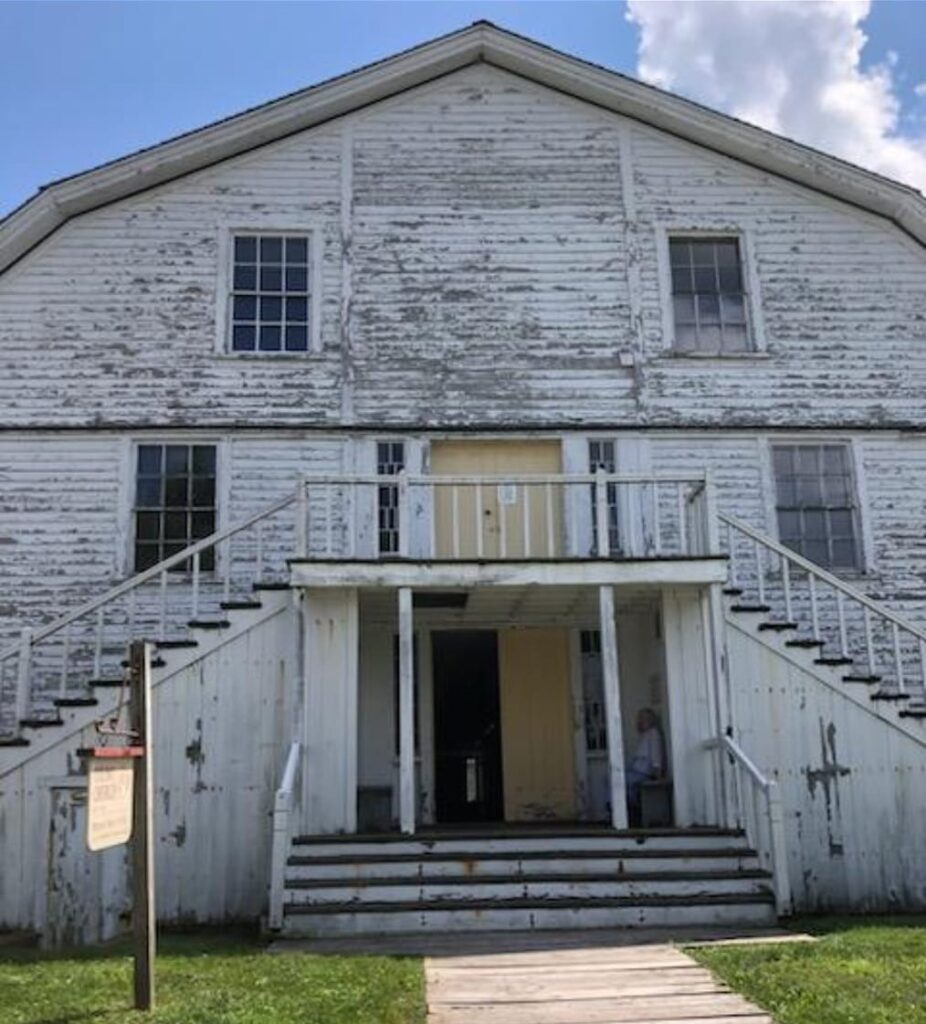
Bishop Hill residents, village officials and advocates are sounding the alarm about the fate of their historic village if their dilapidated buildings aren’t tended to soon. Their problem, however, seems to be those with the power to provide the village much-needed funding don’t seem to share their sense of urgency.
The crumbling facades on the once beautiful buildings in the historic village are in stark contrast to the brick walkways, gift shops, restaurants, bakeries and museums that bring tourists to this tiny spot in West Central Illinois. With a population of 110, the village was founded in 1846 by Swedish immigrants who fled religious persecution in their country and remains full of Swedish culture and many direct descendants today.
Although not a resident of Bishop Hill, John Taylor has Swedish roots on both sides of his family and has been an outspoken advocate. When he was a child, Taylor remembers trips to the historic village. Nowadays, he loves taking his own children there. He is also the owner of Bishop Hill Creative Commons, which acts as both a centralized meeting space and venue for artists.
Just recently, Taylor began to alert the public regarding his concerns about the condition of the state-owned properties in Bishop Hill and the state’s lack of response. After attending a press conference in Springfield regarding those concerns and then following up with a letter to the Illinois governor, Taylor felt it necessary to take the issue public.
Rather than receiving a response back from the Illinois governor, Taylor said he received a letter from the Illinois Department of Natural Resources (IDNR), the agency responsible for managing state-owned historical sites. That letter wasn’t much different than the last one he received, he said, and the news was the same. Bishop Hill is on the list.
“I feel for IDNR, because, while they are responsible for maintaining historical properties throughout the state, they don’t have the resources necessary to do so and, if nothing changes, they never will. The can keeps getting kicked down the road,” he said.
When he first started looking into the matter in 2019, he was told there was approximately $1.5 million in deferred maintenance.
“That amount has since grown to $7 million and is increasing exponentially with each day that passes,” Taylor wrote in a social media post.
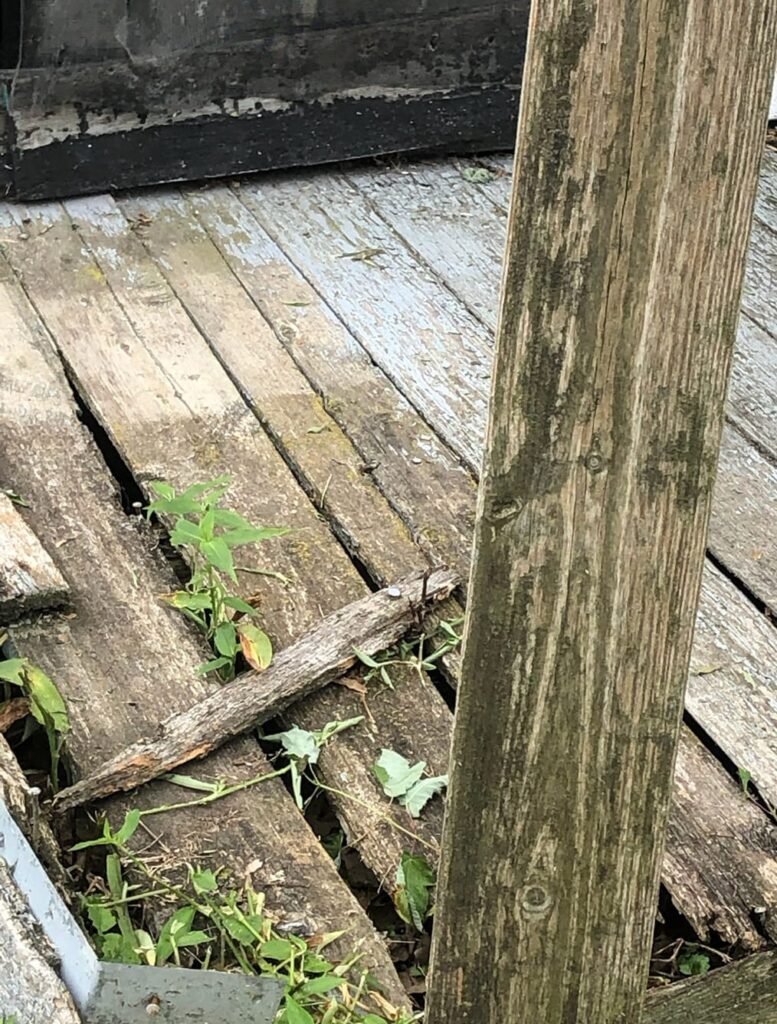
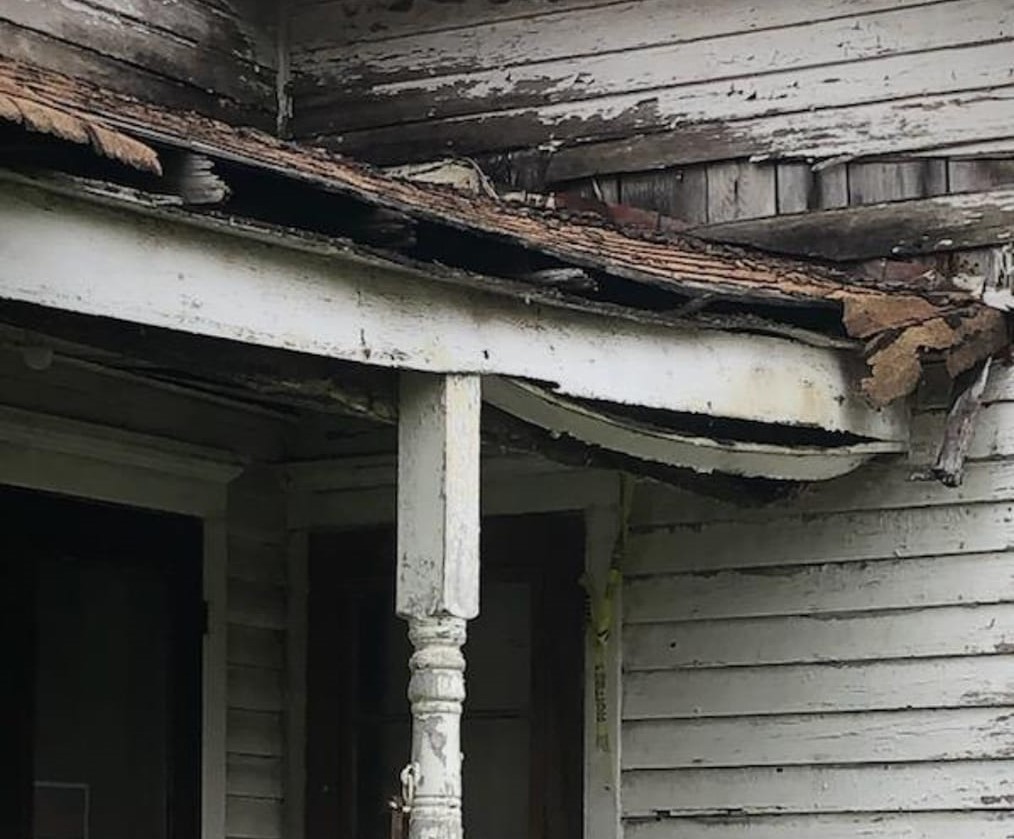
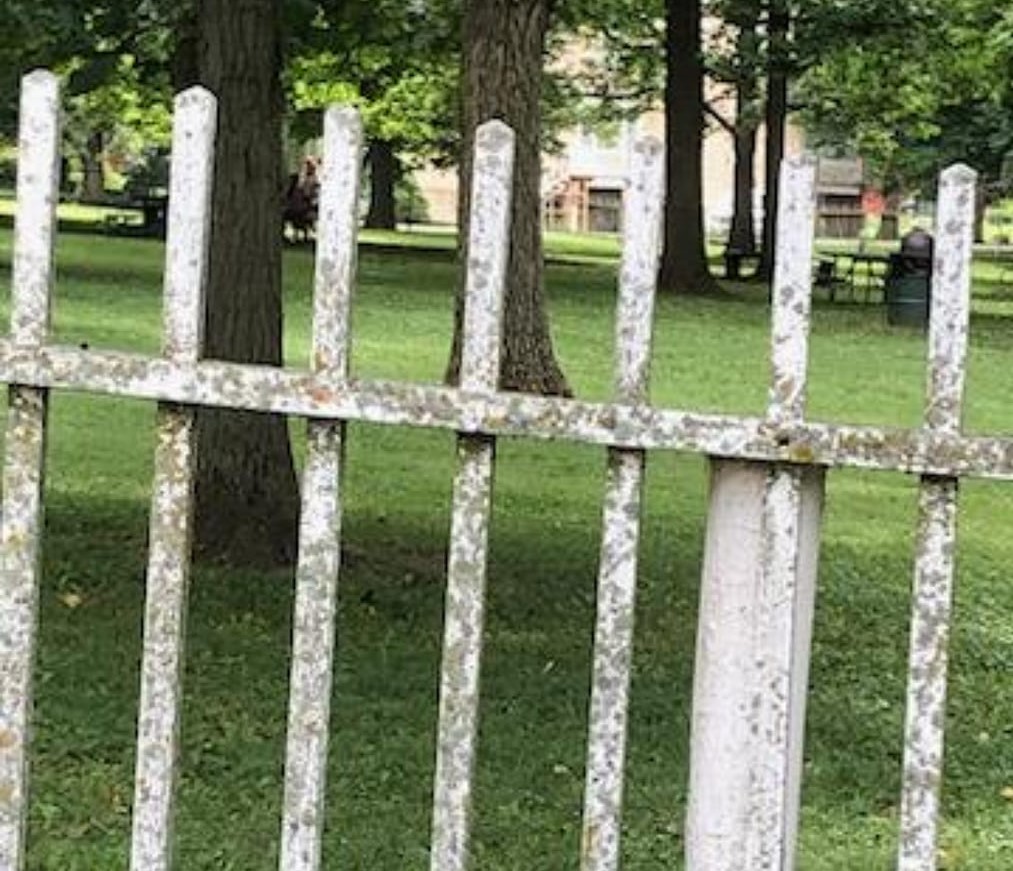
Taylor began working on trying to find solutions to the crumbling state-owned buildings in Bishop Hill in 2019. Initially, he said, he thought maybe plans were in the works to restore the properties or that the state wasn’t aware of their condition.
“I was told there were planned projects that would start shortly,” he said. “After time passed and no progress had been made, I asked if it would be possible for volunteers to help with some of the necessary work, as many concerned citizens had offered to volunteer their time and resources to the cause.”
But Taylor said he was informed by the state that they were unable to accept volunteer help. Looking for any possible solution, he then asked if the state would consider selling the properties to one of the organizations based in Bishop Hill dedicated to its preservations.
Again, Taylor’s offer was rebuffed by state officials.
“I was told they would not even entertain the idea,” he said.
In other words, the state, Taylor said, was not holding up its responsibility to maintain the properties and blocking any outside attempts to do so.
Now five years later, Taylor said there has been no significant work done to the properties excluding some sump pumps and furnaces. But Taylor wonders what good those things do if the structures they are housed in are crumbling?
“Each year, I have been told, ‘Bishop Hill is high on the list’ of projects the IDNR is planning to tackle in the coming fiscal year; however, the projects have not been funded and the buildings continue to deteriorate,” he said.
Taylor said he has come to believe that the system is broken badly, and said that under current conditions, every historical property owned by the state is in jeopardy, not just those in Bishop Hill.
“Until there is change in the legislation that protects historical properties this cycle will continue,” he said.
Two Illinois lawmakers, Rep. Travis Weaver (IL-93) and Sen. Neil Anderson (IL-47) have spoken publicly about the state’s lack of funding for the historic landmarks. Both lawmakers joined together in a press conference held last month.
Weaver and Anderson urged the General Assembly and Gov. JB Pritzker to set aside funds in the 2024 budget for critical repairs needed at the Bishop Hill State Historic Site.
The buildings, they said, are in desperate need of attention and repairs and maintained by the INDR, but they require funding from the state to be able to make repairs. Deferred maintenance has led to foundation cracks, water leaks, rotting soffits and windowsills and other issues.
This week, Rep. Weaver gave a statement to The Kewanee Voice about Taylor’s public appeal to raise awareness of the issue.
In his statement Weaver expressed his disappointment in the governor’s response and with the IDNR for neglecting state-owned historic buildings, but expressed pride in the citizens who are trying to make a difference.
“I could not be more proud of the citizens with ties to Bishop Hill,” Rep Weaver said in a written reply, “They’ve supported our efforts with press conferences, letters, phone call, meetings, you name its; anything we can do to get IDNR’s attention and put pressure on the Governor’s office.”
Megan Sloan is one of those residents that Weaver is referring to. Sloan is the widow of descendant John Sloan and said she noticed the need for restoration of the Colony Church as well as the dormitory and the fence around the park back in 2018 when she took her Visitation third grade class to Bishop Hill on a field trip.
“I saw the deteriorating history of Bishop Hill from the eyes of many who had never even been there before,” said Sloan.
Sloan decided to write a letter to Illinois State Rep. Dan Swanson.
“He did get someone from the state to come visit, ” she said, but nothing was done and the situation didn’t change.
In the summer of 2022 during a tour for a representative from the Levitt Foundation from Los Angeles, the organization that provides part of the funding for the Galva summer concert series, Sloan said she was embarrassed and ashamed of the state.
“All properties that were well cared for and preserved were either owned by nonprofits of the Heritage Association, Old Settlers or privately owned,” she said.
Sloan said the only way she could honor all of the people who had passed on like Ron Nelson, Merrill Nystrom, Jan Arter and so many others who had worked so hard to preserve the history of Bishop Hill, was to do something.
Sloan said there are several people who are working to raise awareness of the issue, including Courtney Stone, who has circulated a petition and of course, Taylor, who has written letters and reached out to the governor and IDNR, but her journey, she said, began with research and frustration. What continues to sadden her is the fact that the history of Bishop Hill and other historical sites throughout the state have been left to decay due to politics.
“It is not right to play divisive politics with preservation and restoration. However, in the State of Illinois, that is just what is happening,” said Sloan.
Bishop Hill isn’t like many historic villages, said Taylor.
“Bishop Hill is important for many reasons, but I think the thing that sets it apart is that it is an entire village that has been preserved in time,” he said.
Many historic villages are more reproduction than authentic, Taylor said. And structures built to resemble previous structures or a “mish-mash of historic structures” have been moved to create a resemblance of the past.
“Bishop Hill is very much the same town you would have seen if you came through on a horse and buggy 177 years ago. It is a living, fully functional village with a mayor and fire department,” said Taylor.
Moreover, he said, “the people who live there still farm the surrounding countryside, cut firewood for the winter, plant broom corn in the spring, celebrate the changing of the seasons, just as their Swedish ancestors did.”
“There are few places in the world where one can experience this sort of living history,” said Taylor.
Taylor said it would be a tragedy if the state-owned properties were not saved since there are many in the community ready to volunteer their time, talents and resources to do what it takes to make sure the buildings are preserved.
“Yet the state has blocked all attempts for the community to contribute,” he said
*** Susan DeVilder and Diana Whitney contributed to this article.