At the end of Johnson Street on the north side of the village park stands J. Goard Pottery. The quaint structure is what first solidified Jeff Goard’s decision to open a pottery shop in the historic village of Bishop Hill.
“I couldn’t resist it,” he said.

Born and raised in Chillicothe, Goard learned the art of throwing clay from his great aunt, Lorraine Edwards. Edwards taught pottery, the Bible and theology at Bob Jones University.
Edwards was his inspiration, he said. “She taught me pottery and my Christian life.”
Goard first came to Bishop Hill as a visitor.
“I came out here because I heard there was a potter,” he said.
Goard often sought out pottery shops in the hopes of finding a treasure to add to his collection. But the potter he was looking for had retired and when it was learned that Goard himself was a potter, a suggestion was made that he work at the Prairie Arts Center.
He returned to Bishop Hill and auditioned for the position and was hired to demonstrate pottery making in 2005. But he soon went back to Peoria, where he opened up his own pottery business.
“I came back for a birthday and saw this building for rent,” he said.
That was two years ago in July, and it’s been a good fit. Goard, with the assistance of Jeff Anderson, a slab builder, manages the small shop. Goard often provides demonstrations for customers and tourists and creates custom pieces.
Last week, Goard made a wedding bowl for his friends, Tyler and Tonya Joos from Wyoming. The couple were visiting his shop for the first time and watched as he created their bowl for them. When the shape was just right and while the wheel continued to turn, Goard assisted them both by placing their thumbs inside the bottom of the bowl- leaving their own personal mark on the piece.

The process of creating a piece of pottery is the same, but the end results are always unique.
“There’s nothing I can really tell you,” he said, when asked how he decides the shape and design of his pottery. “You’ve got to feel it.”
To make a bowl, Goard starts off by removing several pounds of clay from a 100 lb. block. Clay can be dug up from the ground, he said. That’s something he’s done before and he’s made pieces with the natural material, but consistency, time and resources makes purchasing clay blocks more practical.
Once he’s pulled off the right amount of clay, he begins the wedging process, kneading the lump like dough to homogenize the pieces together. It’s an important step before throwing it on the wheel.
Next comes the centering. Wetting his hands, he makes sure the clay is firmly on the wheel, and both of the first two steps require some strength, he admits. He then begins to shape the mass into the desired form.
It doesn’t take long at all before Goard is able to hollow out a tunnel in the clay and the rudiments of a bowl begin to appear. He uses tools, such as a wooden rib to create its form, and an important part when making nesting bowls, he said. “I need them to match.”
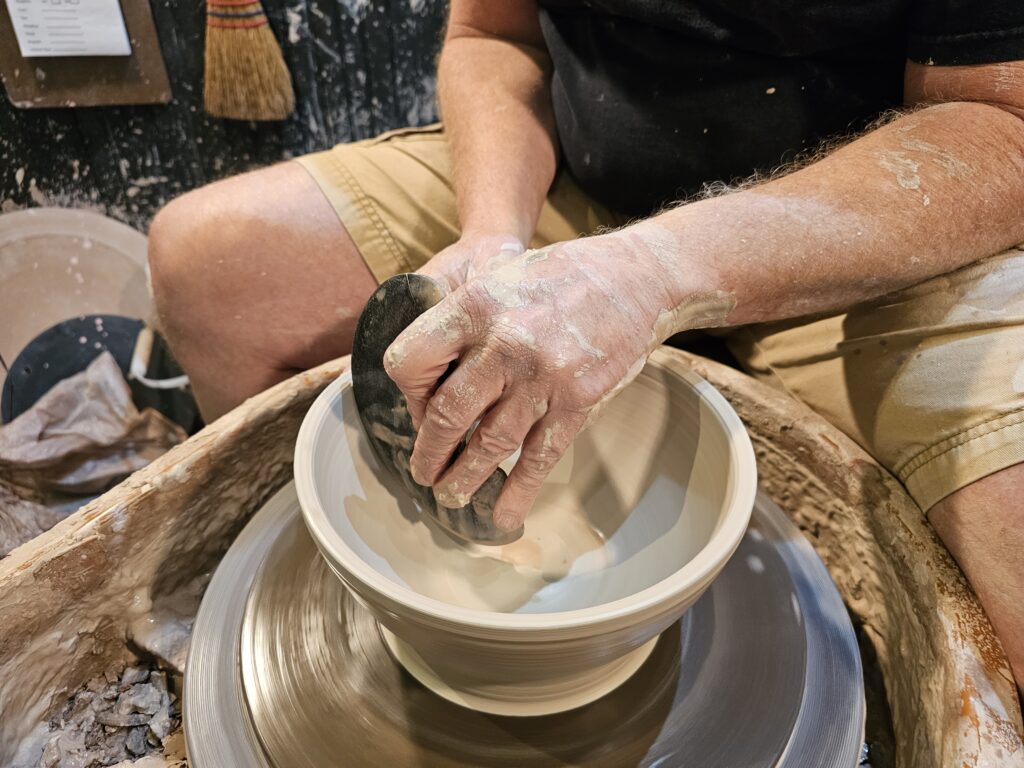
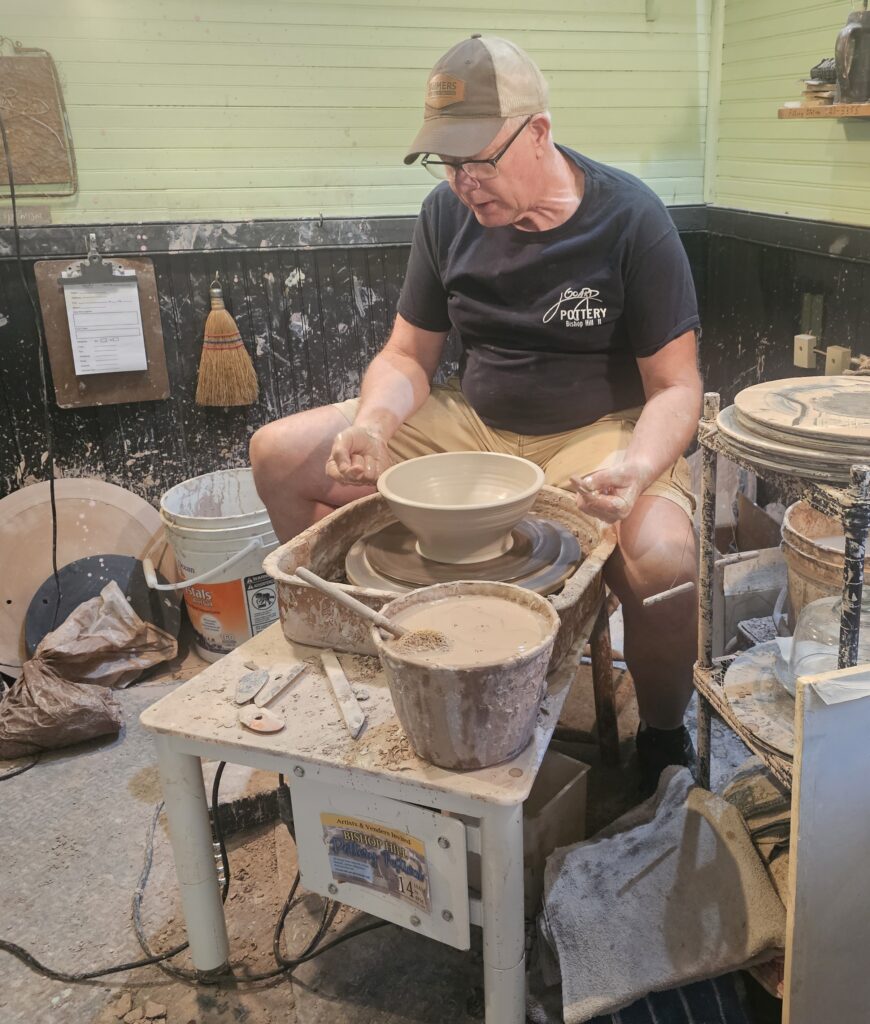
As the vessel forms, so do the grooves and lines that become etched into the design.
“I love those striations because the glazes react to them,” said Goard.
While Goard works, he talks freely about his philosophy and faith and how it impacts his art and life. It’s not uncommon for him to quote Bible verses while giving demonstrations, he said, and paraphrases a verse from the Book of Jeremiah.
“We can be shaped and molded into a vessel more pleasing to him and he does that to us each and every day,” he said.
He continues to shape the sides of the vessel, keeping in mind the thickness of the bowl and uses a wet sponge to smooth and clean up the edges. For custom pieces, he often asks his customers if they would like an imprint of their thumb at the bottom. Kids, he said, especially enjoy participating.
“I like to engage with people who come in here to make it a special event for them,” he said. “We’re making memories in Bishop Hill.”
Once he’s achieved the desired result, the piece will be cut from the wheel and allowed to dry. The amount of time required to dry depends on the weather. Hot and arid conditions allow for quicker drying, while cool damp weather requires a little more time. The pieces are then put on a shelf to dry completely before being loaded into the kiln for the bisque-fire.
Once fired and cooled, the pieces are glazed in handmade glazes that come in a variety of colors. They are then reloaded and glaze-fired before they are complete.
Goard’s shop is filled with all of his creations, but he shares the space with other potters he knows. Marie Lindahl from Peoria sells her gnomes in the shop. Cyndi Merrill from Peoria and Ben Watkins, a potter from Lacon, also have their work there. Jeff Anderson, Sheri Wood, Judy Middleton, Ashley Stahl and Julia Endress are other vendors that contribute to his shop’s inventory.
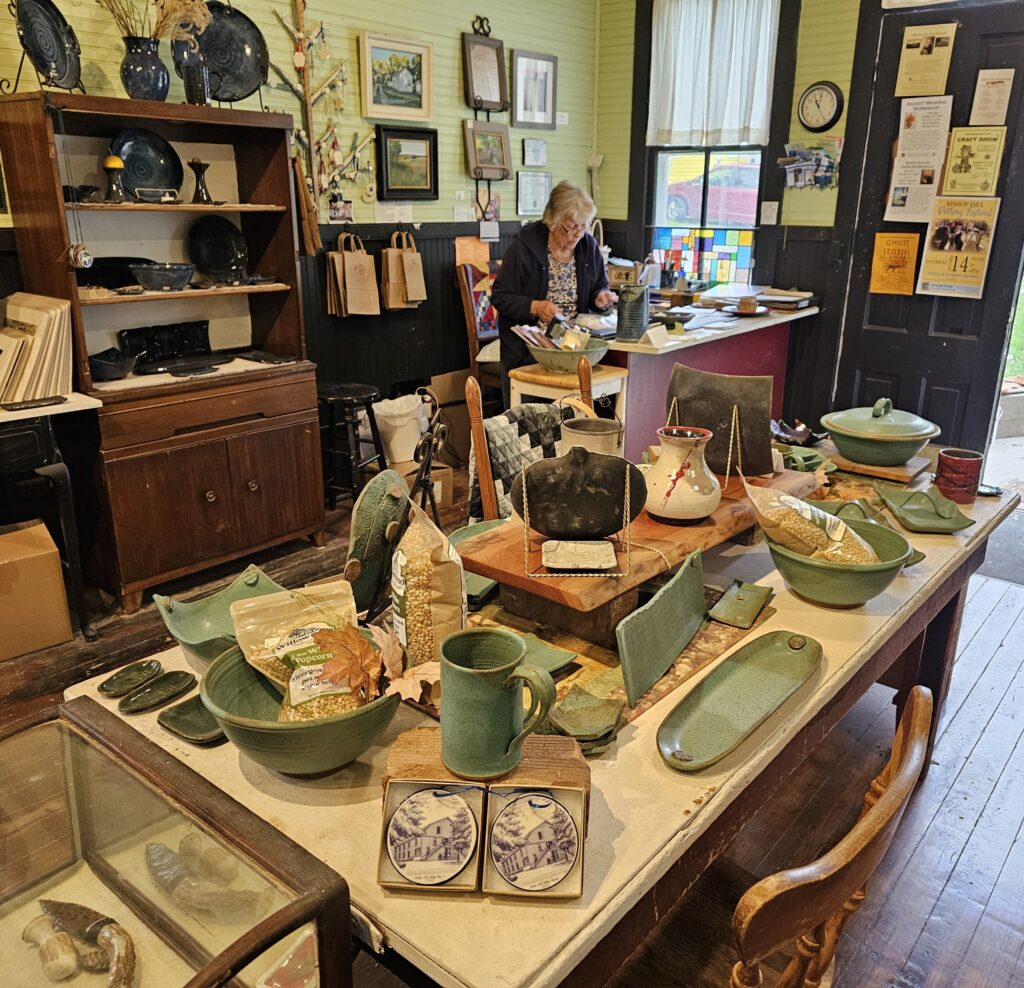
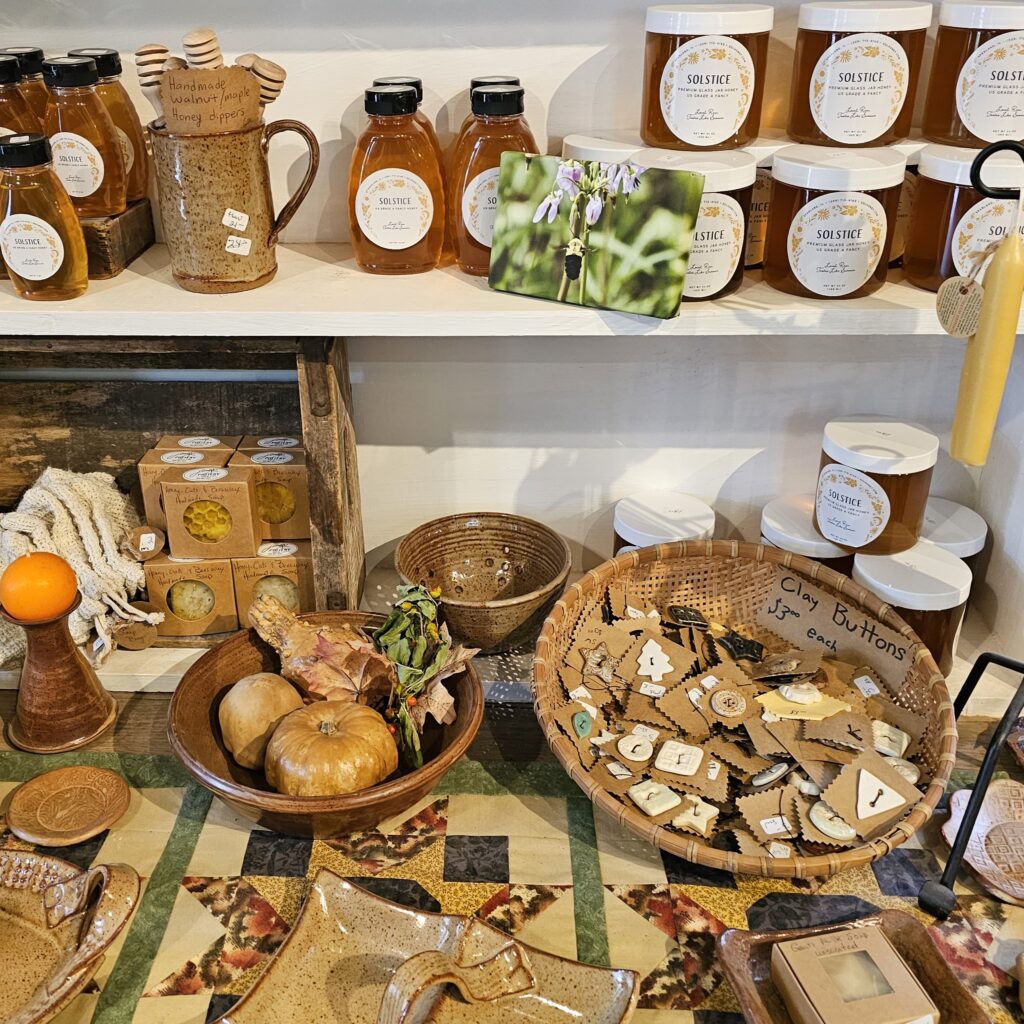
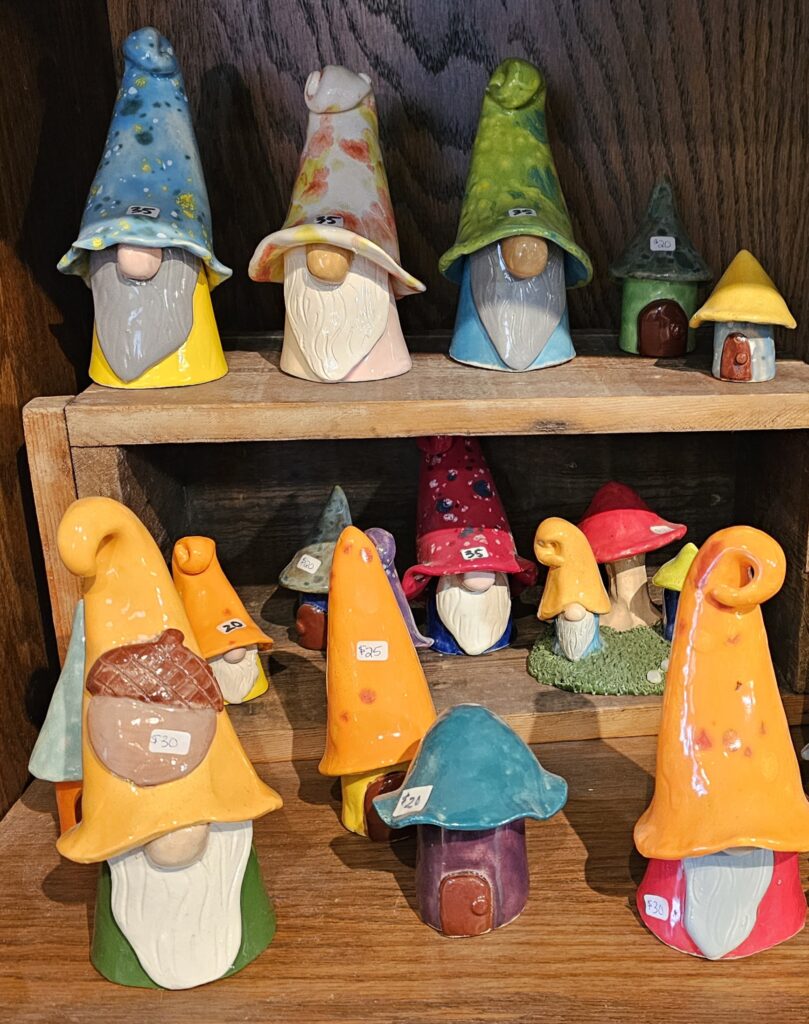
In addition to hand crafted pottery, Goard also sells items that pair well with tea, such as honey and popcorn.
Goard is currently preparing for the Bishop Hill Pottery Festival, scheduled for this weekend, Saturday, Oct. 14. This is just the second year that the festival will be held at this location.
“It’s kind of a reload festival. We did it for about 10 years,” he said. “But we reinvented a very popular event.”
Besides pottery, the festival will include artisans who work with other mediums, such as basketry, stained glass, quilting and jewelry and those artists will be showing off their skills.
“I encourage my vendors to demonstrate their art. Bring the tools of your trade, demonstrate and engage with customers,” he said.
The vendors will set up on the north side of the village park, next to the pottery shop. The festival will begin at 10 am and last until 5 pm. Attendees can come earlier and purchase baked goods, provided by Special Kneads Bakery. The pottery festival is sponsored by the Bishop Hill Heritage Association, Community State Bank, Special Kneads Bakery and J. Goard Pottery.