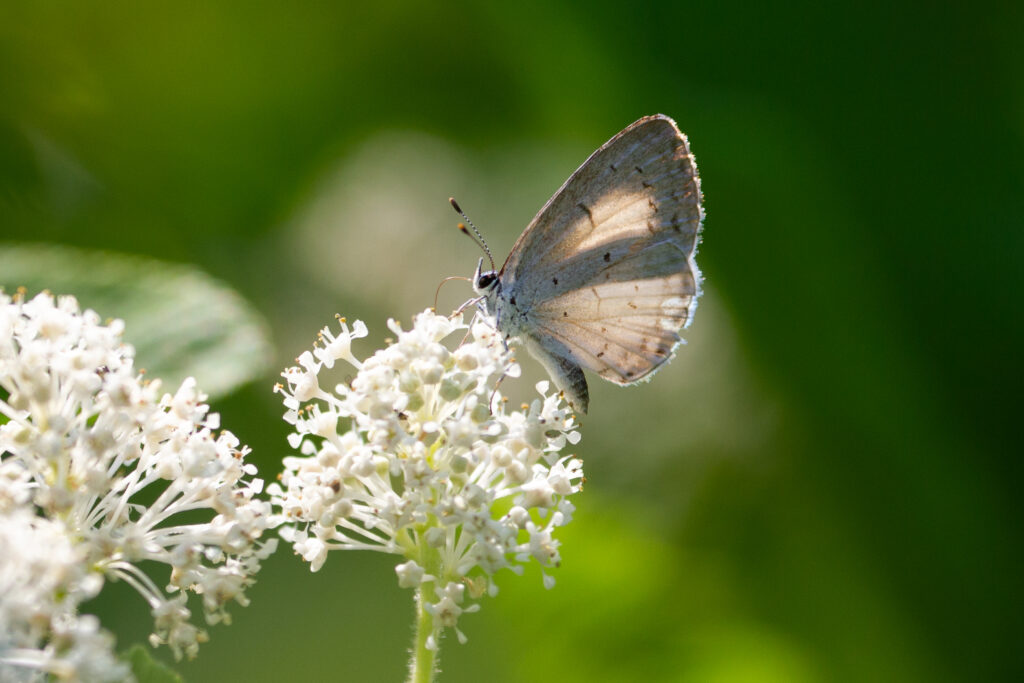
Sometimes a news item just stops your heart.
That happened to me back in March, when I opened an email from the North American Butterfly Association (NABA), an organization that works to conserve and protect butterflies. The text of the email centered on one statistic: in the past two decades, the United States has lost over 20% of its butterflies. Over a fifth of our butterflies, in under half of my lifetime! Could that devastating statistic be true?
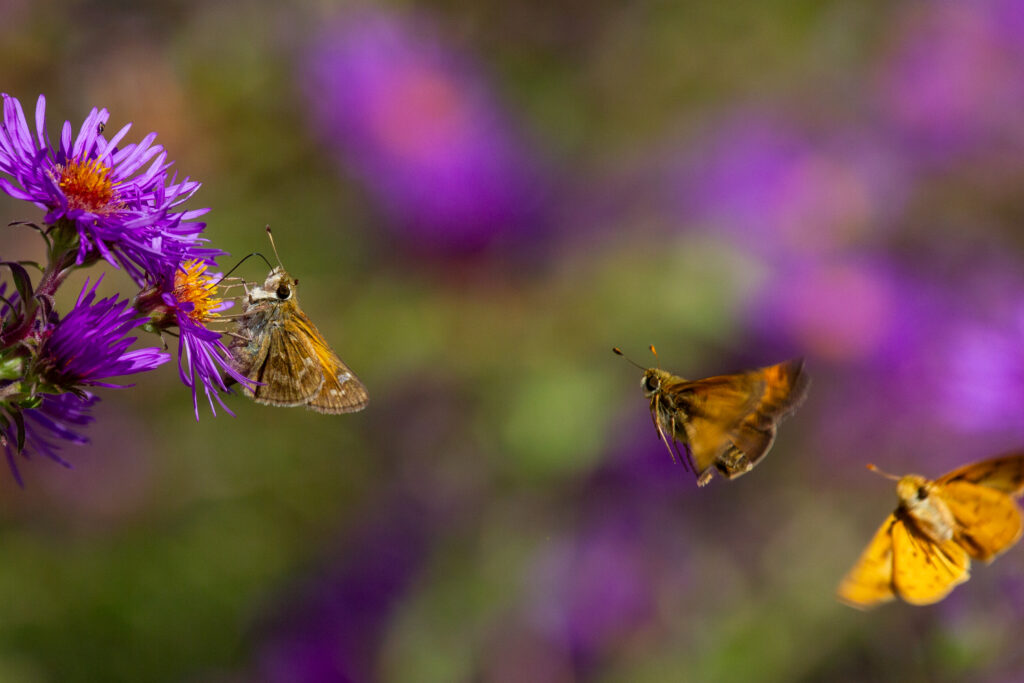
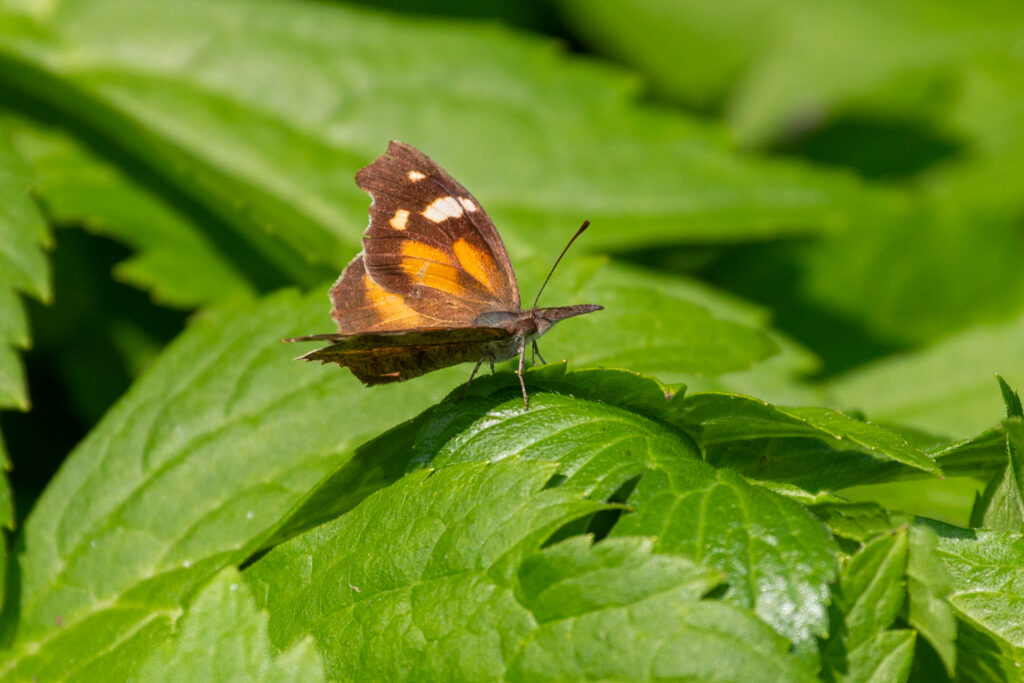
I didn’t want to believe it. I’ve loved butterflies since I was very small, when my dad—an entomologist—taught me about them. As an adult, my love and appreciation for them has only deepened through photography, which has helped immensely with the identification of different species. While some butterflies, like monarchs and tiger swallowtails, are easily recognizable on the wing, I find others—like tiny skippers—much more challenging. And of course, few butterflies hold still long enough for me to compare them with the entries in my field guide!
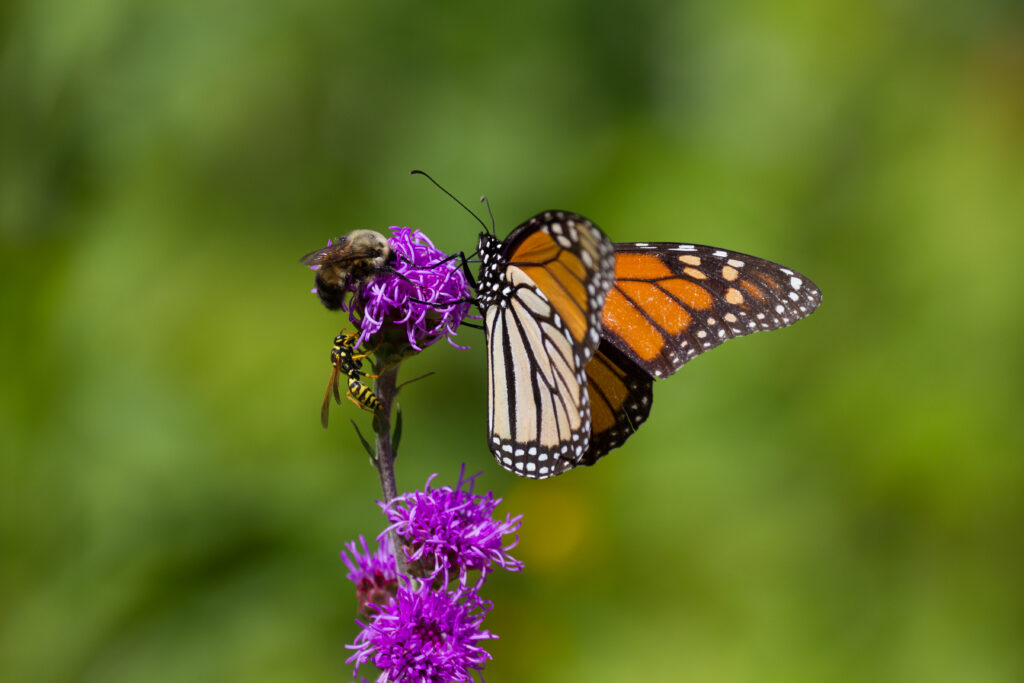
It’s far, far easier to freeze a butterfly in time with my camera, then identify it at leisure at home, its image blown up on my computer screen. I’ve learned many new species this way, and seen old favorites from fresh perspectives.
The thought of all these beautiful creatures disappearing from the landscape made me sick. I desperately wanted to doubt the statistic, but I found myself unable to. It fit too well with others I had been hearing lately, about various insects, birds, and so many other plants and animals.
Much as I hated to hear about butterflies in decline, I felt grateful to the individuals and organizations who had collected and analyzed the data. They made me see the problem, which is the first step in helping to address it.
Threats to butterflies have not come in the form of a single, catastrophic event. Instead, changes in the environment have built upon each other incrementally. More, and then still more, acres of prairie, wetland, and woodland habitat have vanished. New pesticides have come on the market. Temperature and rainfall patterns have shifted. Little by little, year by year, the world has become a more difficult place for many butterflies (along with numerous other species) to inhabit.
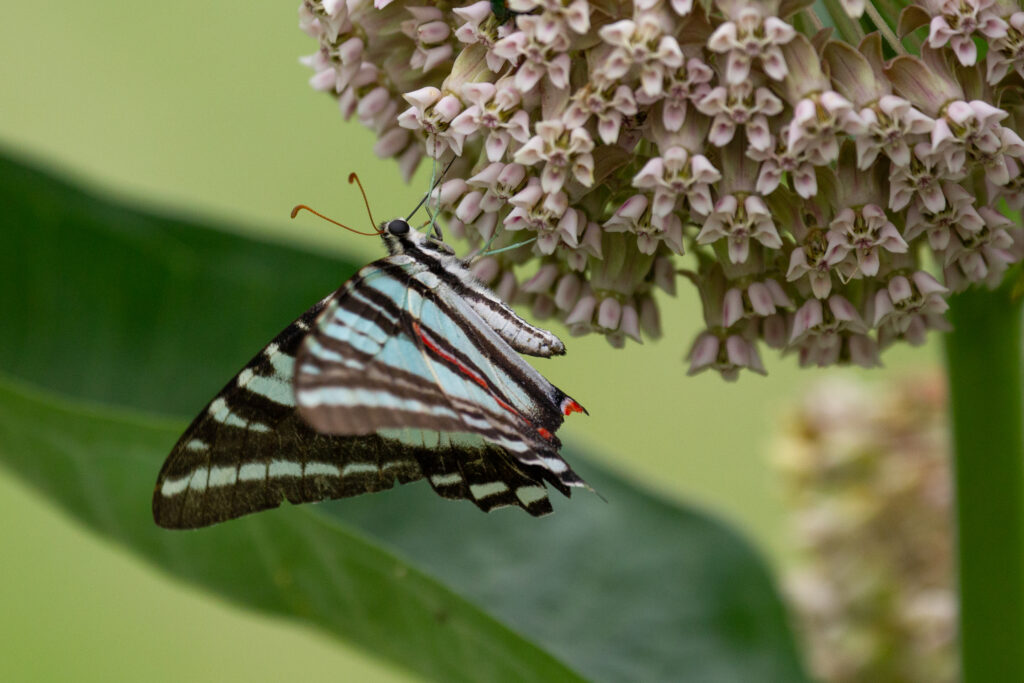
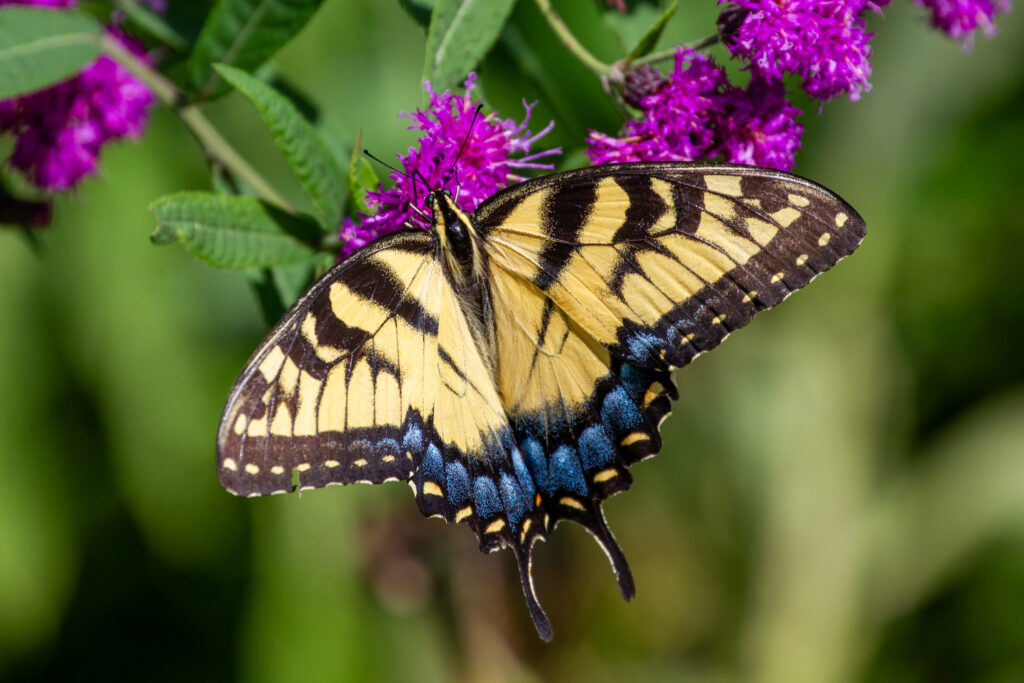
The most encouraging aspect to butterfly conservation is that, according to NABA, actions taken by individuals truly matter. In our own yards, our own gardens, we can do so much! The same email that warned of declines in butterflies also gave advice on how to help them. For example, planting native wildflowers, grasses, and trees can attract adult butterflies and nourish their caterpillars. Eliminating (or at very least reducing) use of pesticides is another important way to protect these insects.
The mention of native plants gave me hope. Planting them was something I had already been doing, because I wanted to attract butterflies and other insects—even before I knew the extent of the threats facing them. In the five or so years that Marc and I have lived in our home, I’ve planted a plethora of trees and wildflowers, often with more passion than know-how. I’ve made many mistakes, planting wild petunia where taller plants shaded it out, goldenrod where its poor roots drowned, and gray-headed coneflower where it engulfed the mailbox. The whole place is—and probably will always be—a work in progress.
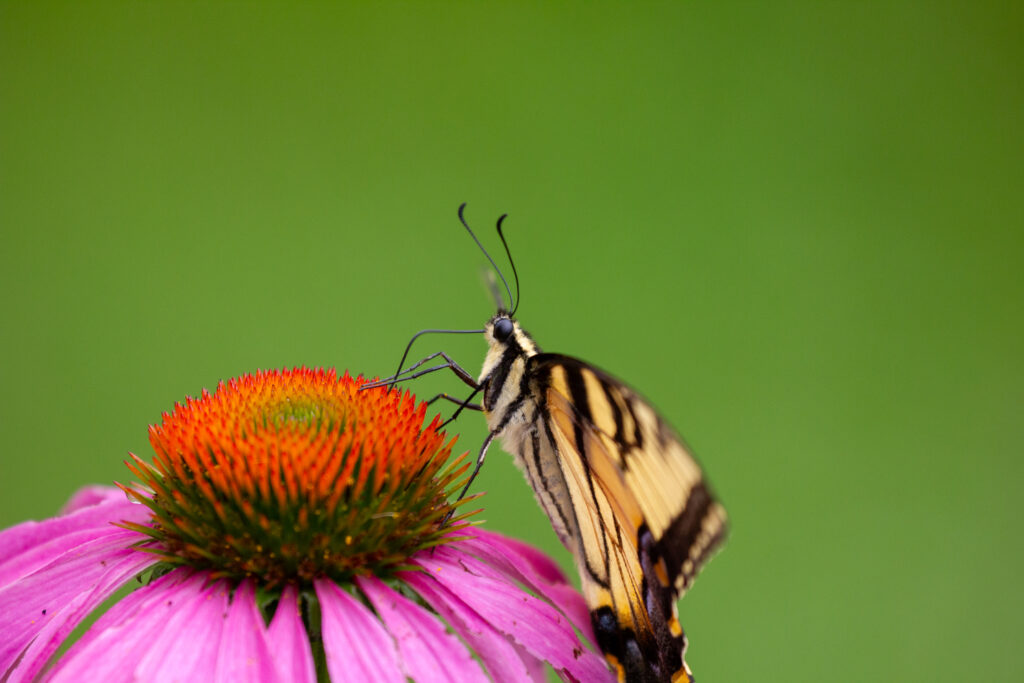
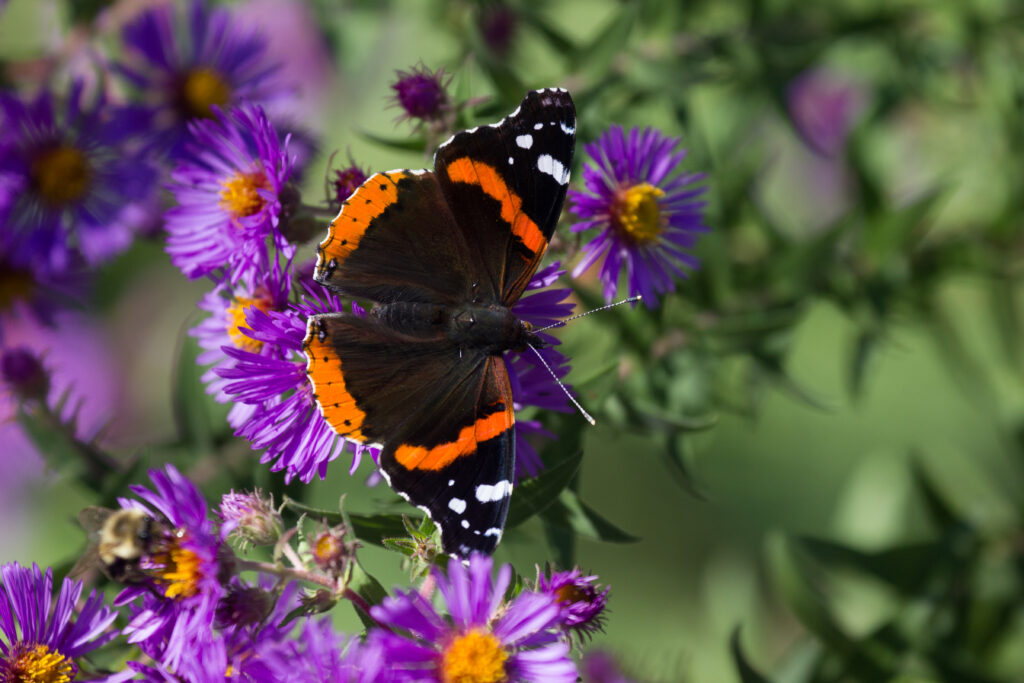
Happily, for me, though, insects don’t demand perfection. They just need a little space, a little of the right sustenance, in order to go about their lives. Whenever I walk out into the yard, now, I see butterflies taking nectar from my milkweed blossoms, coneflowers, or, depending on the season, New England asters. I’ve found several kinds of caterpillars, including monarchs.
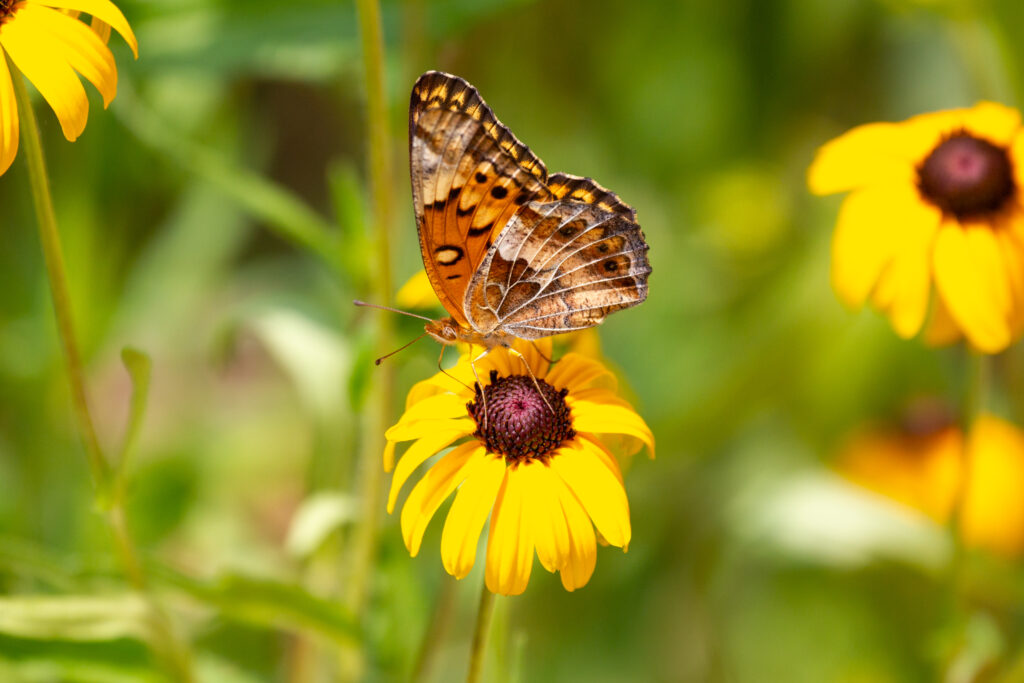
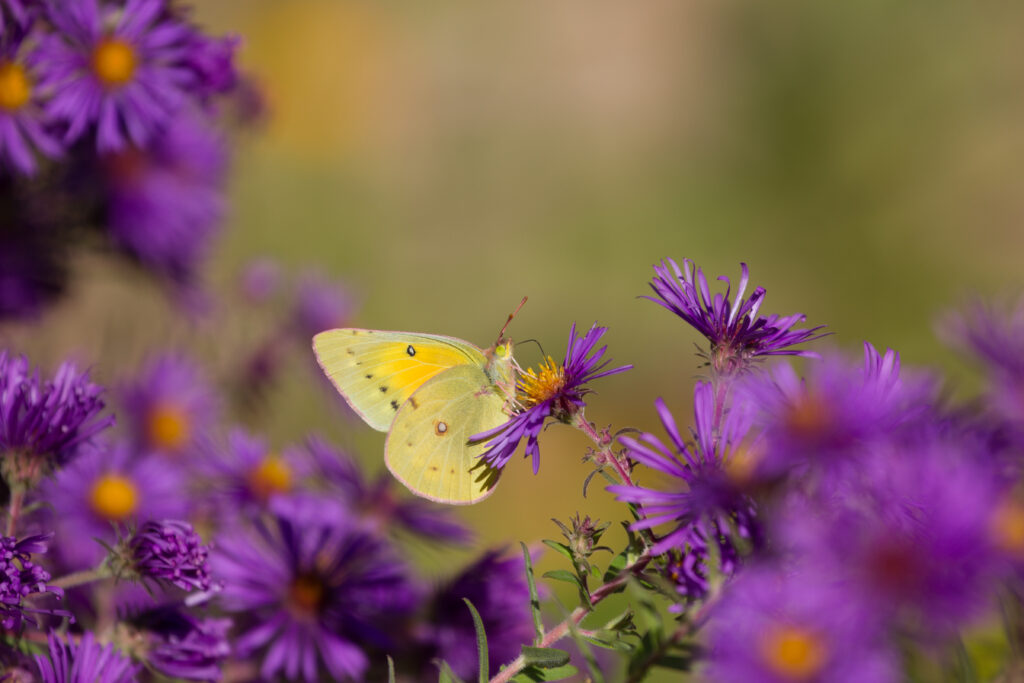
Just recently, I decided to count how many species of butterflies have visited my yard, and I came up with 25-30. The number is not exact because there are some species that I remember seeing but don’t have a photo of, and others that I find challenging to identify. Some of these species are rarities that I’ve only seen once, while others are everyday summer neighbors. In any case, I was happy to learn that so many had found their way to my yard—and I was motivated to entice even more. Now that I have some experience with which plants grow best in my yard, and which ones the butterflies prefer, I can make plans for expanding my butterfly gardens in the years to come.
In butterfly conservation, as in most things, a bit of knowledge plus a few concrete action steps make all the difference between despair and hope.
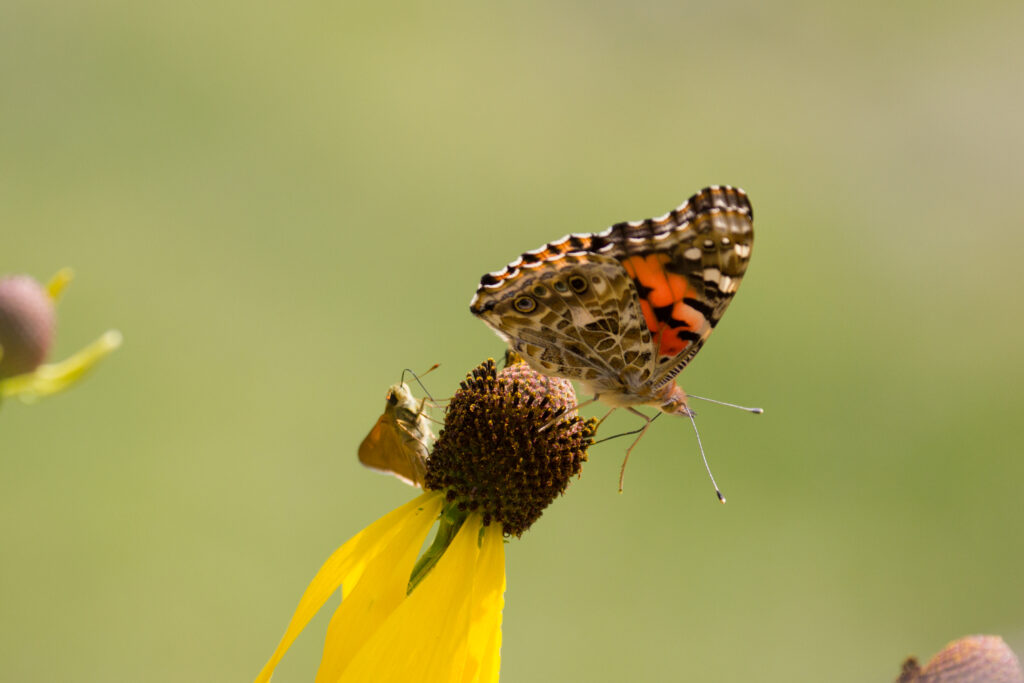
• Loss of habitat (for example, woodlands, wetlands, and prairies)
• Pesticides
• Changes in temperature and rainfall patterns
Steps we can all take to help
Fortunately, there are steps large and small that we can take to help butterflies. These actions also benefit other insects, as well as birds!
• Plant native wildflowers, trees, and other plants. Along with the benefits to insects, many native wildflowers are beautiful, drought-tolerant, and easy to maintain! The University of Illinois Extension Offices and Illinois Department of Natural Resources provide excellent information on native plants.
• Don’t use pesticides in your lawn or garden.
• Support organizations that protect habitat, insects (including butterflies), or both.
• Contact lawmakers at all levels of government (local, state, and national) to urge them to support laws that protect birds, insects, and their habitats.