Years ago, many years ago in fact, my brothers, sisters and I, along with the rest of the neighborhood children all celebrated the exchanging of May baskets.
Come May first, we created small baskets filled with candy and a few flowers and left them on the doorstep of neighbors. We’d holler, “May basket!” Then quickly run away before being sighted by the recipient, who was under obligation of tradition to chase down and kiss the gift bearer.
Even back then this tradition seemed to be on the verge of obscurity.
Thinking back on our spring tradition it got me to wondering, “Where has the seasonal celebration gone and how did it originate in the first place?”
In ancient times, the first of May was one of the Celtic cross-quarter days that marked the mid points between the four solstices and equinoxes of the year.
It was an agricultural celebration marking the beginning of spring and festivities of song and dance were celebrated as the fields sown with seeds started showing signs of sprouts. People decorated their doors with yellow May flowers. The celebration of Beltane was celebrated by the Gaelic by lighting bonfires and dancing.
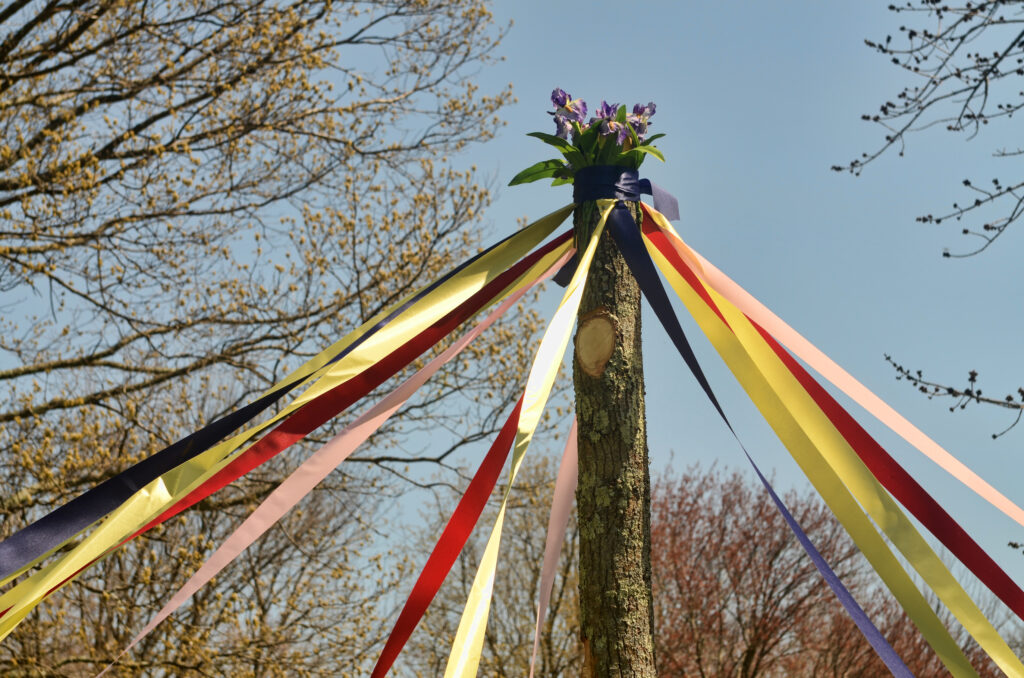
Most of the traditions celebrated in America were actually founded in England. Children danced around the Maypole, as they held onto colorful ribbons. Wildflowers were gathered and they wove hair garlands and floral hoops. They also crowned a May queen and king.
Originally the Maypole was actually a living tree. The ancient Celts danced around the tree praying for fertility of their crops and living things. For some of the young it was a time of courtship. If a young man or woman paired by sundown their courtship would continue for the next six weeks as they got to know one another. Then if the learning process of their prospective mate didn’t turn them off of the whole marriage notion. They culminated the courtship in the month of June with a wedding. Which was the origin of the June wedding tradition.
As mankind has evolved and changed, the anticipation of spring is something that has remained the same with each and every generation.
For many the dream of its arrival is what has gotten us through the last few months of winter. But the end of the 20th Century saw the rapid decline of May Day celebrations. In the 21st Century most mark the coming of spring and summer with celebrations like Easter, Cinco de Mayo or the Kentucky Derby.
You seldom hear of anyone engaging in what was once a common coming of spring observance, May Day. It, like so many traditions, has fallen through the cracks of time.