A few years ago, the streets in Spring Valley were in bad shape.
At Wednesday’s forum on Kewanee streets and the proposed sales tax, Mike Richetta said Spring Valley officials rated their streets on a scale of 1 to 10, and the average rating was 4.
Richetta is an engineer with Chamlin Engineering, which is consulting with Kewanee officials on street maintenance. Chamlin also was the engineering firm that worked with Spring Valley.
Apparently the residents of Spring Valley felt the same way about their streets then as Kewaneeans feel now about theirs. By a wide margin, they approved a referendum adding half a cent to their local sales tax to raise money for street repairs.
Richetta said that since the funds from the sales tax have been available, the rating of Spring Valley’s streets has improved from 4 to 7.
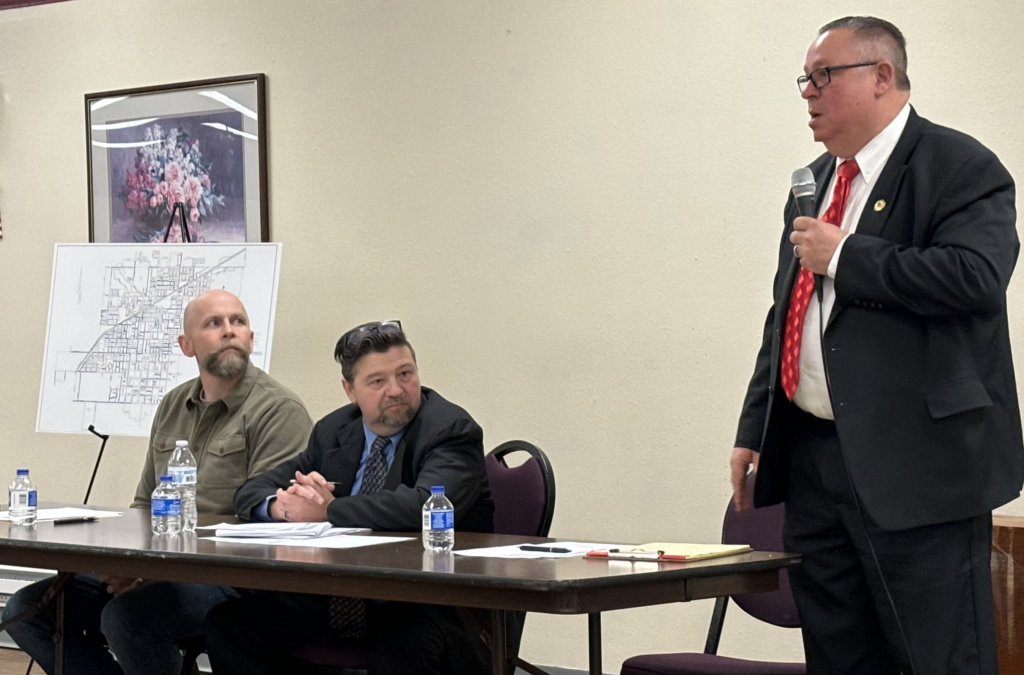
Kewanee officials at the forum at the Senior Citizens Center, sponsored by the Kewanee Voice, with the assistance of the League of Women Voters of the Kewanee area, were asked by moderator Dave Clarke if similar results could be attained here if the half-cent addition to local sales taxes is approved in the March 19 primary election.
Mayor Gary Moore, City Manager Gary Bradley and Public Works Director Kevin Newton said they are “100 percent confident” that the city can give citizens better streets if the referendum passes.
If it doesn’t, Moore said, “We’re going to have status quo.”
“The biggest complaints that come to my office are about streets and sidewalks, plain and simple,” Moore said. He added that city employees “do a fantastic job” of repairing streets, but they’re limited in what they can do by a lack of funds.
About 30 people attended the forum, and they asked questions about the streets and the city’s methods of taking care of them.
Bradley has estimated that it will cost $80 million to get local streets into excellent condition. He said Wednesday that this is a “very conservative estimate,” and the actual cost could be considerably higher.
The proposed sales tax increase would bring in $800,000 to $850,000 a year, Bradley said, and would “sunset” after 10 years — meaning there would have to be another referendum then if the tax were to continue.
The city gets around $650,000 a year from the state’s Motor Fuel Tax, and each year that money “gets spent and it’s not enough” to fix all the streets that need attention, he said.
Newton said the streets are deteriorating so fast that the Motor Fuel Tax can’t keep up with the need to fix them.
One advantage to using sales taxes to pay for public improvements, Bradley said, is that 18 to 20 percent of those taxes are paid by out-of-towners who spend money in Kewanee.
Bradley said the plan is to use 30 to 40% of the sales tax proceeds on bonds, which would provide the funding for larger-scale street projects sooner — “so the people can see their money at work.”
One person asked if the city was pursuing state or federal grants for street repairs, and Moore said, “We’re always pursuing that.” In fact, there is a grant writer on staff for the city, who has secured several grants — including federal funds for a new fire truck.
Bradley said the city has received several grants which require a low level of matching funds from the city. These include a federal grant that paid for resurfacing East Street from Second Street to South Street.
The plan is to use federal funds for major repairs either to South Chestnut Street or to South Street from Beach Street west, he said.