Column
All is quiet on the western front. . . of Kewanee, and the eastern, northern and southern fronts as well. Outside windows, birds sing and call, crickets chirp and an occasional frog makes itself known. But missing from the symphony of sounds is the loud roar of cicadas promised by experts and written about by multiple media outlets.
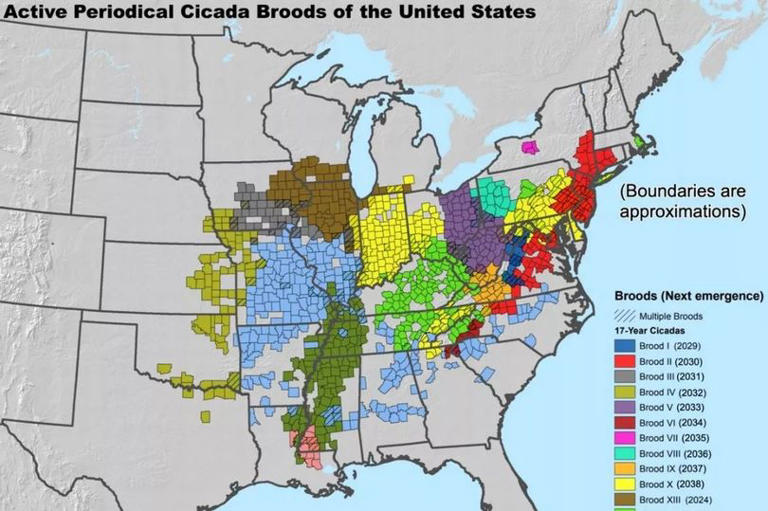
Maps of the rare event, the simultaneous emergence of two broods-something that hasn’t happened for 221 years- have been published. One map showed the emergence of Brood XIII starting their ascent from deep under the ground in Henry County in May of 2024 after soil temperatures had warmed enough. But with temperatures soaring into the 90s of late, it’s pretty safe to say that the red-eyed insects aren’t ascending in Kewanee.
Kewanee isn’t the only city that missed out on the excitement. Dwyer and Michaels also wrote that Moline didn’t get the expected arrival either. Parts of the Quad Cities are reporting some activity, but only city sounds can be heard outside the windows of most city residents.
According to Dwyer and Michaels, the concrete urban area makes Moline less than ideal for cicadas. Suburbs of Chicago are seeing a fair share of the cicadas, as is Peoria and Springfield, which was ground zero for the emergence of both broods, XIII and XIX.
According to the science, cicadas require something specific in a habitat of which Kewanee, surrounded by farmland, doesn’t have a large quantity. For their emergence, cicadas need mature forests with plenty of trees, and that bit of fact might explain the patchy distribution of the broods’ emergence. So Kewanee residents not seeing the cicadas in their yard aren’t alone.
Of course, there may be places in Henry County that have witnessed the event, but we’ve not heard any reports.
In Springfield, where both broods were expected to arrive, one resident told me that they are there and can be heard, but they are mainly keeping to themselves out of sight in the trees. Cicadas don’t live long, just a month or so.
Female cicadas lay up to 400 eggs in mostly branches and twigs. After six to eight weeks, the eggs hatch and newly hatched nymphs head underground where they live off of plant roots. There they spend about two to five years underground and some may remain there for 13 or 17 years. Once in the nymph stage, they return to the surface.
Of course, just because Kewanee didn’t see the anticipated Brood XIII, doesn’t mean the city doesn’t have cicadas living under its soil, and over the years, many residents have heard and seen signs of them when they die- their carcasses clinging to foundations and trees. But the emergence hoopla surrounding the “Cicadapocolyse” of 2024 didn’t hit here.
The next time the two broods are expected to cross paths won’t be until 2245. And if it’s like this time, Kewanee won’t get to witness that event either.