Time spent outdoors in November is usually more sober than during the spring, summer, and early autumn months. The songs of birds and chatter of insects have mostly grown quiet, and the vivid leaves and flowers have dried to wintry brown. The sun itself seems subdued, pale, as it emerges for a shorter time each day.
Yet even now, in the fading months of the year, I keep catching glimpses of golden light in unexpected places; it’s almost as if Earth itself is trying to hold onto the sun.
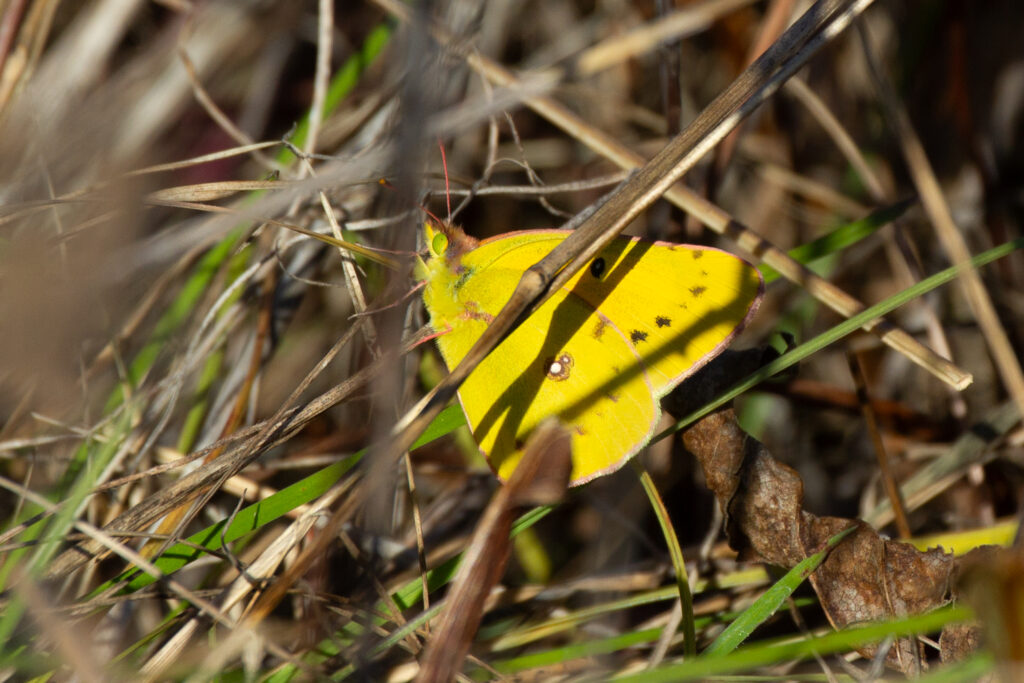
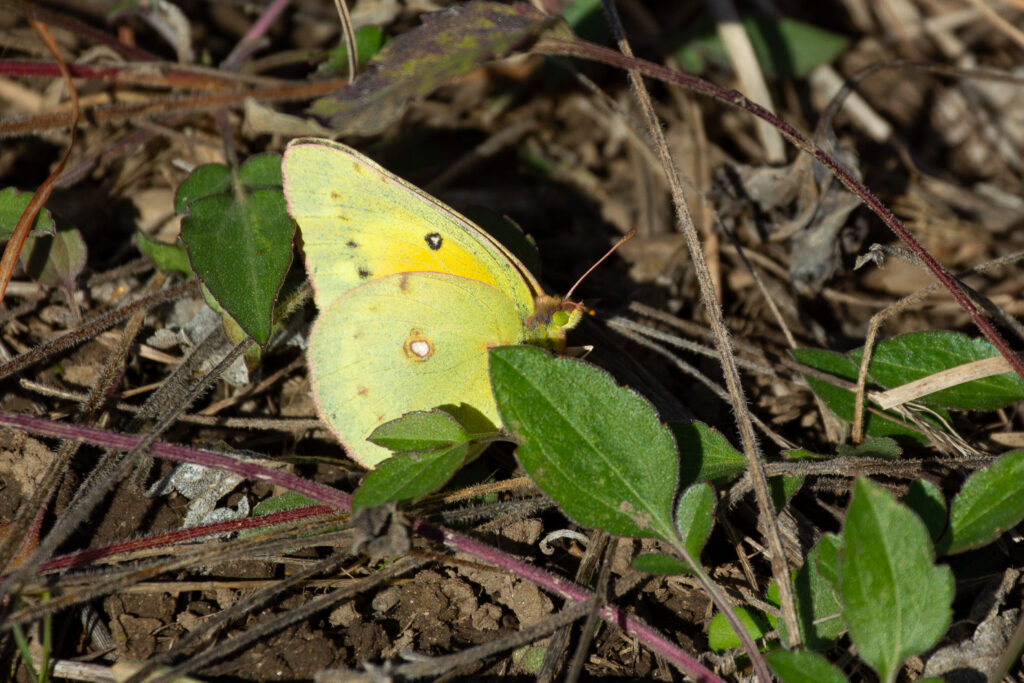
In early November, Marc and I drove to a nearby sand prairie, one of our favorite places to stroll. In summer, it teems with many species of bees and dragonflies. We didn’t see any of those insects—their season was past. As I looked out into the dry prairie grasses, though, I noticed a dappling of bright yellow wings. The day was warm, but I was still a bit surprised to see a butterfly flying around. I stayed still, hoping the creature would settle near me, and finally it did: an orange sulphur butterfly landed and sat basking in the sun. I edged closer with my camera, hoping to capture a photo or two. Wary, the sulphur flew off, fluttering among the tall grasses before landing again. Several more times we did this dance until at last, I managed a photograph. To my delight, we spotted many more sulphurs out on the prairie that day. How tenacious they were, flying so late in the year!
Later in the month, sunlight found me once again. Five years ago, when Marc and I first moved to our house, I planted rhizomes of a lovely yellow iris out in the front garden. My family calls it the “Nana Grace iris,” after my dad’s mom, who gave us cuttings of the plant from her own garden. These may be the hardiest flowers on the planet. They’ve survived, even thrived, despite numerous transplantations into all different types of soil. My family has shared them with many friends, and I’ve brought them with me each time Marc and I moved to a new house.
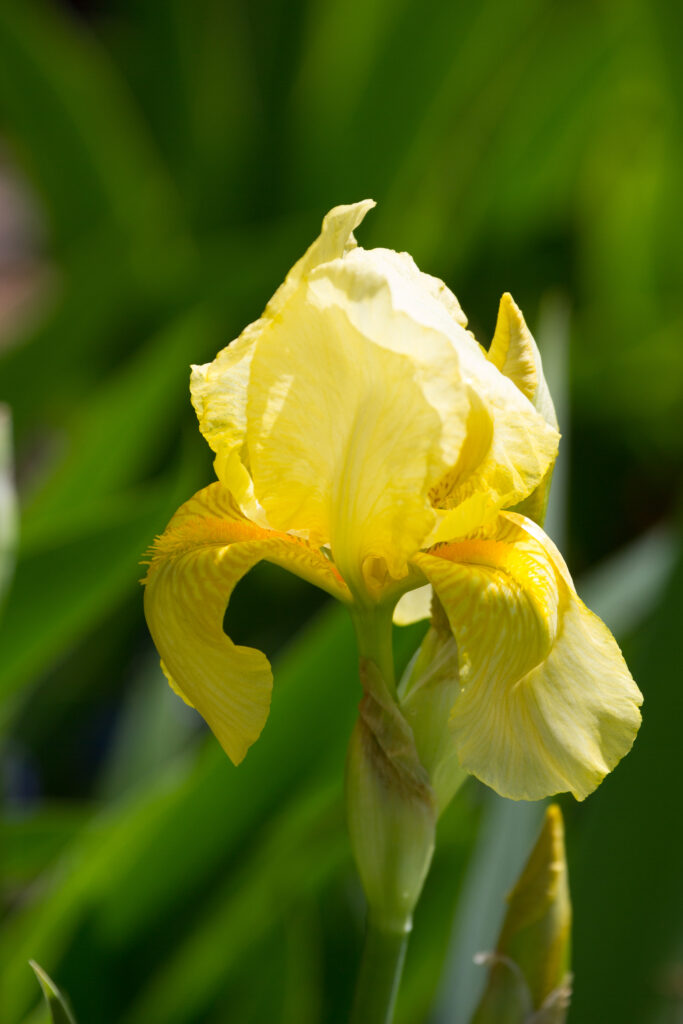
They’re the first of my iris to bloom each spring, and each fall, they usually bloom again. They astonish me—but never more than this year, when I looked out my kitchen window on November 25 to see the delicate, pale lemon petals of an iris flower! It offered the warmth of held light and the sunshine of my Nana’s smile.
Even after the first real snowfall of the season, November brought me a vision of surprising gold. Toward sunset one afternoon, Marc and I were walking our dog, Luke, through the neighborhood. The sky was an exquisite fresco of soft pink and pale blue. Suddenly, I noticed a vee of nine or so birds winging southward. As they flew over us, I realized that they were larger and paler than Canada geese. “Trumpeter swans!” I cried, thrilled.
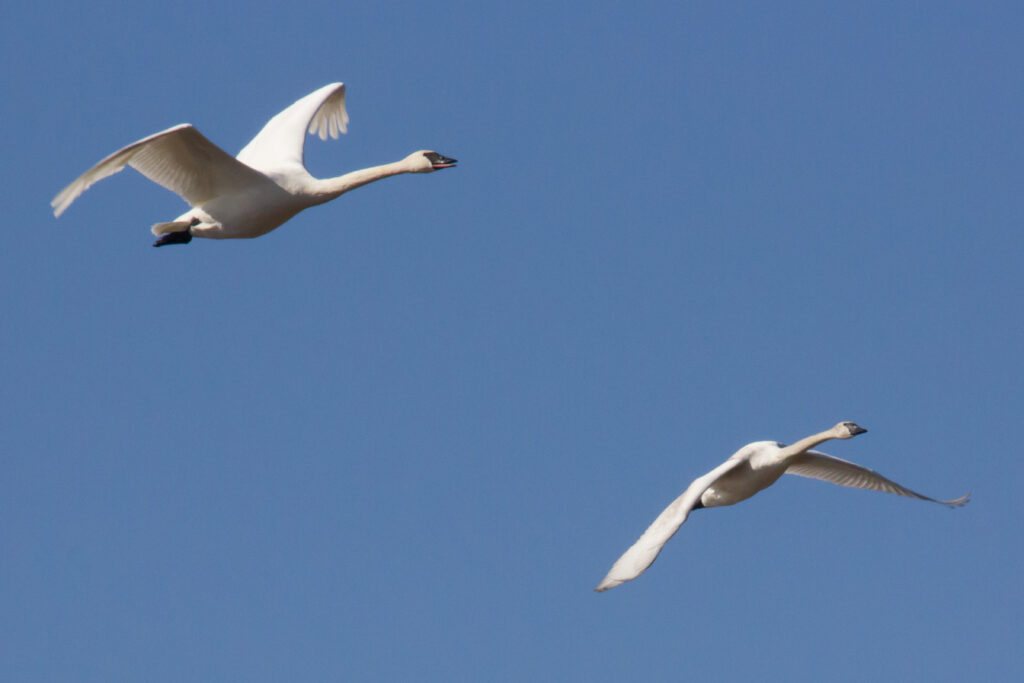
Seeing trumpeter swans in the wild always fills me with joy—tinged with dismay at what the world almost lost. These largest of native North American waterfowl, with their bright white feathers and black beaks, were pushed almost to the brink of extinction in the twentieth century. Their populations are now growing, thanks to the tireless work of conservation groups and scientists. I felt profound gratitude toward those people as I gazed up at the swans, not white just then but golden in the rosy sunset light. I didn’t have my camera with me, so I could only watch as the swans vanished in the shimmering horizon. I tried to press the moment deeply into my mind, where I could hold onto it forever.
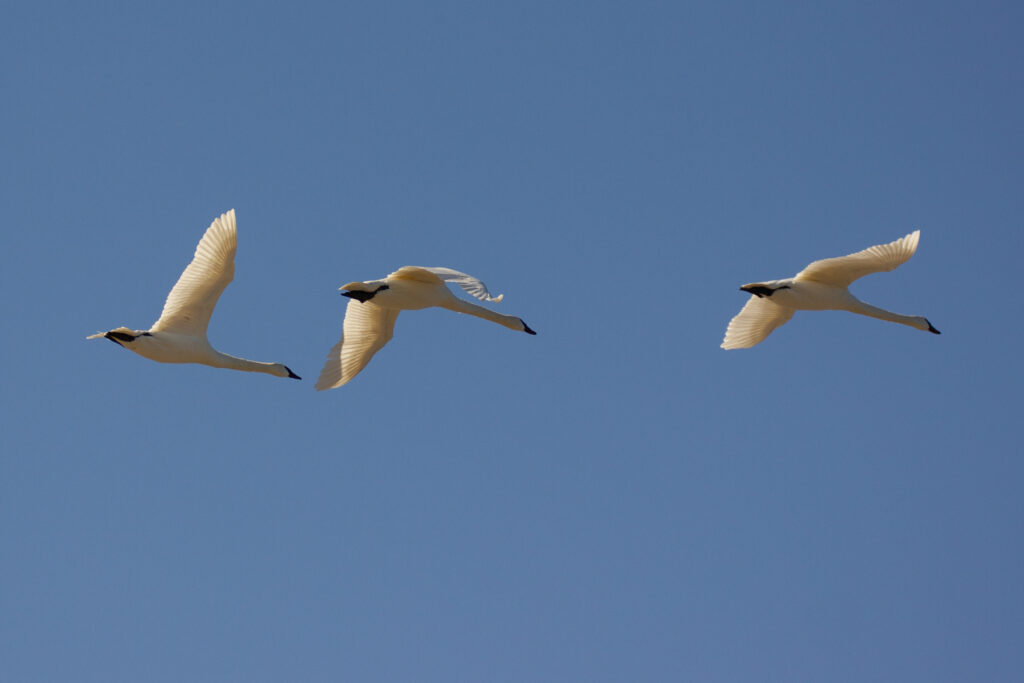
Its glow will stay with me, even in the darkest times of winter.