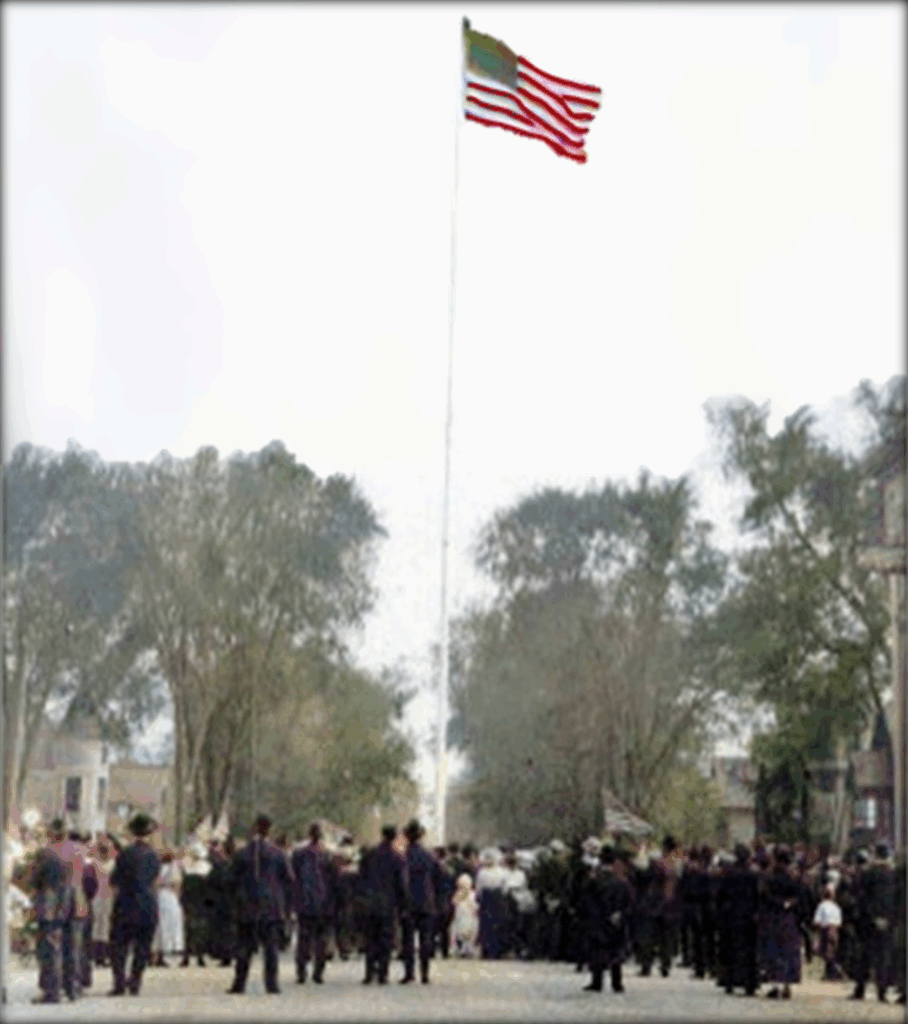
The patriotic display in support of WWI drew 20,000 persons
(There is a political divide in the United States today, and it’s growing wider, threatening to tear the country apart. Each side believes that it’s right and the other side is wrong, with little or no room for any compromise. The comity which made America great is missing.
One hundred and seven years ago, Kewaneeans of all political stripes, religions and nationalities rallied in support of a country preparing to go to war. They were acting truly patriotically, not the false patriotism we’re seeing today. If it’s not too late, perhaps we can learn from our past.
Here’s one story about a moment in time about which we can be proud of our forebears in their true patriotism.)
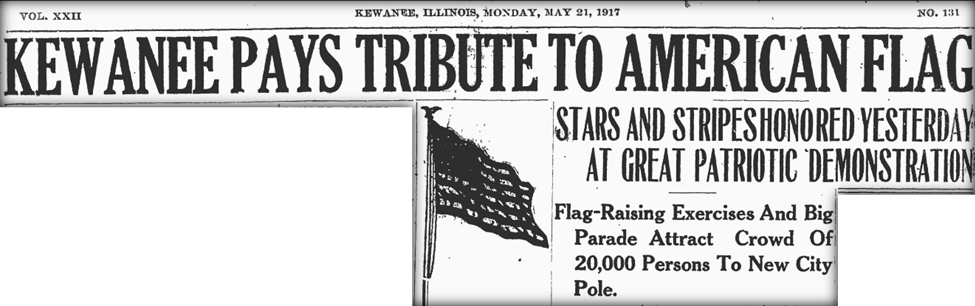
In early January of 1917, the newly-organized Kewanee Rotary Club installed its first set of officers.
On April 2 of the same year, President Woodrow Wilson asked Congress for a declaration of war against Germany. On April 6, Congress declared war. Patriotic fervor rolled across the United States.
In Kewanee, a grand, patriotic idea originating with the new Rotary Club soon came to fruition.
On May 1, a joint committee comprised of members of the Rotary Club, the Civic Club, and the Grand Army of the Republic invited other organizations to join them in a parade and program culminating in the raising of a fifteen by twenty-foot American flag on a hundred-foot-high pole to be placed in the middle of the intersection of Tremont and First Streets. The Rotary Club would donate the flag and the Kewanee Works of the National Tube Company and the Kewanee Boiler Company would donate the pole.
Planning for the May 20 event began in earnest. Dozens of groups and organizations from Kewanee and elsewhere heartily agreed to participate. The parade and route were planned, speakers selected, and on May 16 the steel flag pole, painted white, was set in concrete ten feet below the surface of the pavement, leaving one hundred feet above ground.
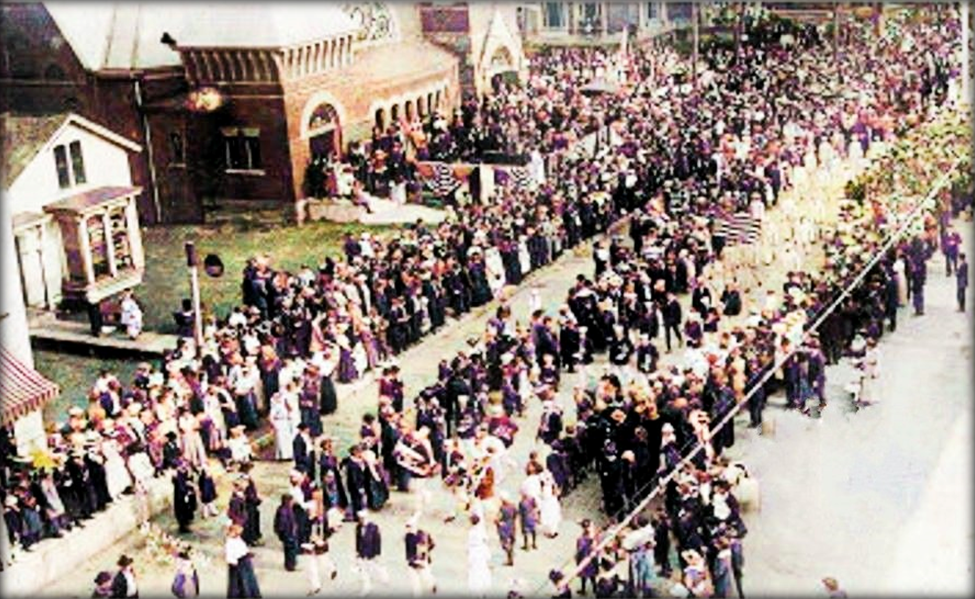
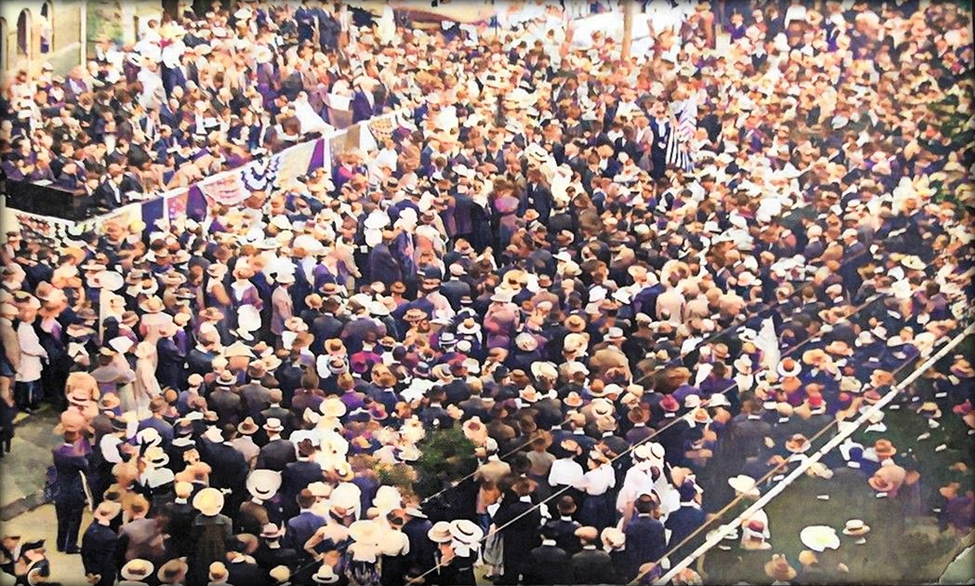
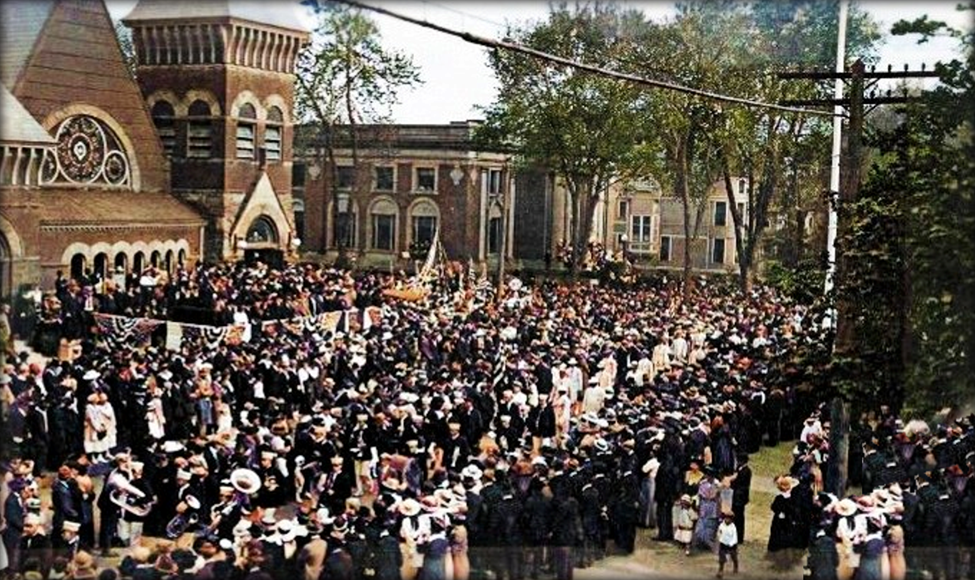
Sunday, May 20, arrived with pleasant temperatures and partly cloudy to cloudy skies. An estimated 20,000 persons, many visitors, crowded into the city for the spectacular tribute.
The parade started at 3:00 p.m. at the corner of Second and Chestnut Streets, proceeded south on Chestnut to Prospect Street, east a block to Tremont Street, north to Central Boulevard, east on Central to Elm Street, doubled back on Central to Tremont, and then north on Tremont past the flagpole and reviewing stand, the latter located in front of First Congregational Church on the northeast corner of Tremont and First.
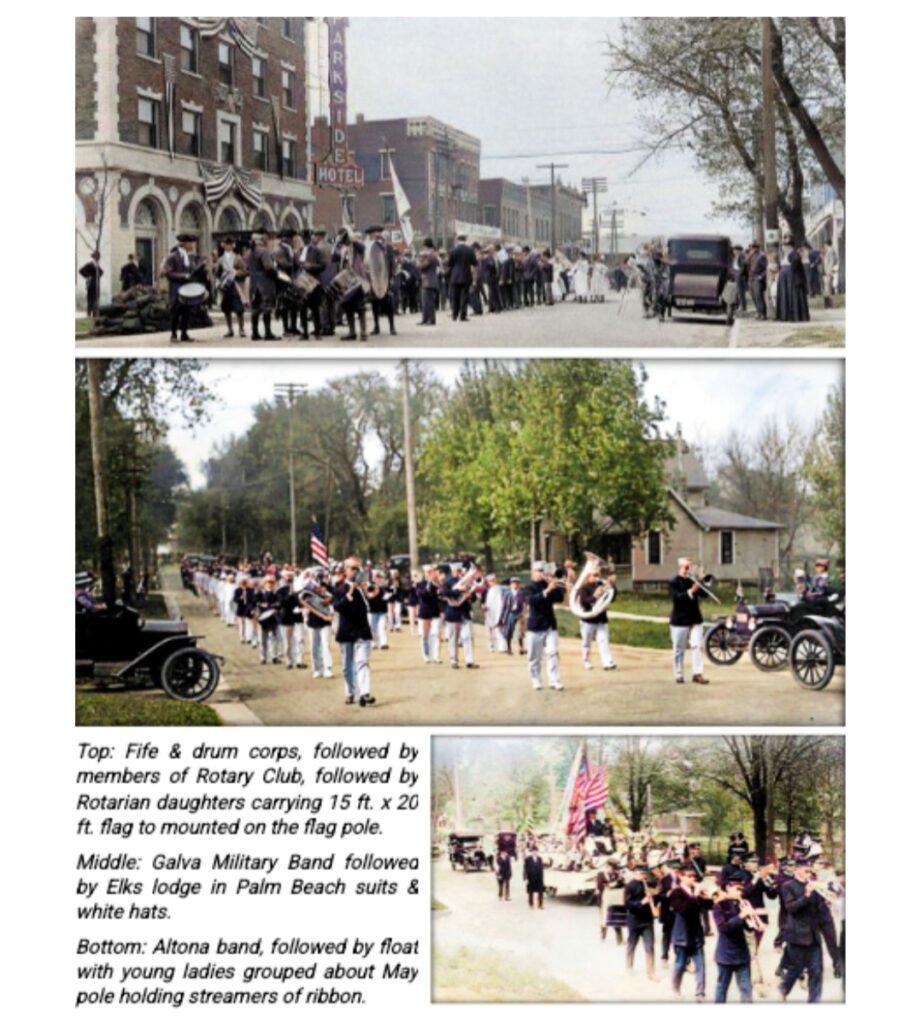
The Rotary Club’s fife and drum corps led the way. They were followed by twenty young women carrying the stretched-out flag at shoulder height. There were automobiles decorated with flags and bunting carrying officials, marching military units, Sunday school delegations, fraternal organizations of professionals, churches, and immigrants, floats, groups of employees from Kewanee manufacturers, school choral groups, and many, many more participants. Music was provided by various bands, including the Red Men band, the Altoona band, the Eagles fife and drum corps, and the Galva Military band,
E. E. Baker, president of the Rotary Club, had a large gun on his lot at Chestnut and Prospect Streets which he fired every time an American flag passed his premises.
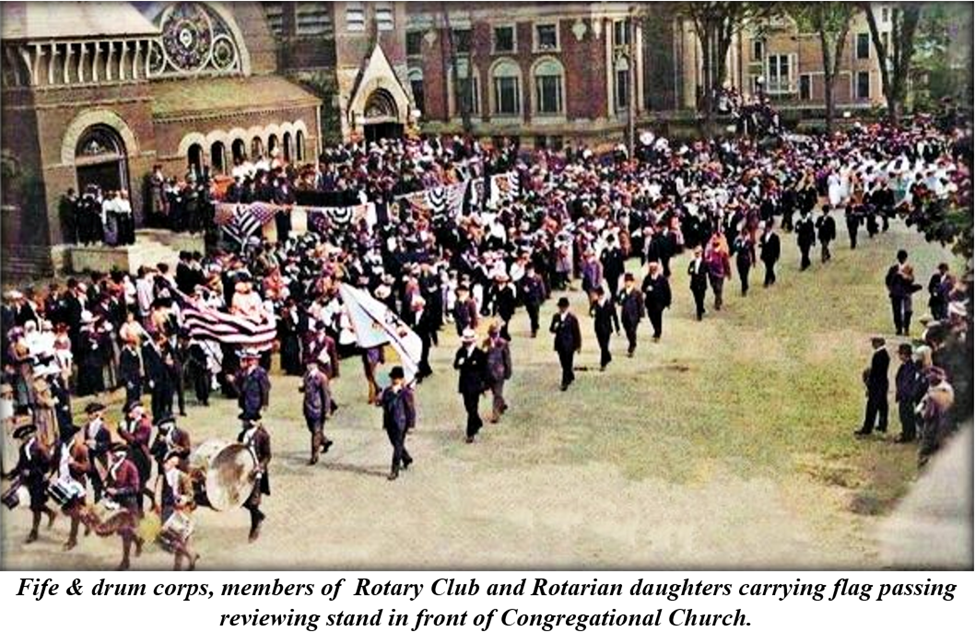
After the last groups of the parade passed the reviewing stand shortly after 4:00 p.m., the pastor of St. Paul’s German Lutheran Church gave the invocation, followed by other speechifying and singing.
W. J. Cunningham, an out-of-town official associated with a large Sunday school convention scheduled to start the next day, said the Kewanee event was “a bigger and better demonstration than that which Peoria put on,” one of the finest displays of patriotism he has yet seen.
Kewanee had honored Old Glory well.