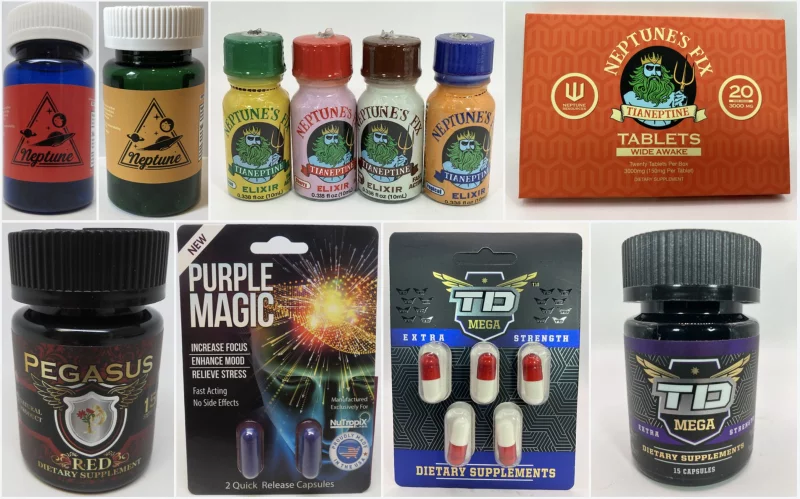
You may have never heard of tianepine or kratom.
But Kewanee police have heard of them, and Police Chief Stephen Kijanowski wants the sale of them prohibited in the city.
Kijanowski was at Monday’s City Council meeting to ask the council to pass an ordinance prohibiting the sale of the substances, which he said can have serious impacts on users’ mental and physical health.

Kijanowski had submitted a report “to inform the City Council about the public health and safety risks associated with the retail sale of products containing tianeptine and kratom.”
The chief Monday said police surveyed three local businesses which might be selling one or both of the substances. None were selling tianeptine, but products containing kratom were being sold here, he said.
Kijanowski’s report said he had researched the effects of the two substances and the health risks they pose.
Tianeptine is sometimes called “gas station heroin,” the chief said, because it can have effects similar to those of heroin if misused.
According to Wikipedia, tianeptine can be used as an antidepressant. It is legal in France and other countries, and is sold by a French pharmaceutical company.
But the drug, which isn’t legal in the U.S., can cause severe withdrawal symptoms after prolonged use.
And the Food and Drug Administration says tianeptine is not approved for any medical use in this country.
“In the U.S., reports of bad reactions and unwanted effects involving tianeptine are increasing,” the FDA’s website says. “Annual poison control center cases involving tianeptine exposure. . .have increased nationwide from four cases in 2013 to about 350 cases in 2024.”
The FDA also reports that tianeptine “has a potential for abuse,” and some people have turned to it as an opioid alternative.
The FDA says Kratom is available in brick-and-mortar stores like the ones in Kewanee.
Consumers are warned not to use Kratom “because of the risk of serious adverse events, including liver toxicity, seizures and substance abuse disorder. Deaths associated with Kratom have been reported but are rare, the FDA says.
Kratom “is not lawfully marketed in the U.S. as a drug product, a dietary supplement or a food additive in convention food,” according to the FDA.
Council members were receptive to Kijanowski’s proposal that an ordinance banning the sale of the two substances be passed.