For most of us, this past weekend has been spent with, or thinking about mothers. While it’s celebrated once a year, the work to make it official deserves some additional thought. Here is what I conjured up for mom’s holiday.
The roots of Mother’s Day intertwine with traditions far older than the holiday we know today, and date back to ancient civilizations that celebrated motherhood via deities and festivals. These early celebrations show how societies have historically revered motherhood, highlighting its significance across cultures for centuries.
For instance, the Greek Goddess Rhea was honored with an annual spring festival (son Thor was probably obligated to appear). The Romans followed suit, with processions and a series of games to indicate their reverence for motherhood. Their mother goddess was Cybele – and considered the mother to end all mothers. Back then, mothers ruled – and their importance never dwindled.
Celebrating Mother’s Day in the United States goes back to before the Civil War. A West Virginian named Ann Reeves Jarvis created “Mothers’ Day Work Clubs” to teach women how to care for their children properly. She, and others like her, were some of the first to join the newly created public health initiatives to combat childhood illness and unsanitary conditions. Raising families was very hard back then. Ann lost a number of her children to disease and wanted to help other women avoid such tragedy.
After the war, these clubs became a unifying force in her region, still divided over the conflict between the states. To lessen the tensions of the day, she organized “Mothers’ Friendship Day” where mothers gathered with former Union and Confederate soldiers to promote reconciliation between the men.
Others soon followed. Among them was suffragette Julia Ward Howe who penned the “Mother’s Day Proclamation” which asked mothers to unite in promoting world peace. She campaigned for “Mother’s Peace Day” to be celebrated each June 2. She was tired of war and felt women were the only ones who could stop them.
Temperance leader Juliet Calhoun Blakely created a Mother’s Day in Albion Michigan in the 1870s while Mary Towles Sassen, a teacher in Kentucky traveled the country, convincing school leaders to hold Mother’s Day tributes in the classroom.
However, it is Frank Hering, a Notre Dame faculty member who is credited with giving the first public plea for a national day of recognition for mothers. His lively oration titled “Our Mothers and the Importance in Our Lives” gave him the title “The Father of Mother’s Day.” Thirty years later, a bronze tablet was unveiled near the English Opera House where he had delivered his speech. A parade followed in his honor and was touted by the Indy Star paper as the “most elaborate and colorful ever held in celebration of Mother’s Day.”
I do hope he sent his mother a card.
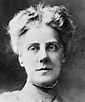
The person most credited with creating Mother’s Day as we know it now was Anna Jarvis, daughter of Ann Reeves Jarvis. Anna was completely devoted to her mother. Following her mother’s death in 1905, the younger Jarvis conceived of Mother’s Day as a way of honoring the sacrifices mothers made for their children – and to remember her own.
Three years later, after gaining financial backing from a Philadelphia department store owner named John Wanamaker, she organized the first official Mother’s Day celebration at a Methodist church in Grafton, West Virginia. That same day also saw thousands of people attend a Mother’s Day event at one of Wanamaker’s retail stores in Philadelphia. Perhaps we could deem him “The Father of Mother’s Day Gifts!”
Fully resolved to see her holiday added to the national calendar, she started a huge letter-writing campaign urging newspapers and prominent politicians to make it a special day. She argued that holidays in the US were biased toward males and their achievements and felt that honoring mothers was the right thing to do.
By 1912 Mother’s Day was gaining ground. Jarvis had established the Mother’s Day International Association to help promote her idea of an annual holiday. Two years later, her persistence paid off when President Woodrow Wilson established the second Sunday in May as Mother’s Day.
Florists, card companies and other merchants soon jumped aboard, and the holiday became a commercial success. Jarvis, whose earlier vision was of simple recognition and individual devotion between children and mothers was in stark contrast to the cash cow she believed it had become.
With the same resolve she had used to create the day, she worked to stop it from continuing. By 1920, she was outwardly denouncing the holiday and urging the public to stop buying into its commercialism.
In addition to an open campaign against Mother’s Day “profiteers”, candy makers and florists, she launched countless lawsuits against groups who used the name “Mother’s Day,” – spending most of her personal wealth on legal fees. For nearly 30 years she fought to stop the holiday from being promoted and actively sought to have it removed from the US calendar.
Sadly, Jarvis died unmarried, without children and financially devastated.
While versions of Mother’s Day are celebrated worldwide, traditions vary depending on the country. In Thailand, for example, Mother’s Day is always celebrated in August on the birthday of the current queen, Sirikit.
In Ethiopia, families gather each fall to sing songs and enjoy a large feast as part of a multi-day celebration honoring motherhood.
In the UK, “Mothering Day” is celebrated three weeks before Easter Sunday. The tradition originated in the Middle Ages when children who worked in domestic service were allowed to visit their home, or “Mother church.” It was an opportunity for families to reunite and children would pick flowers to give their mothers. The day is also referred to as “Pudding Pie Day” or “Refreshment Day.”
In Mexico, Mother’s Day is always held on May 10. Mothers are awakened with music (often with a mariachi band) outside their window, and gifts of food and flowers are brought by the family to show their love.
In Ireland, mothers get breakfast in bed. The Swedes celebrate mothers on the last Sunday in May. Mothers are to rest that day, with children doing the cooking and housework.
You will find motherhood being celebrated in almost every country in the world.
In the United States, Mother’s Day continues to be celebrated by presenting mothers, grandmothers, aunts and other important women with gifts and flowers. It has become one of the biggest holidays for consumer spending, behind Christmas and Valentine’s Day. The National Retail Federation (NRF) estimates that spending in the US is close to $36 million – or an average of $300 per household (Mr. Wannamaker would likely be impressed. Miss Jarvis not so much).
Flowers, cards, jewelry, outings and electronics are at the top of the gift list. However, nearly 40 percent of mothers polled said quality time with family is the most appreciated gift of all.
Whatever way you choose to spend Mother’s Day – don’t assign it to just one day a year. It doesn’t take bouquets, fancy earrings or mariachi bands to show a mother you love her. A visit, a call or a note of remembrance is what counts. Any time of the year. Just do it often. Tell her Anna Jarvis sent you.