(Hog Days will be celebrated in Kewanee in a little over a month. Some think the pork party began in 1947, while others think of the Centennial year of 1954. But “hog day” was an important event long before then. Here’s a little background on what the hog meant to our forebears.)
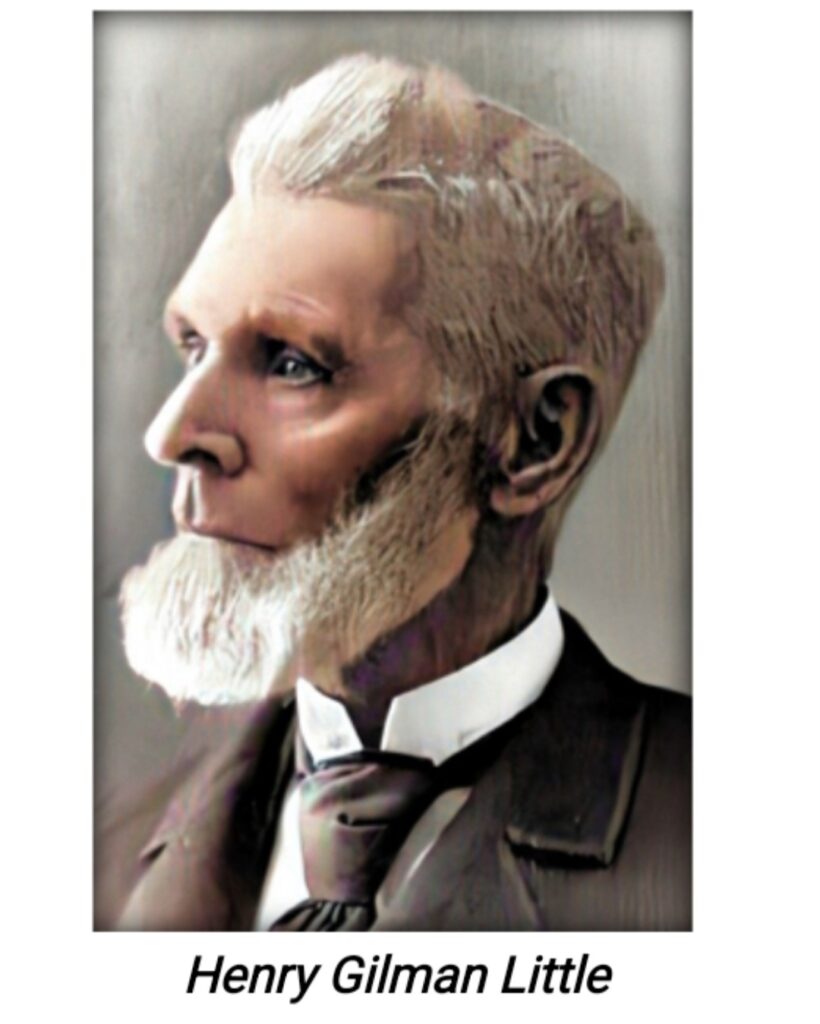
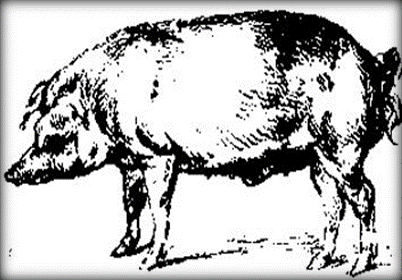
Before he came to the colony in 1837, Wethersfield and Kewanee founding father Henry Gilman Little had accumulated a drove of hogs in French Grove in Peoria County. After arriving in the colony, his passel grew, and Henry agreed to furnish another colonist all of the pork he needed. The hogs were decently sized, but lacking in fat since they could only graze on the prairie.
Then Henry had to leave home for a week-long trip. At the time, Henry’s family had a boarder named Joe, who was erecting the colony’s mill in 1839. (“Joe” was likely Joseph Davis based on census records.) Henry gave Joe directions to keep the other man’s family and Henry’s extended family supplied with pork during his absence.
When Henry returned, he asked Joe to account for his stewardship. Joe said he butchered the first day.
Henry:
“What the next?”
Joe:
“It rained, sir.”
Henry:
“Well, what the next?”
Joe:
“I butchered, sir.”
Henry:
Butchered again, eh?”
Joe:
“Yes sir.”
Henry:
“What the next day?”
Joe:
“I drove the hogs up so as to have ’em handy.”
Henry:
“Well, Joe, (getting a little fidgety), what did you do the rest of the time?”
Joe:
“I – butchered, sir.”
Not exactly what Henry wanted to hear happen to his hogs!
By 1839, some of the colonists’ hog production allowed them to take that which they didn’t need to market in order to buy needed supplies otherwise unavailable in the colony.
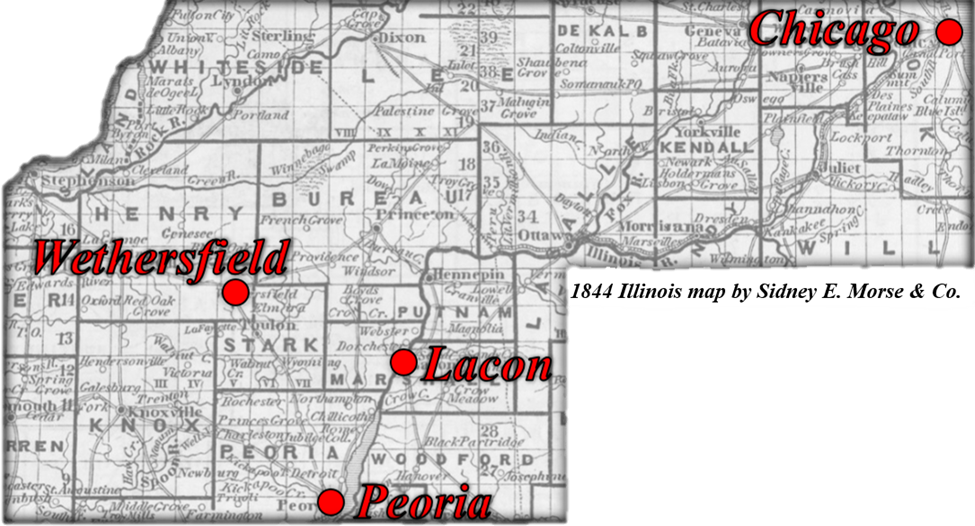
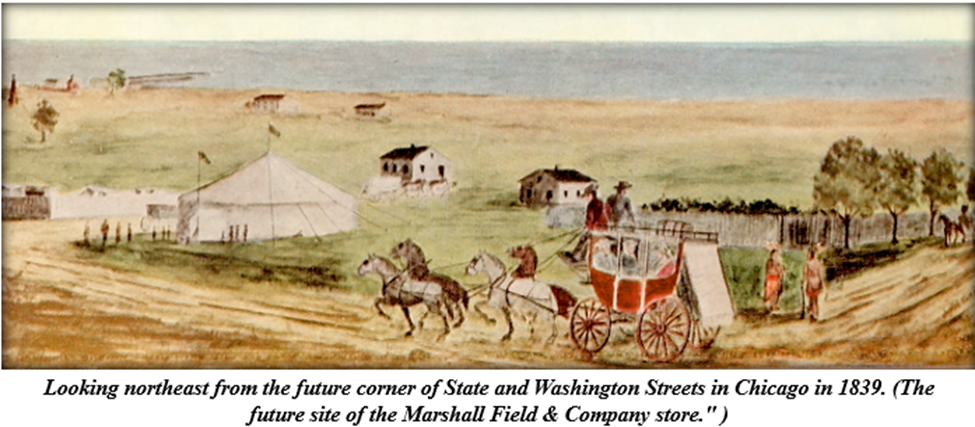
The colonists would organize a drive to Lacon, Peoria or, eventually, to Chicago. There would be a couple of colonists mounted on horses, others walking on foot (usually the older children) and a wagon with supplies for the three-week trip to Chicago, traveling 10 to 12 miles a day. To encourage the hogs, the wagon would travel in front and the wagoner would occasionally throw out ears of corn. At night, the drive would stop near or in a town along the way where the hogs might be corralled. One traveler at such a stop described watching a drove of 1,000 hogs eat their evening meal:
“The music made by this large number of hogs, in eating corn on a frosty night, I WILL NEVER FORGET!”
Upon the colonists’ arrival to market after camping out through whatever weather accompanied them, they would search out buyers, getting perhaps one to two dollars and twenty cents per hundred-weight. They then would shop for the supplies before a much quicker trip back home.
The hogs served other purposes around the colonists’ homesteads. For instance, Henry talked about one of his sow hogs and its encounter with a rattlesnake. The rattler was laying coiled beneath a spreading oak, its broad, combative head raised and his forked tongue darting in defiance of the sow which had discovered him. As Henry arrived on the scene, the sow, with its bristles erect and tusks bare, circled the snake, gnashing her teeth, grunting, and snarling with rage. The sow would feint attack and, when it finally was within reach, the snake sprung its entire length, fastening his fangs in her fore leg. The sow squealed but quickly disengaged
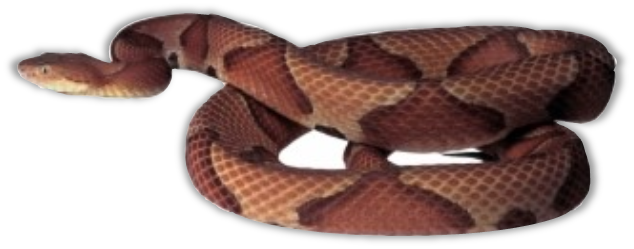
herself and her foot was immediately on the snake’s neck. An instant later, the sow snapped off the rattler’s head. Henry said that to those who had not had the chance to observe such interactions, it was hard to imagine. But the colony’s hogs were nearly impervious to rattlesnakes, and Henry’s story is but one of many Illinois settlers could tell with pride about their swine’s dominance over rattlers.
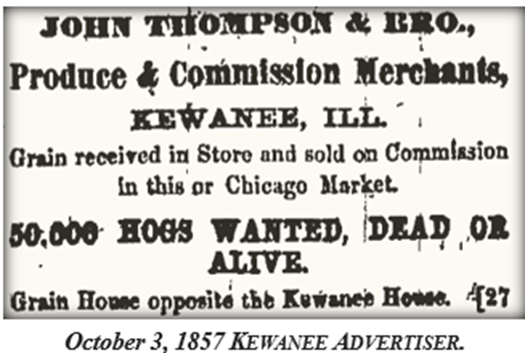
In 1854, Kewanee and the railroad arrived on the Henry County prairie virtually together, albeit the latter spawning the former. Now, in addition to shipping coal to all points along the line, the railroad could ship hogs – lots of hogs – to Chicago. Soon, merchants like John Thompson & Brothers served as brokers for the hog producers and the processors in Chicago.
By 1860, hogs outnumbered everyone and everything in the county according to statistics compiled by mapmaker P. Holmes.
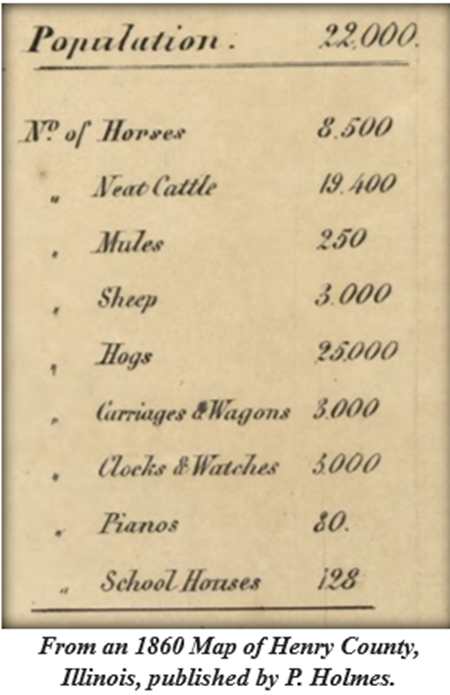
Hogs were winning the Midwest. And soon, “hog day” was born. Well, sort of.
The Kewanee papers began reporting on hog day, the day hogs were driven into Kewanee for transport by rail to Chicago:
· “BIG HOG DAY. – Monday last, the 6th of January, 1879, was the ‘biggest’ hog day in the history of Kewanee. Eleven hundred and seventy-five hogs were brought to this market, and shipped, the average weight of which was 375 lbs., much above the usual average. To bring these hogs to town required 300 teams, and they filled 25 cars. It would seem hardly probable that an equally large number will again be shipped in one day, this season.” January 9, 1879, Kewanee Independent;
· “Last Monday was hog day. Twenty cars shipped! Might just as well have had fifty, for there are hogs enough in the country.” January 11, 1879, Kewanee Courier;
· “Monday was the big hog day for this year. Sixteen carloads were shipped, and the average weight of several of the lots was something remarkable. . . . Six car loads were shipped on Tuesday. . . . The total weight of all the hogs shipped Monday and Tuesday was 406,000 pounds.” February 25, 1880, Kewanee Courier;
· “Monday was the big hog day of the season as yet, we believe. The streets were crowded with teams, and the restaurant keepers reaped a harvest.” January 11, 1882, Kewanee Courier;
· “Last Monday was the big hog day of the season in Kewanee. The streets in the vicinity of the stock yards were literally packed with teams all day unloading, and there was a hog team for every hitching post all over town. Twenty-two cars of hogs and cattle were loaded during the day, we believe.” January 17, 1883, Kewanee Courier.
And the news stories continued on and on and on, regularly reporting on and capturing the importance of the hog to Kewanee.
So, “hog days” have been occurring in Kewanee regularly since its birth. Then, a century later, we finally began celebrating the economic benefit that hog production provided for our hometown.
In about a month, there’ll be carnival rides, the world’s largest outdoor pork barbecue, a parade, entertainment acts, and so much more. As you enjoy all of the activities and that succulent pork, take a moment to look around and imagine how it all started.
(Some of this story appeared in my book, The History of Wethersfield 2.0. It’s available on Amazon and from the Kewanee Historical Society, and you can check it out from the Kewanee Public Library.)