(This is a reprint of an earlier article to which I’ve added some art. I think it’s timely.)
He came from what was probably then considered one of those “sh*thole countries.” You know, a “countr[y] whose government [is] a complete and total catastrophe, the worst, most corrupt and inept anywhere in the world,” one which is “totally broken . . . .”
Even politicians in his homeland knew that the country’s economy was in disarray, with little or no work available for the next generation. One local leader even had the temerity to say that its citizens “have not been emigrating from our homeland, we have been fleeing from here in desperation!”
So, he and others fled to the United States.
When they crossed into the U.S. and got past the immigration authorities, they headed to an inland town where some of their fellow countrymen had found work. They found jobs too, working in a factory. (The factory’s owner knew that many of his workers were immigrants, and so posted signs in languages the immigrants could understand.)
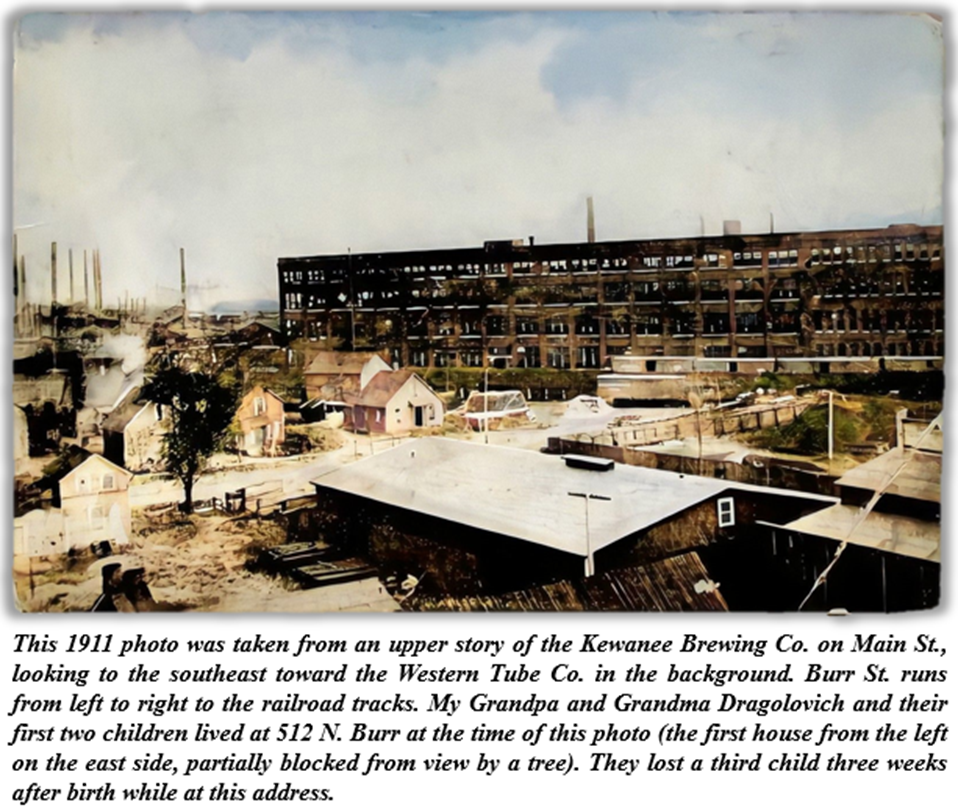
The immigrants all lived on the “wrong side of the tracks.” The housing was crowded, with workers and families living in some places intended for only a third of their number. In some hovels, they even rotated use of the beds, three shifts of sleeping matching the factory’s three shifts of work.
The onslaught of immigrants also led to an increase in crime.
But it wasn’t all so rosy.
When the economy took a dive, he and his new girlfriend had to go elsewhere to find work, ending up three states away.
They had their first kid, illegitimate, of course. Because of intolerable conditions and a turn-around in the economy, they headed back to the first town they had arrived in a few years earlier.
They had a second kid, then a third, and then they finally decided to get married. They had a couple more kids, but had to move again to follow the available work. Over the next half-dozen years, they moved multiple times, usually returning to their adopted “hometown” but again having to leave to try to get ahead. They ended up with ten kids.
Finally, nearly twenty years after they immigrated, they were able to buy a home, albeit still on the wrong side of the tracks, and they settled down permanently.
He worked hard, but he also supplemented his meager income with some petty crime. Unfortunately for him, he soon was caught and paid the consequences for his misdemeanors.
But eventually, after nearly thirty years in the country, he finally figured out the straight and narrow.
It was about time, Grandpa.
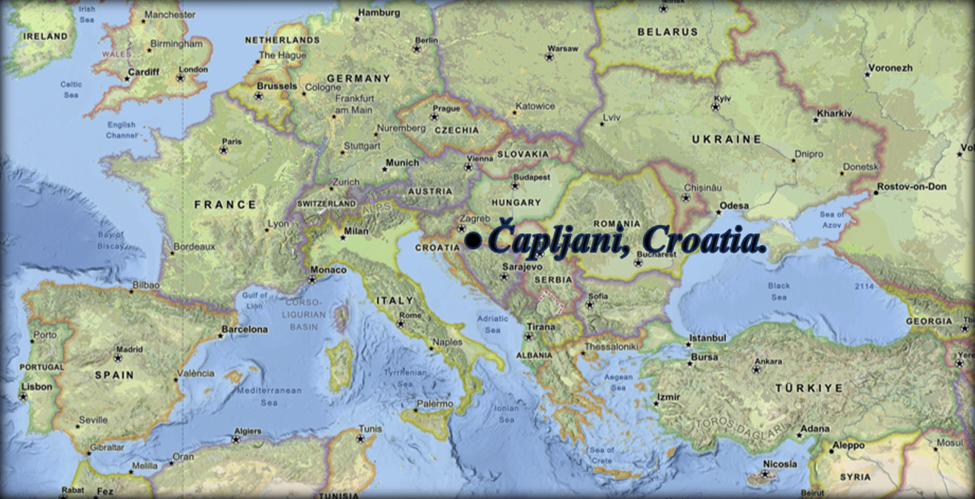
My Grandpa was born in 1884 in Čapljani in what was then part of the Austro-Hungarian Empire, one of the poorest regions of southeastern Europe. He, his parents, his siblings, and their extended family were crowded together on two small parcels of land. They were able to raise vegetables and keep chickens, perhaps a cow. But they all had to work for other, more well-to-do farmers in the region. There was little hope for the adults and almost no hope for the next generation. A leader of the peasants was the one who described above why people were fleeing the country.
As a result, almost 100 people, mostly young men and including my Grandpa, left the small village and surrounding area to come to America between 1903 and 1915.
I’ve written before about chain migration from the old country. But once the immigrants got here, life was no bowl of cherries.
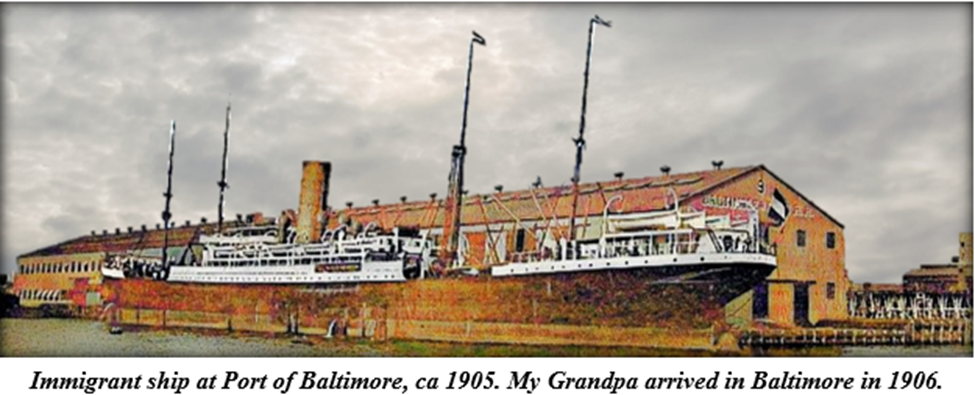
My Grandpa arrived in Kewanee in 1906. He met my Grandma shortly after he arrived. A year later, the Panic of 1907 struck, and Kewanee industry shrank to almost half of its previous size, causing unemployment for thousands.
My Grandpa and Grandma, along with my Grandpa’s brother, had no choice but to move to find work. They ended up in northern Minnesota where they worked in the iron ore mines. My first uncle was born there, but the bitter cold of winter drove them away and, coupled with a recovering economy, they returned to Kewanee.
As the family grew over the next dozen years, Grandpa chased work around Henry and Mercer counties. He primarily worked in factories – Western Tube (later Walworth) and Kewanee Boiler when the family could live in Kewanee, and tile factories when living in Aledo, Griffin, and Windsor. They weren’t glamorous jobs, but they put food on the table and kept a roof over their heads.
When the Volstead Act passed Congress and Prohibition formally began, my Grandpa, like many other Kewaneeans, set up a still and made liquor. And like many other Kewaneeans, Grandpa got caught and paid his fines.

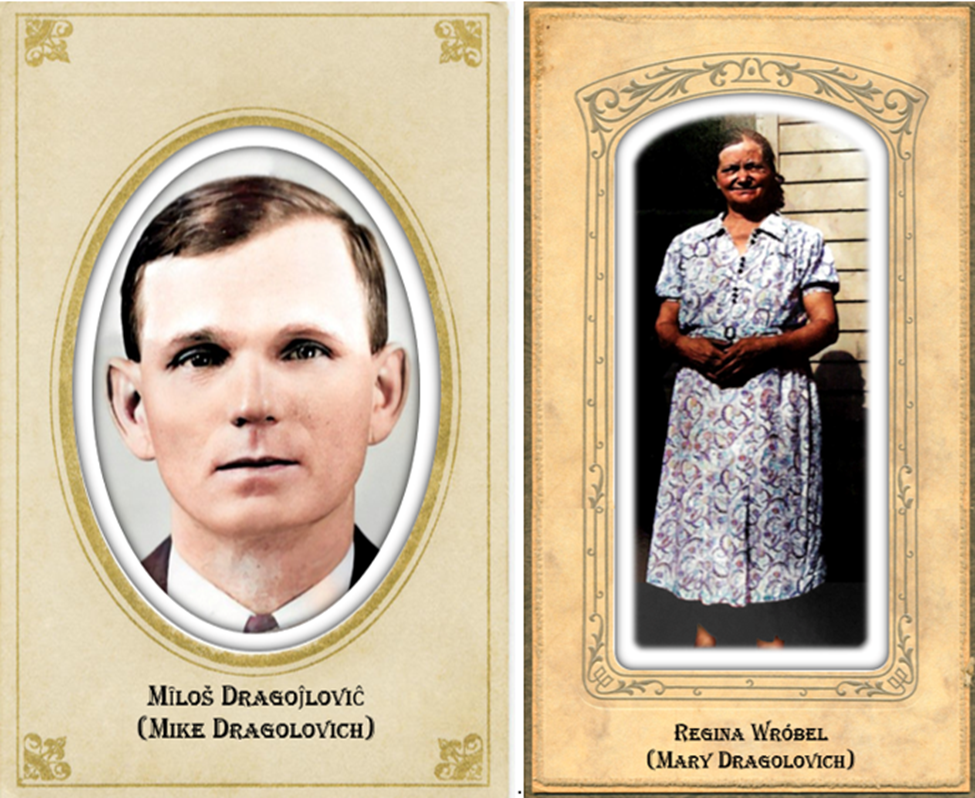
My Grandpa and Grandma ended up raising 10 kids to adulthood, all with a strong work ethic, a strong faith, and a strong belief in the importance of family. Those kids raised their kids with the same values.
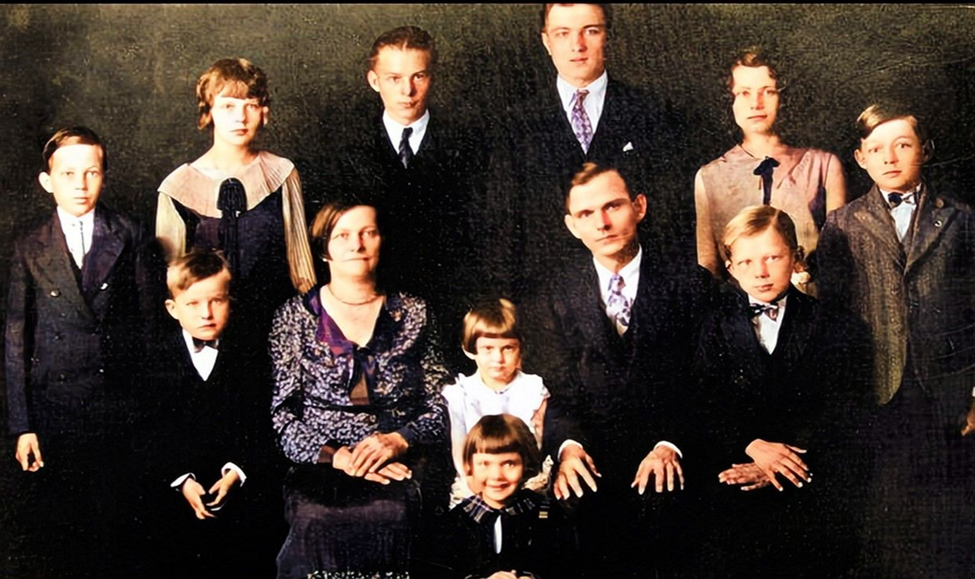
Grandpa and Grandma, like us, weren’t perfect. But they weren’t living in a perfect world, either. They did their best for themselves and their families. And we’re the result.
I doubt there are any Kewaneeans today who are not the descendants of immigrants. Not a single one. All of our ancestors were immigrants looking for better lives for themselves and their families.
So, if we all think we turned out OK, then we have to give a healthy dose of the credit to our immigrant ancestors. They also helped make Kewanee the city it became, and helped make the U.S. the country it became.
In fact, you might say they made us great, they made Kewanee great, they made America great.
Not bad for a bunch of immigrants.
Ronald Reagan once talked about a letter he received just before leaving office:
“I don’t know why he chose to write it, but I’m glad he did. He wrote that you can go to live in France, but you can’t become a Frenchman. You can go to live in Germany or Italy, but you can’t become a German, an Italian. . . . But he said anyone, from any corner of the world, can come to live in the United States and become an American.”
I, for one, think America is already great, and I think we could do worse than allowing what’s worked in our favor in the past to continue to work in our favor now.