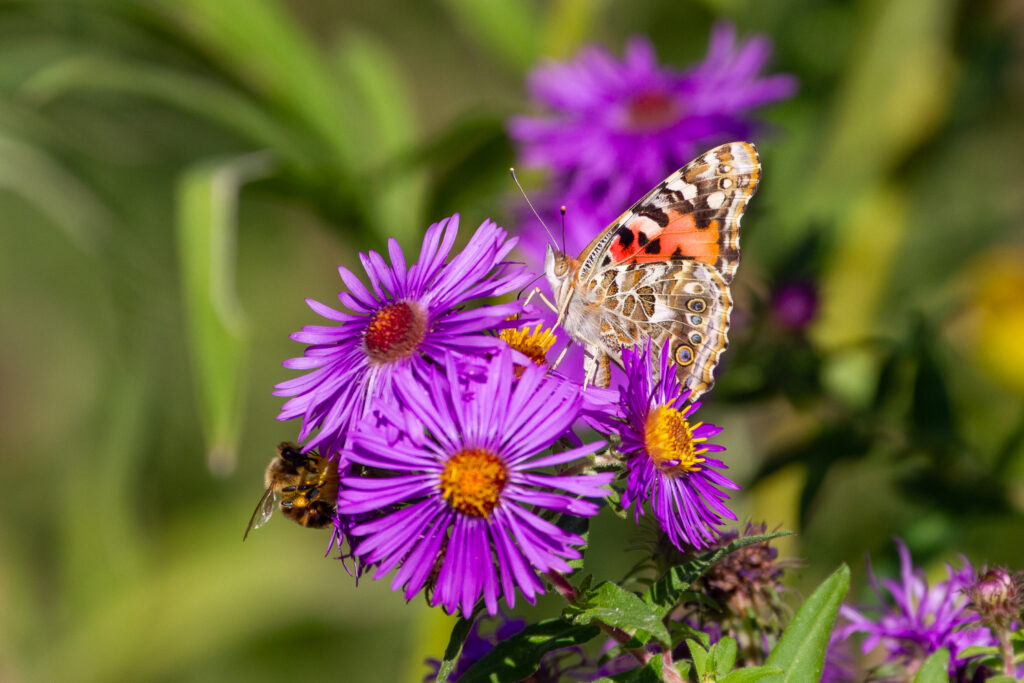
When people hear the phrase “fall colors,” they tend to picture leaves—the reds and browns of oak leaves, the golden-yellow of hickories and walnuts. Certainly, autumn leaves deserve such recognition, but they aren’t alone in bringing rich colors to the landscape. Late-blooming native wildflowers have their own vivid hues to share, and what’s more, they draw in a host of colorful insects.

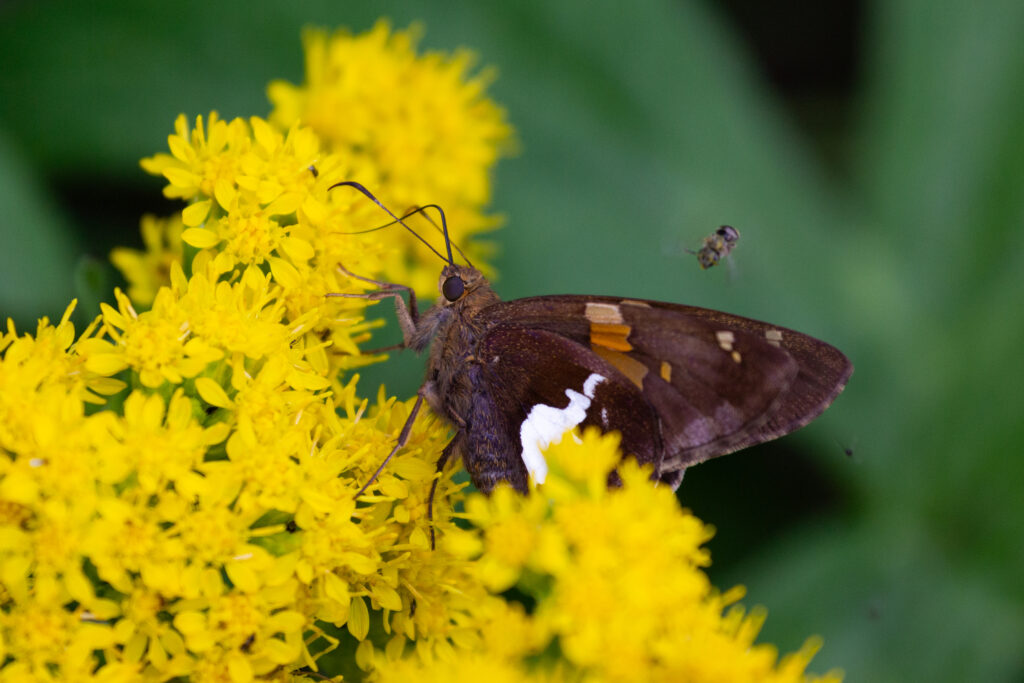
In the month of September, goldenrods blaze like torches across the garden. Their small, bright blossoms are a beacon for every type of pollinator, from fabulously colored wasps to orange soldier beetles, to many species of moths and butterflies. I always look forward to walking past the goldenrod flowers, searching for whatever beautiful little creatures I might see.
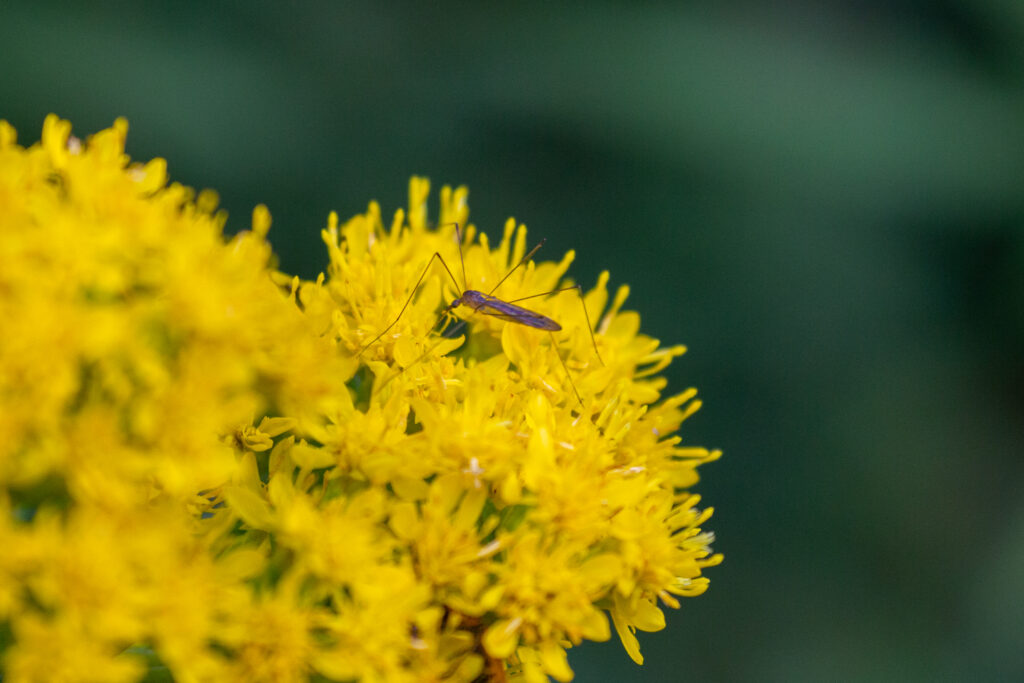
This year, one highlight was a tiny cranefly, drinking nectar, its proboscis quivering like the most delicate of sewing machine needles. Until that day, I’d only ever seen craneflies near a porch light, or mysteriously trapped inside my house (or tent), in need of rescue. It was delightful to spot one going about its normal, natural routines!
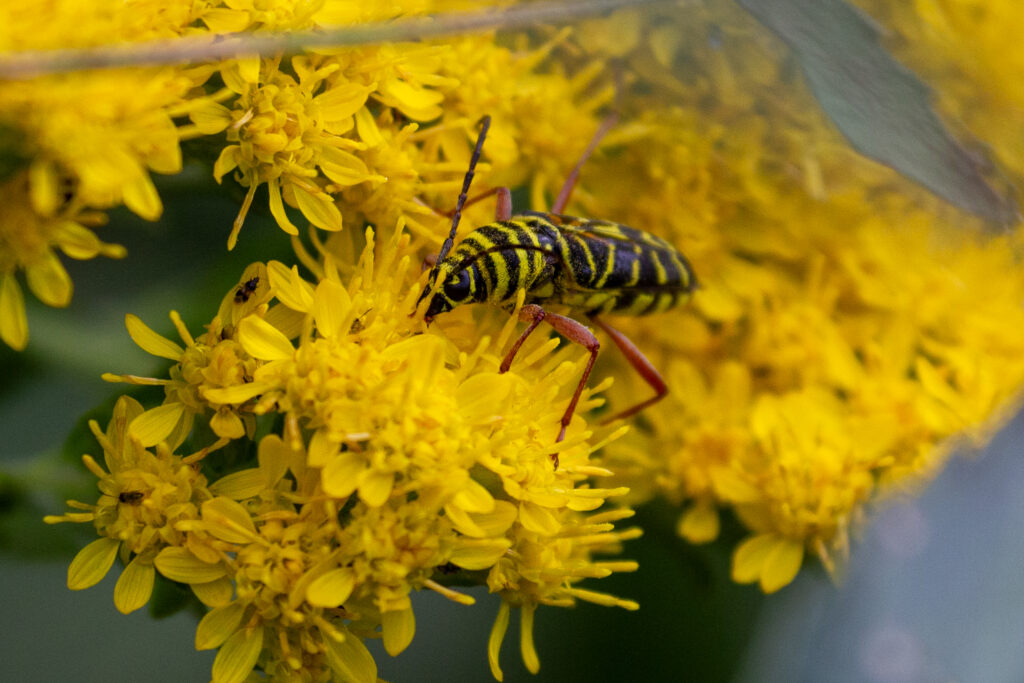
My favorite insect to find in this season is the locust borer beetle, a gorgeous long-horned beetle with black-and-yellow stripes—a color pattern that mimics some bees and wasps and therefore offers protection to the beetles. I only ever see them on goldenrod flowers. As soon as the yellow blooms open, these lovely beetles appear as if by magic, usually at least one or two per plant. This year was a lower year. I had to search high and low among my goldenrods to find even a single locust borer beetle, when usually I see many. I don’t know why their numbers were so few this year, and I can only hope that next year, they will rebound.
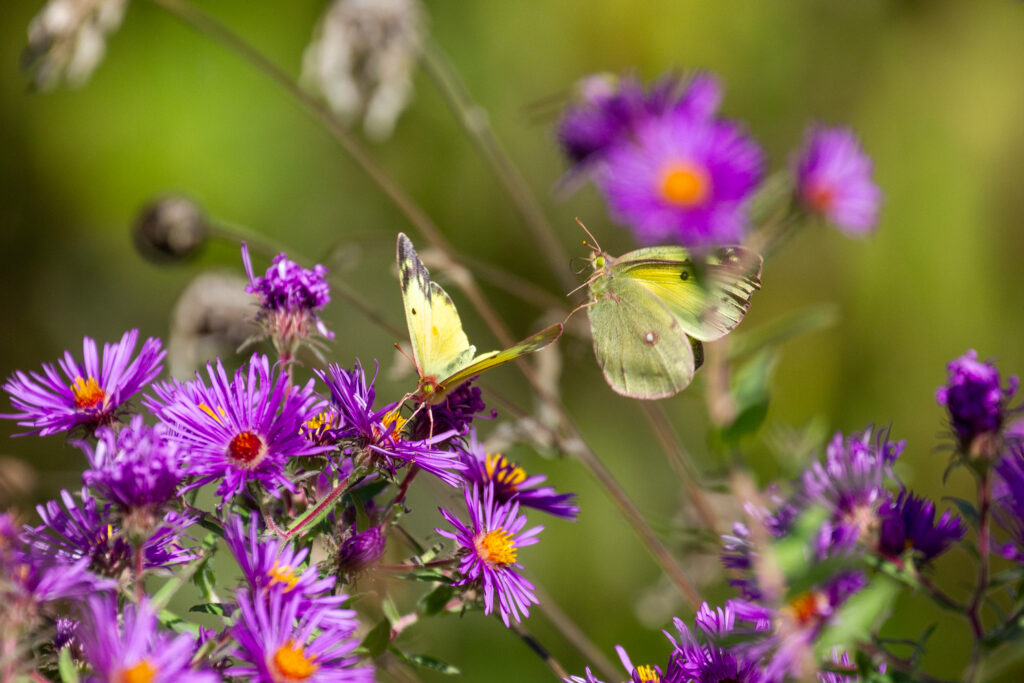
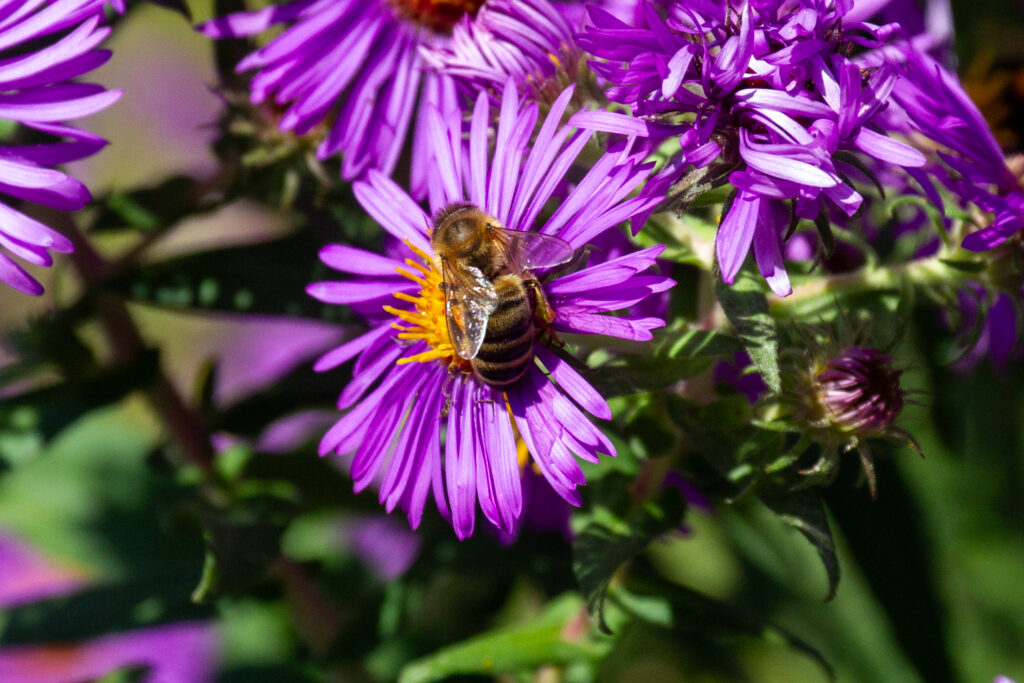
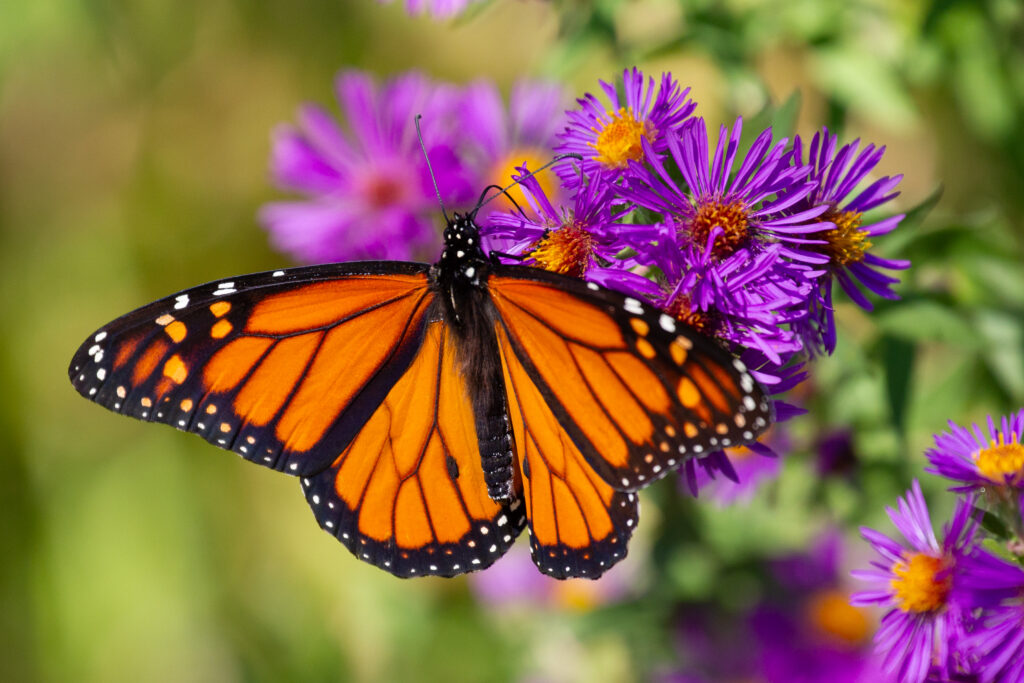
While goldenrods are still blooming, and even as they begin to fade, New England asters join with their own flash of color. These plants grow 4-5 feet tall, forming what look like bushes covered in deep purple flowers, each with a golden center. These blossoms, too, are wildly popular with pollinators.
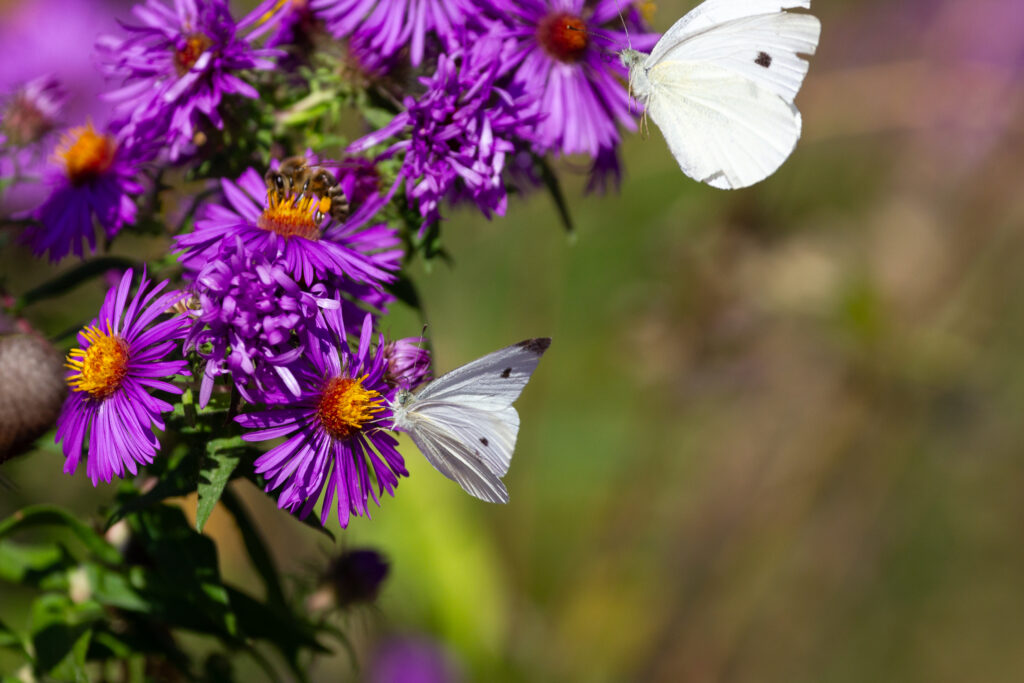
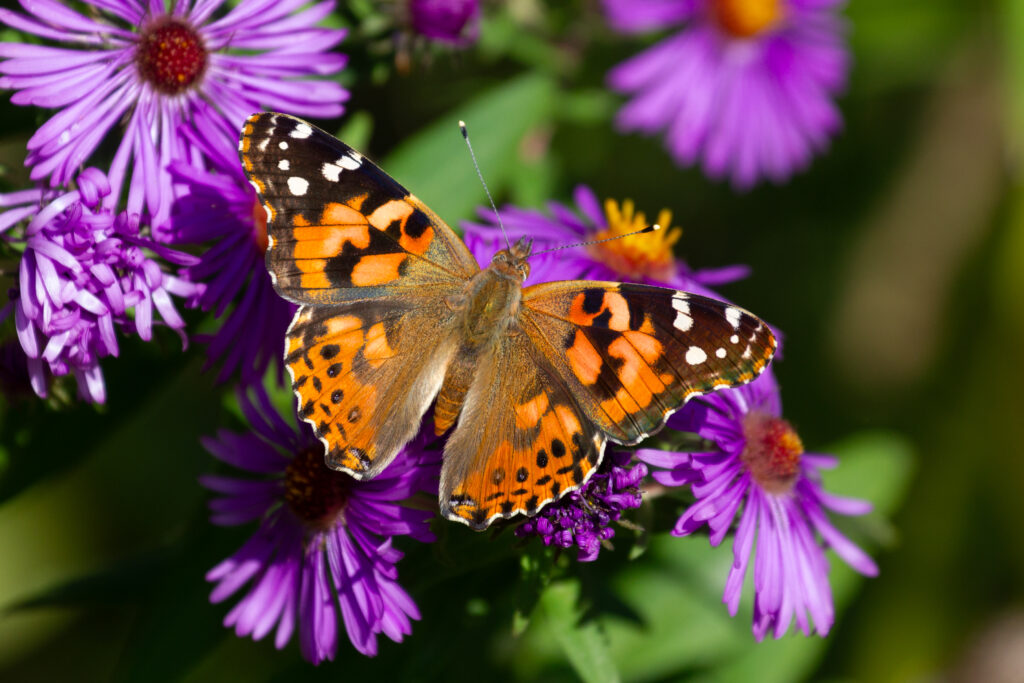
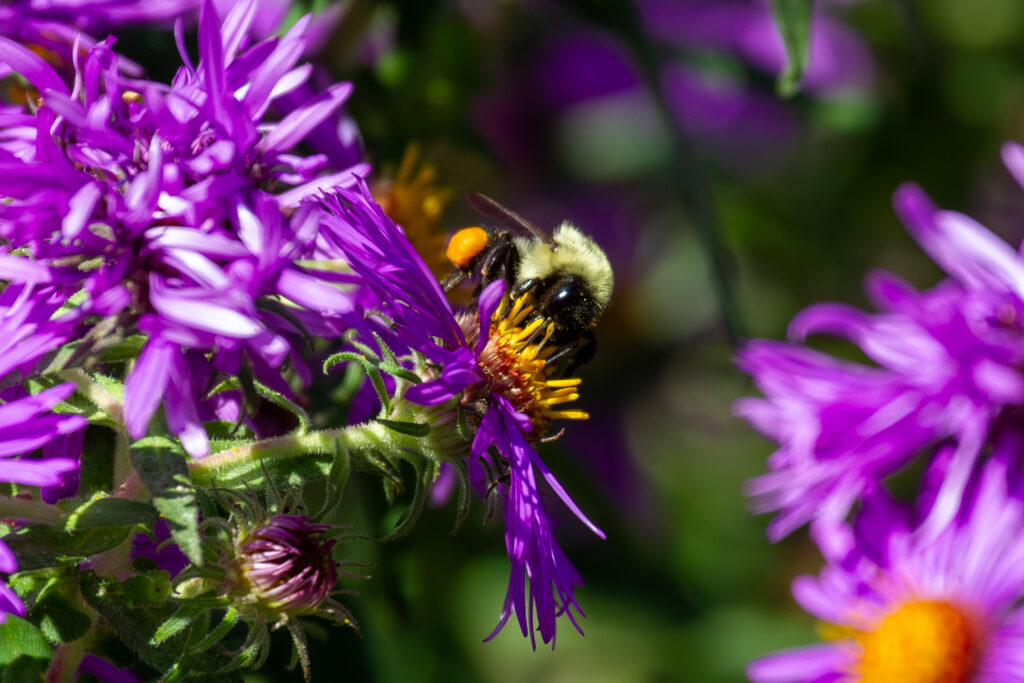
On a recent warm afternoon, it seemed that every aster flower had at least one bee or butterfly drinking nectar or collecting pollen. Sometimes they feasted in harmony, while other times they jostled each other for position. All were in near-constant motion, busy with important tasks—and none more so than the monarch butterflies, seeking fuel for their long flight to Mexico. The movement of all these insects as they bustled from flower to flower made a living wind around the asters. I watched them, mesmerized, until the sun drove me indoors.
It has been a strange, hot, dry autumn. The world feels disjointed, with temperatures lingering in the high eighties even as the calendar moves into October. These last flowers of the season—these other fall colors—bring a touch of normalcy along with their beauty.
In a time of strangeness, the familiar always feels like a friend.