
For just a whisper of time in early spring, it’s possible to see one of our strangest and most wonderful wildflowers: the skunk cabbage.
Skunk cabbages grow in wetlands and other moist habitats. I know of two places nearby where they bloom reliably. One is out at Johnson-Sauk Trail State Recreation Area, in a low spot just past the Waterfowl Viewing Area. The other is at Bennett’s Terraqueous Garden in East Peoria. I’m sure there must be still others, but I haven’t scouted them out. At Johnson-Sauk Trail, the skunk cabbage blooms are so close and easy to see, it’s hard to imagine a lovelier display.

I watch for them starting in late February or early March. At that time of year, the signs of life are subtle, easy to miss. The air might be chilly; there might even still be snow on the ground. Leaves are just a burgeoning hope on the ends of branches. Yet around a shallow pool, something is different than the week before.
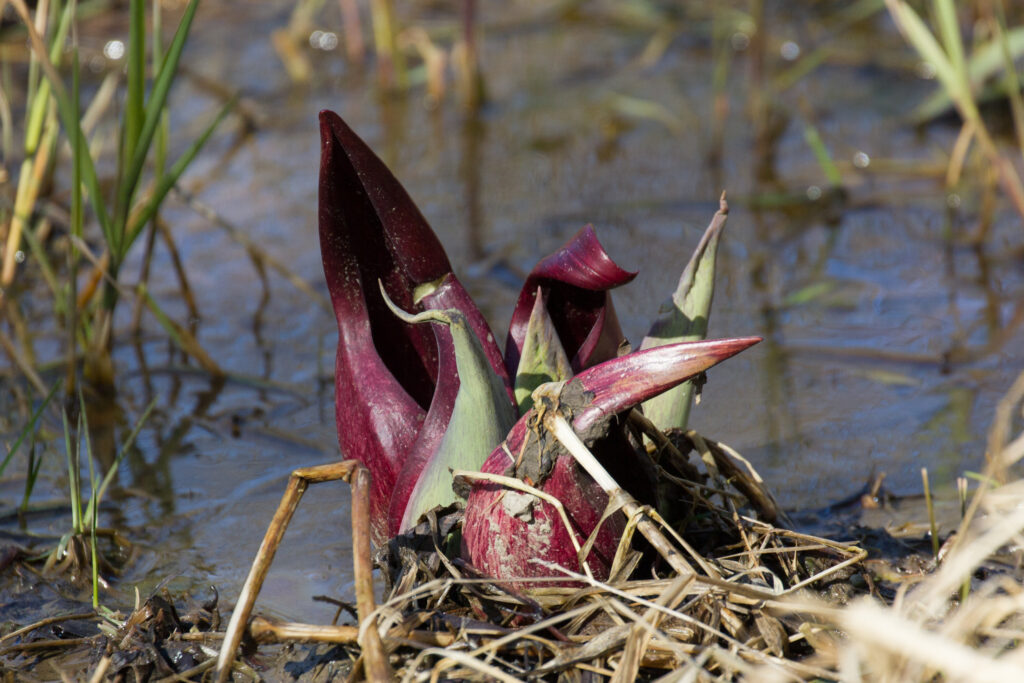
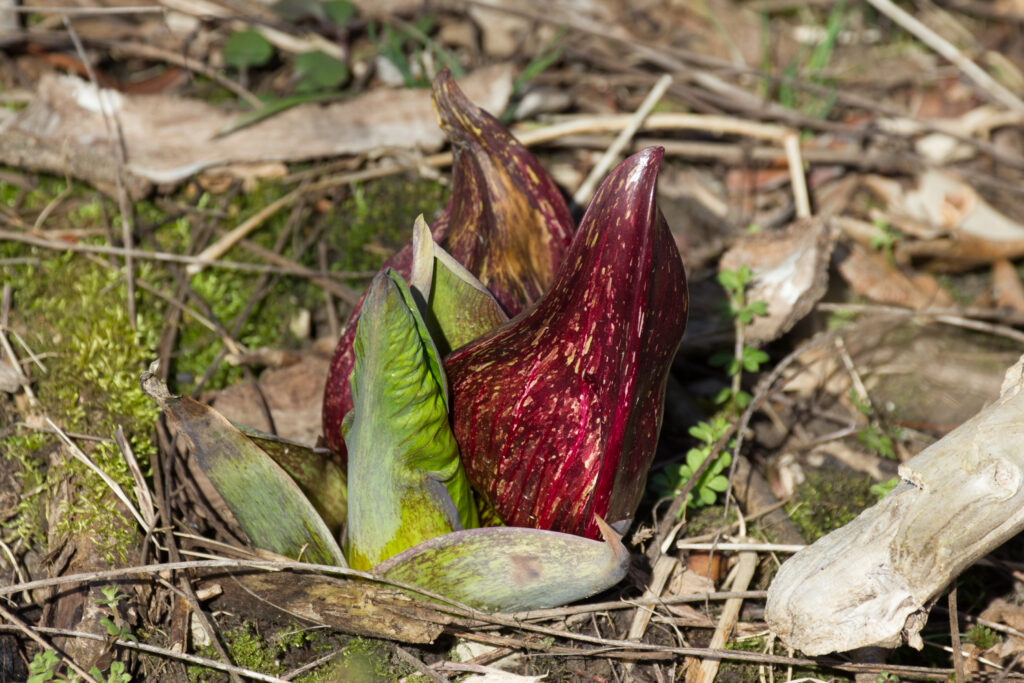
Like ceramic sculptures, they rise from the water’s edge. Each bloom has a gold-flecked sheathe of deep maroon (called a spathe) enfolding a pale spike of flowers (called a spadix). At first, I see only one, but as I stand there, gazing around the pool, more and more pop out at me. Some are just barely emerging from the earth, while others stand several inches tall.
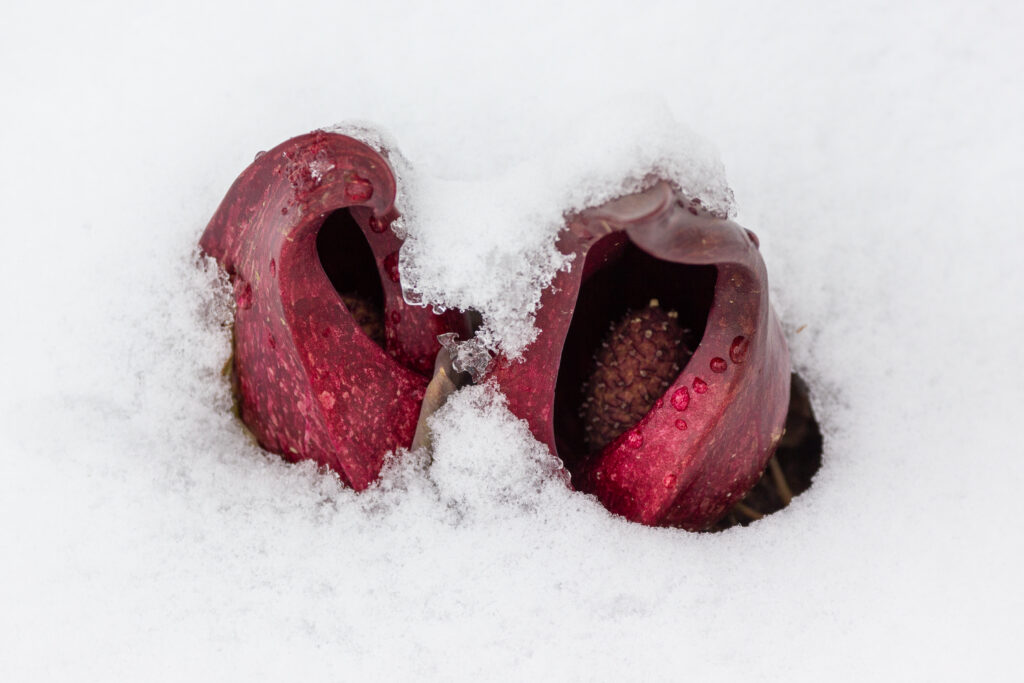
These earliest of spring wildflowers have a rare adaptation: they can melt snow. How amazing is that? Skunk cabbages can actually generate heat! Their warmth and their smell attract pollinators such as flies and beetles.
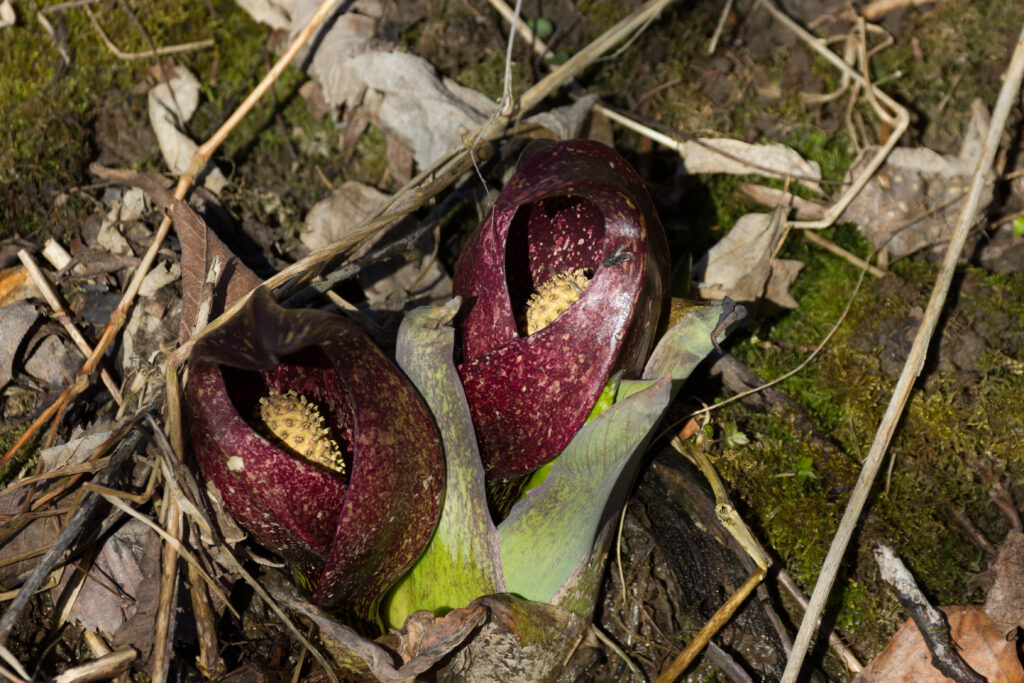
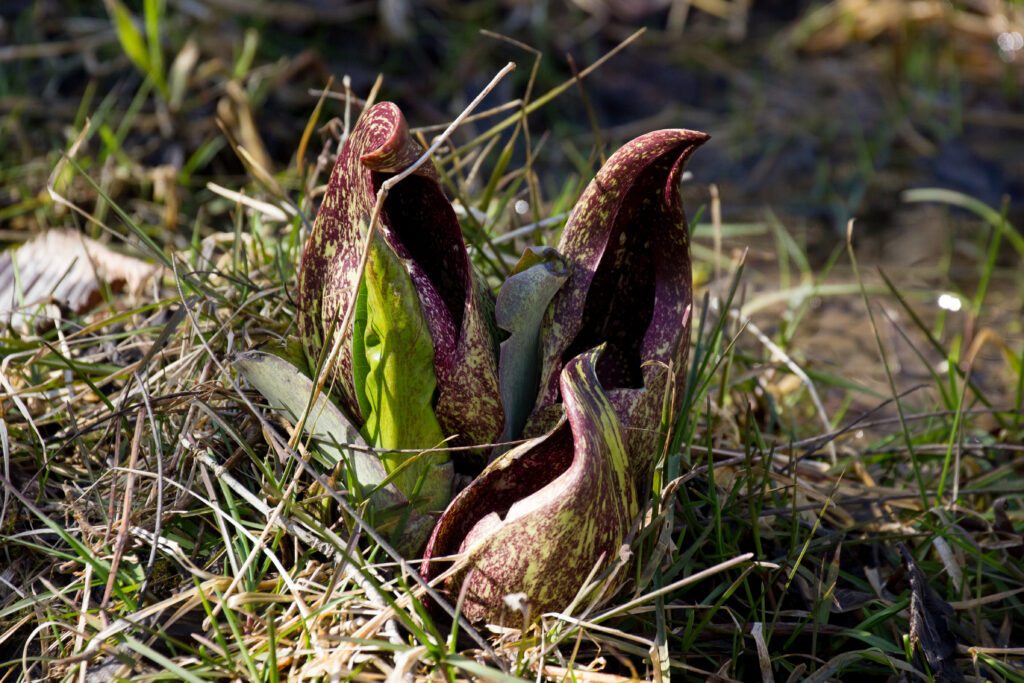
For as long as I can each spring, I visit the skunk cabbage blooms and stand in awe. Inevitably, though, as the season progresses, I notice a browning—a fading—of the purplish spathes. The time of flowering has passed. Green leaves push upward from the earth, leaves which may grow to be a foot wide and three feet tall. By late spring and into summer, these tufts of cabbage-like leaves add a unique character to the bottomlands of Johnson-Sauk Trail. It’s all part of a cycle of natural beauty.
I can vouch that as of March 15, 2025, the skunk cabbages were blooming. Now is the time to go out and see these unique wildflowers!
Threats
While skunk cabbages are widespread, being native to much of eastern North America, they face several on-going threats. First of all, much of their habitat has been lost or destroyed. A 2024 report by the US Fish and Wildlife Service states that wetlands now cover only 50% of their historical area, with losses accelerating since 2009. Many have been drained or filled in for development. I also worry how the changing climate will affect skunk cabbages and other wetland plants. Prolonged droughts, in particular, could devastate them.
What we can all do to help
Wetlands provide many services to people, from filtering groundwater to absorbing excess rainfall. We need these habitats to be healthy. While wetlands and the unique life forms they shelter are at risk, there are steps large and small that we can all take to help them thrive.
· Contact lawmakers at all levels of government (local, state, and national) to urge them to support laws and practices that protect wetland and streamside habitats.
· Volunteer with or donate to organizations that protect and/or restore wetlands, such as The Wetlands Initiative, the International Crane Foundation, or The Nature Conservancy.
· Explore offerings by the University of Illinois Extension Offices, such as volunteer opportunities or the Master Naturalist program.
· If you live near a pond, wetland, or waterway, remove invasive plants and encourage native plants to grow.
· No matter where you live, collect outdoor trash to keep it out of waterways.