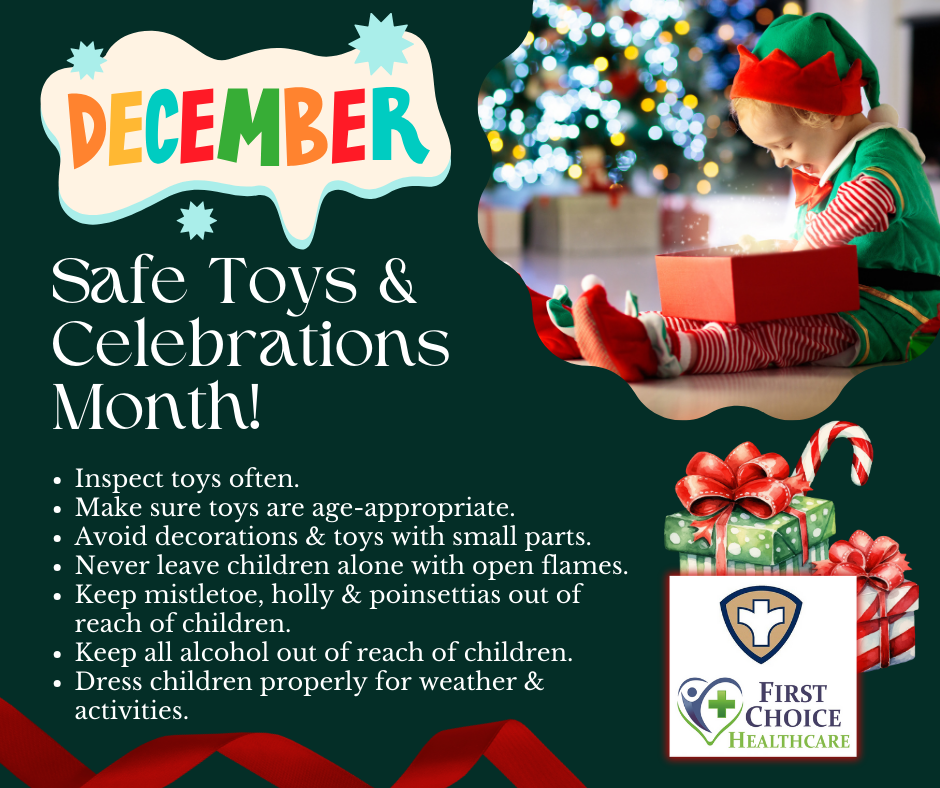
December is National Safe Toys and Celebrations Month
December has been designated National Safe Toys and Celebrations Month. The hustle and bustle of the holiday season can be a fun, exciting time. However, holiday decorations, parties and cold weather can pose threats to children. Therefore, the Health Department encourages you to keep these safety tips in mind while preparing for the holidays:
- If you have a real tree, make sure the tree stand is always filled with water so it does not dry and pose an increased fire hazard. If you buy an artificial tree, make sure it is made from fire-retardant material. Make sure the stand is flat on the ground, and decorate the tree to equally distribute weight.
- Do not leave children alone in a room with lighted candles, matches, lighters, fireplaces or any other sources of flame or heat.
- Keep decorations out of reach of children and secured to the wall. Any object small enough to fit through a toilet paper tube can obstruct the airway of a child.
- Keep mistletoe, holly berries and poinsettias out of reach of children as each is toxic when ingested.
- Closely supervise your child if he or she is helping you decorate, especially when handling lighting, ornaments and breakable objects.
- Purchase lights with the UL Listed mark which certifies that the product has been tested to meet safety requirements.
- Make sure your children’s toys are age-appropriate and the batteries cannot be easily removed. Batteries shaped like disks, or button batteries, pose a choking risk to young children.
- Avoid placing gifts under the tree that contain glass, perfume or cologne, poisonous substances or sharp materials.
- Keep alcohol out of reach of children. Quickly clean up leftover drinks.
- Dress your child properly for the weather, making sure that their hands, feet and heads are covered.
- Supervise children and make sure they wear the correct safety gear for sledding, skiing, snowboarding, ice skating and other outdoor activities.
Heather Aldred, RN Maternal and Child Health Supervisor said, “It’s important to think about safety even during the holidays. Carefully inspecting your home and taking care of any safety hazards can ensure you and your children have a happy, safe holiday season.”

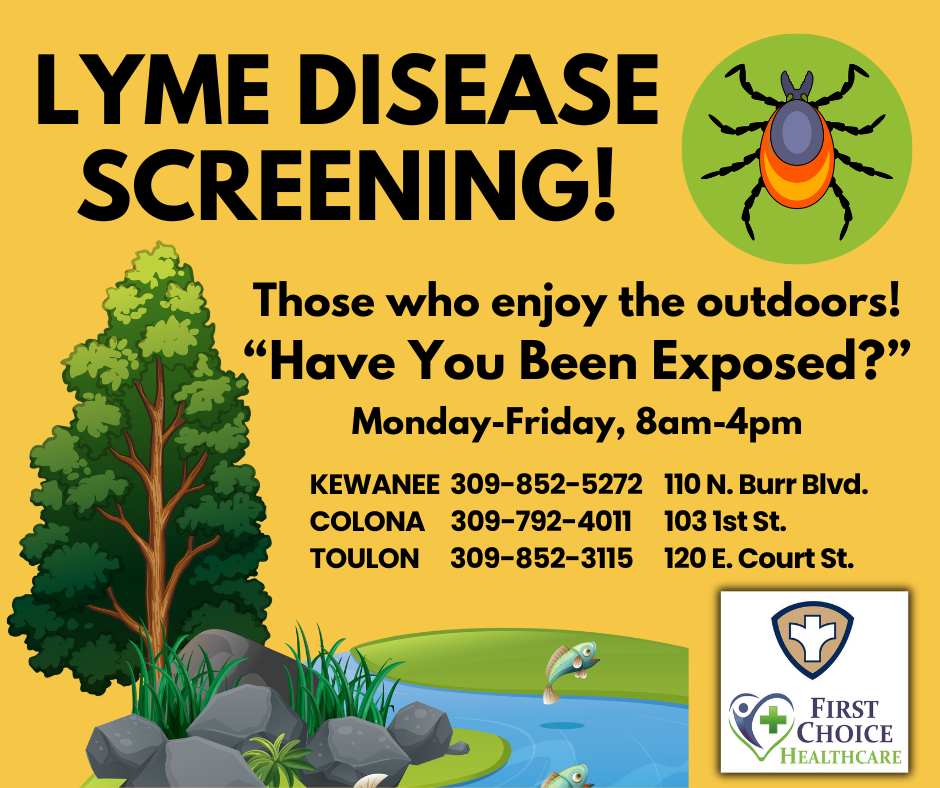
Lyme disease screening services available at clinics
As hunting seasons continue throughout Illinois it is vital to remember the importance of protection against ticks and tick-borne illnesses like Lyme disease. Ticks are active into the fall and early winter and pose a serious health risk to humans and pets.
Tick-borne diseases are on the rise in Illinois and Lyme Disease Screening is a great opportunity to be tested for tick-borne diseases that have been detected in the state.
Due to this continued risk, First Choice Healthcare has joined with MDL Labs and the Illinois Lyme Association to announce they have Lyme Disease screening now available at all of their clinic locations: Kewanee, 110 N. Burr Blvd., 309-852-5272; Colona, 103 First St., 309-792-4011; Toulon, 120 E. Court St., 309-852-3115, Monday through Friday from 8am to 4pm.
Most insurances are accepted. MDL labs files insurance claims, and participants will receive “in-network” benefits, including Medicaid and Medicare.
For appointments or for more information call the First Choice Healthcare Clinic nearest you.
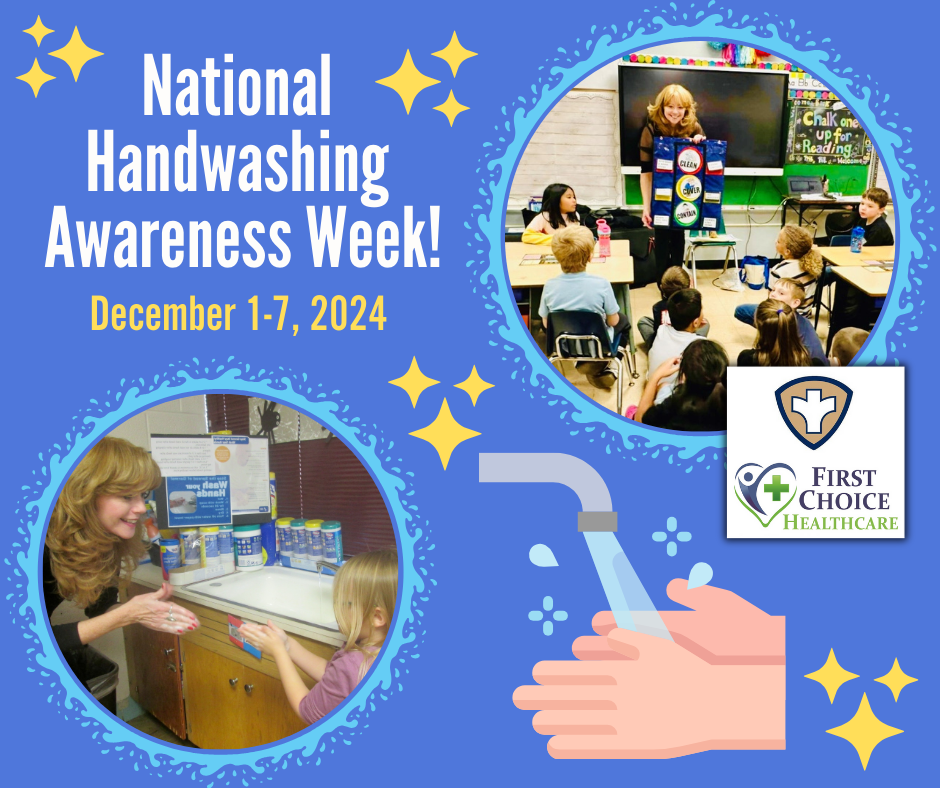
National Handwashing Week is Dec. 1-7
December 1-7, 2024 is National Handwashing Week and according to the Centers for Disease Control and Prevention, “Handwashing is one of the most important means to prevent the spread of infection.”
RaeAnn Tucker, Health Department Director of Health Promotion said, “What people need to remember, especially while mitigating the effects of Covid-19 and the cold and flu season; is that simple and consistent handwashing promotion and awareness is important for infection prevention, food safety, school health, personal health and disease prevention.”
Startling statistics to consider:
- 2/3 of adults in the US wash their hands after using the bathroom.
- 1 in 4 adults do not wash hands after changing diapers.
- Less than 1/2 of Americans wash hands after cleaning up after pets.
- 1 in 3 wash hands after sneezing/coughing.
- Less than 1 in 5 people wash hands after touching money.
- 1 in 3 E. coli occurrences is caused from not washing hands before handling food.
The Health Department staff notes that there are many critical times to wash your hands. A few examples are before eating, after the toilet, during food preparation, after handling animals, upon arriving home, after changing diapers, leaving the hospital or physician’s office and any time you think your hands are dirty. Use soap, running water, and scrub all surfaces of your hands for 20 seconds and dry with a paper towel. If a sink and soap are not available, use an alcohol-based hand sanitizer.
In addition, the Health Department reminds individuals to practice infection preventative measures; clean hands frequently, cover your nose and mouth when coughing, and contain the spread of the infection by staying home when you are ill.
For more information visit their website at www.henrystarkhealth.com or find them on Facebook at Henry and Stark County Health Departments or follow them On Twitter and Instagram.