On Jan. 1, a new law went into effect in Illinois which requires animal shelters and animal control facilities to waive the adoption fee for veterans for dogs and cats.
The Veterans Adoption Program Public Act (HB 2500), signed into law last summer by Gov. JB Pritzker, amends the state’s Animal Welfare Act and requires an animal shelter to waive adoption fees for veterans.

Although the wording is vague, the act appears to limit the number of dogs or cats adopted to one of each in a two-year period per veteran while not placing a limit on the number of veterans who may receive pets as long as they provide proof they are a veteran and comply with the shelter’s adoption policies.
There is no mention in the law of any mechanism whereby the shelter, many which are non-profit, may recover the fee, which usually pays all or a portion of their cost for spaying or neutering, microchipping and vaccinations.
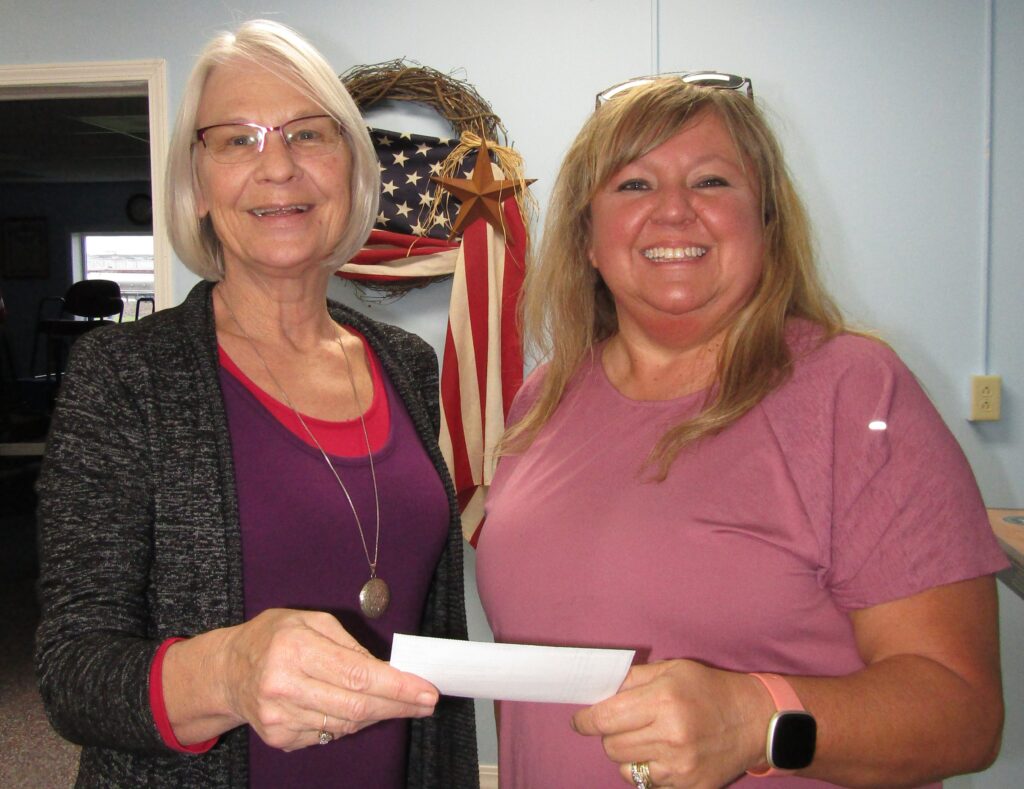
The topic was discussed Wednesday night when the Galva American Legion Auxiliary presented a check for $800 to Louise Harrison, president of the Henry County Humane Society-Kewanee Chapter, which operates the Kewanee Animal Shelter.
While in favor of supporting veterans and anything that can be done to help them, she was nonplussed by the way the state has handled implementation of the program with no communication before or after the requirement was passed into law.
Harrison said the Kewanee Animal Shelter’s adoption fees — $100 for dogs and $50 for cats — is lower than most shelters and doesn’t cover the entire cost of preparing a dog or cat for adoption, as required by the state. In addition to spaying and neutering, microchipping, vaccinations for various diseases including rabies and heartworm, the cost of any veterinary services a dog or cat may require are also included in some cases.
She wishes that legislators had reached out to shelters statewide for input on the bill beforehand and provided more and clearer information on how it works after it was passed. In addition to no provision on how many dogs or cats can be adopted, there is apparently no geographic requirement.
“A bus load of 50 could come down from Chicago looking for pets in Kewanee,” Harrison said, with the supporters of the local shelter absorbing the waived adoption fees.
Meanwhile, another amendment (Senate Bill 3537) was introduced in February and is making its way through the legislature. That bill specifies that fees for spaying and neutering “shall be waived” in addition to adoption fees, which were only stated in HB 2500, apparently in the event that some adoption fees may not include those procedures.
Harrison said the shelter relies solely on donations, fundraisers and volunteers. They receive no federal or state tax money. The shelter also has to pay for food, utilities, and veterinary services, when necessary, in addition to other expenses.
Harrison thanked the Galva Legion Auxiliary for providing the funds which will help them serve as many veterans as possible until they can learn more about the specifics of the program, and possibly find a way to recover some of the costs.
Darci Gustafson, Auxiliary president, said they heard about the program from Dr. Colleen Lewis, DVM, Lead Veterinarian at In the Veterinary Sciences Center at Black Hawk College East Campus, who is a member of the Auxiliary after she had learned about the new law.
“We are all about pets and vets,” said Gustafson, “and are glad to help out.” Harrison said the shelter has collaborated with Dr. Lewis providing dogs and cats for various classes.
More about the Kewanee Animal Shelter, including information on adoption policies and a fee schedule, can be found on their website, hchskewaneeshelter.org, or find them on Facebook.