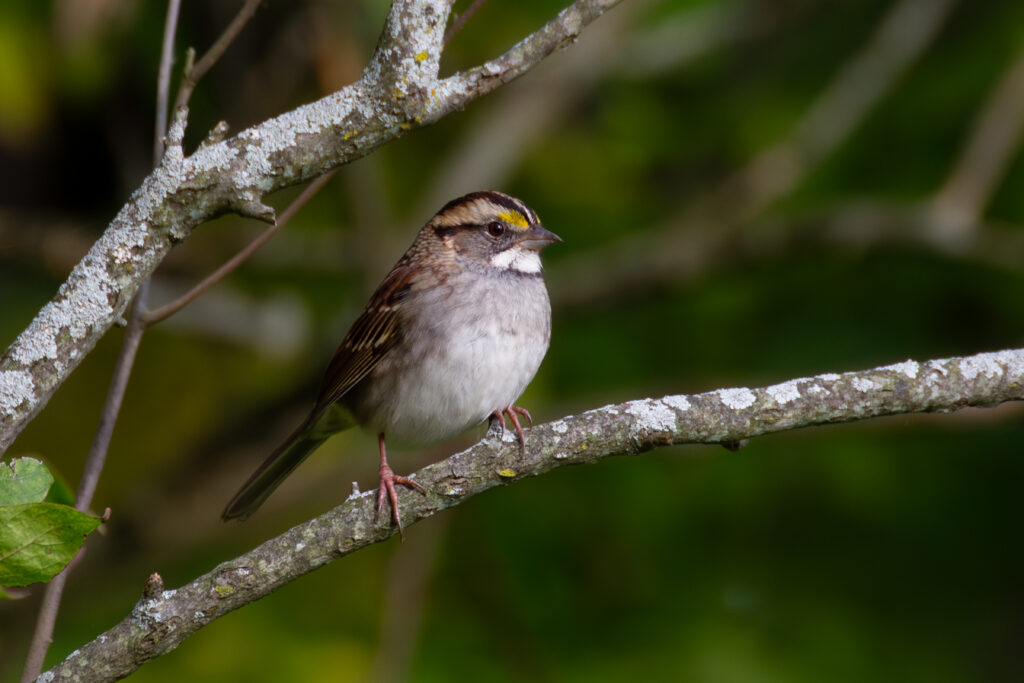
It began a little before 7 a.m., a week or so ago. From various corners of the yard, I heard a sound that reminded me of popcorn popping: “Chip! Chip! Chip, chip, chip!” I knew the voices were small birds calling to each other, and I was fairly certain of the species.
As the sun rose higher, cresting the horizon, one of the voices could no longer be contained, and it began to sing: “Oh, sweet, Canada, Canada!” The song was thin, reedy, clear, and bright. I smiled. I’d been right! A flock of white-throated sparrows had landed in my yard.
Every spring, and again in fall, these sparrows visit my yard in the course of their migration. They usually spend a week or two here, bathing in the creek and fueling up before their journey to places north (in spring) and places south (in fall). I love to watch them flitting through the elderberry shrubs by the creek. If I hold still for a moment, they land on sunlit branches; the namesake white feathers at their throat and the dash of gold near their eyes catch the light.
I always look forward to visits from white-throated sparrows and other birds on their migratory flights. Warblers, with their bright colors and quick movements, are especially thrilling. In spring of 2020, when the whole world seemed topsy-turvy, a mixed flock of warblers landed in my yard.
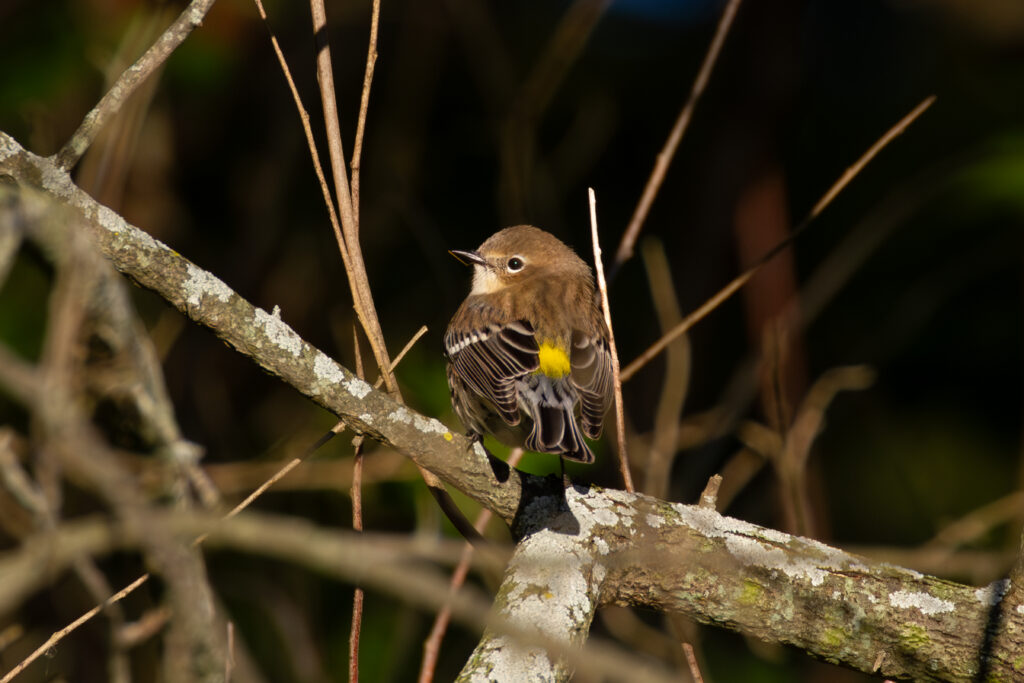
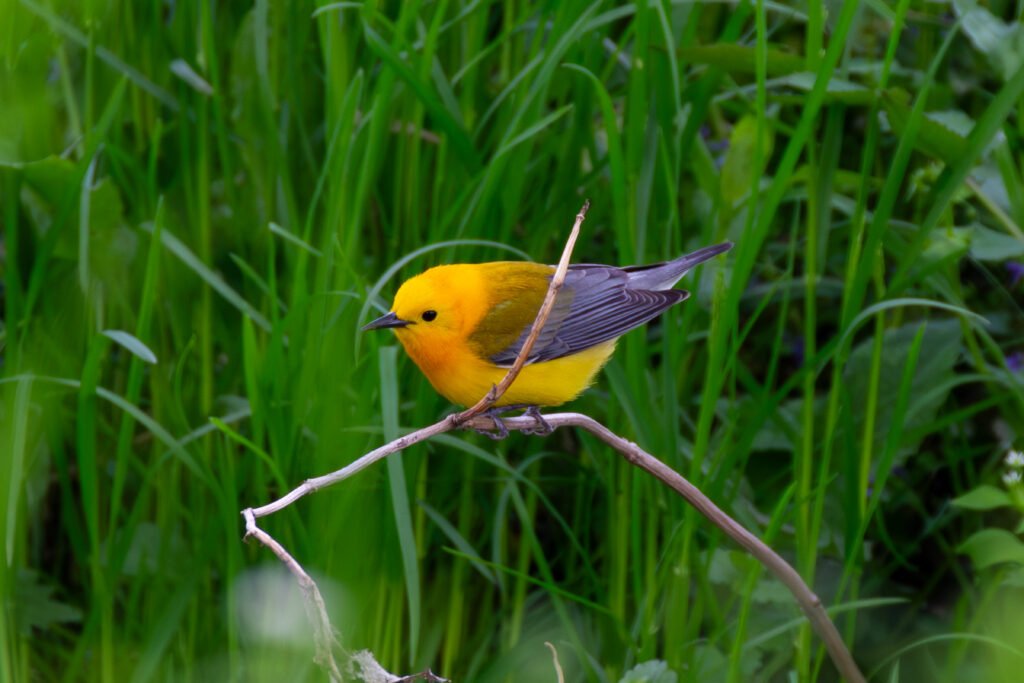
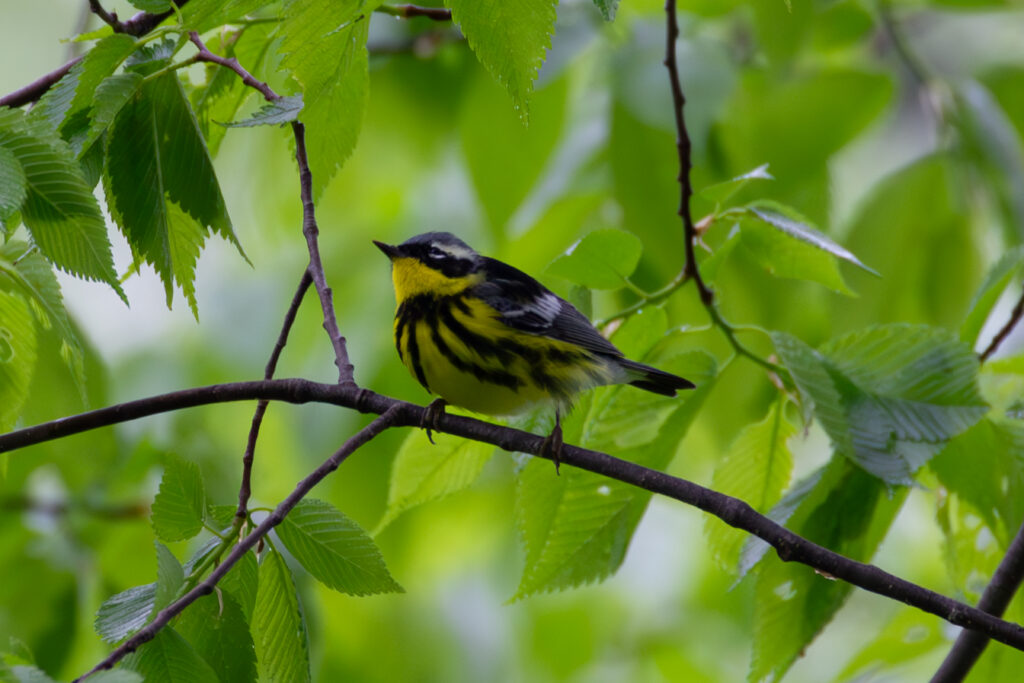
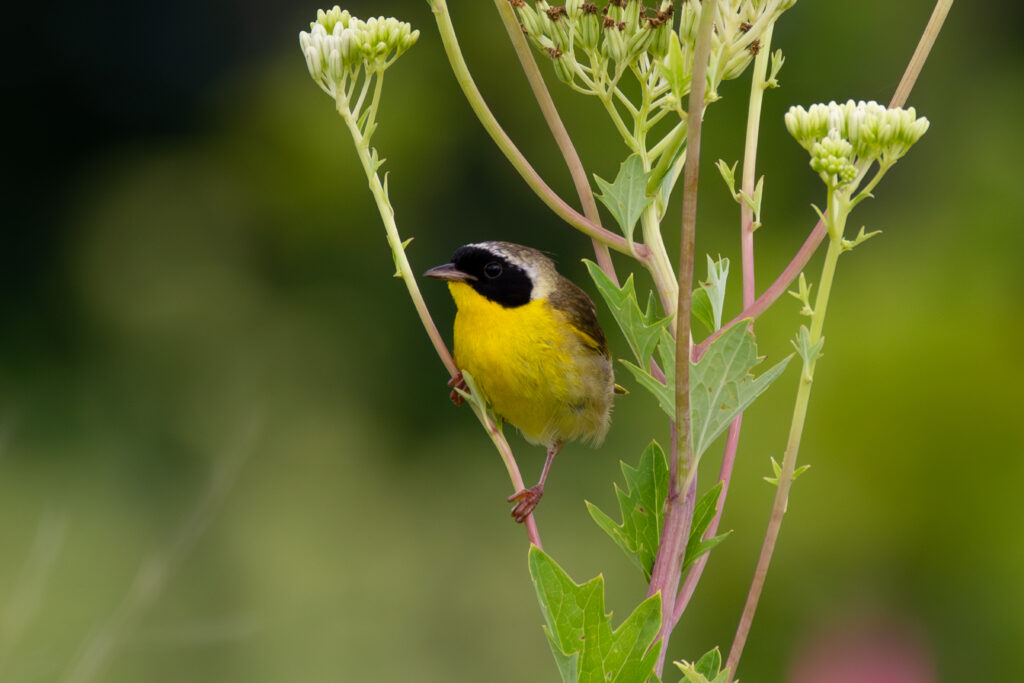
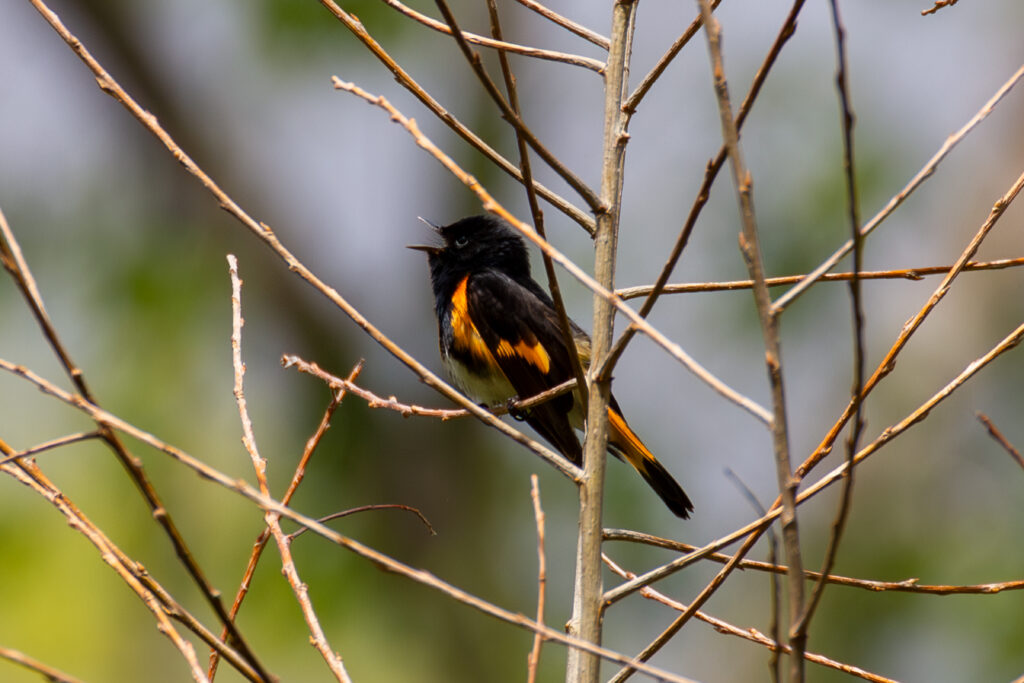
I spent the most beautiful day taking photographs of those dazzling little birds: a bright yellow prothonotary warbler, a striped magnolia warbler, a dapper little masked common yellowthroat, an American redstart with its flash of orange. In autumn of that same year, a small flock of yellow-rumped warblers spent the day in my yard, hunting insects to fatten up for their flight southward. All afternoon, I watched them weaving through our trees and prairie plants. By the next day, they were gone. Migration is a special time of year that doesn’t last long.
I’m stunned whenever I think about it: twice each year, driven by instinct and cues from the natural world, these tiny, fragile creatures fly thousands of miles. They depend on favorable winds, on finding stop-over places for food and rest along the way. It’s an incredible journey! I’m amazed that so many survive it—and my heart breaks for those who don’t. These birds face natural threats such as predators and storms. Sadly, they also face unnatural threats.
Overnight on October 4-5, just a few weeks ago, nearly one thousand migrating songbirds died when they crashed into a particular building, the McCormick Place Lakeside Center in Chicago. This was the deadliest single night ever at this building; on average, 1,000-2,000 birds might die there each year. Songbirds fly at night during migration, and the lights and reflective glass of buildings like McCormick Place confuse them.
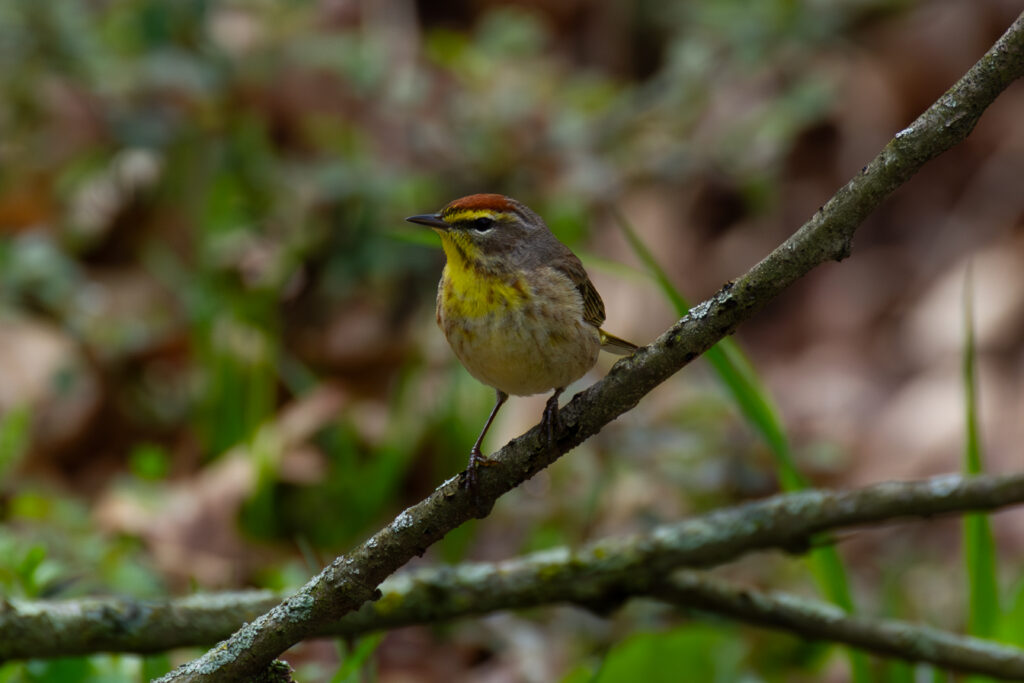
One thousand broken, feathered little bodies on the pavement. One thousand voices silenced. Warblers were hardest hit, with just two species—palm and yellow-rumped warblers—making up over half of the birds who perished. When I read this news, I thought back to a moment out at Johnson-Sauk Trail, when I’d chanced upon a large flock of those two species, hopping effervescently about the road. I couldn’t imagine them lying stiff and still. I recognized other names on the horrifying list from October 5, other beloved birds I’d seen at parks or in my yard: Tennessee, magnolia, chestnut-sided, black-and-white, and black-throated blue warblers; common yellowthroat; American redstart; gray catbird; wood thrush; rose-breasted grosbeak; American woodcock; indigo bunting; and white-throated sparrow.
All those beautiful lives, extinguished in a single night. The world is a poorer place without them. And that number represents just one night, at one building, in one city. Hundreds of millions—perhaps even a billion—birds die every year in the United States due to collisions with buildings.
Most tragically—yet also most hopefully—heartbreaking events like the one at McCormick Place do not have to happen. Such collisions are not inevitable. There are measures people everywhere can take to help birds on their journeys. Bird-friendly glass or window decals can be installed to make glass surfaces more visible (and thus avoidable) to birds. It’s also helpful to leave lights off at night, especially during peak migration (or use motion-detectors where lighting is essential for safety).
For more ideas on how to prevent collisions, visit this American Bird Conservancy website (https://abcbirds.org/solutions/prevent-home-collisions/). From to insect control and seed dispersal, to the joys of song and vivid color, birds bring so much to our lives. They need fairly little from us in return.
This morning, I smiled again to hear the dawn song of the white-throated sparrows in my yard. I imagine they’ll be leaving soon, and I hope the rest of their journey will be safe.