Galva’s first responders are unprepared for a carbon‑dioxide emergency, according to certified legal nurse consultant and Galva resident, Amanda Stodgel.
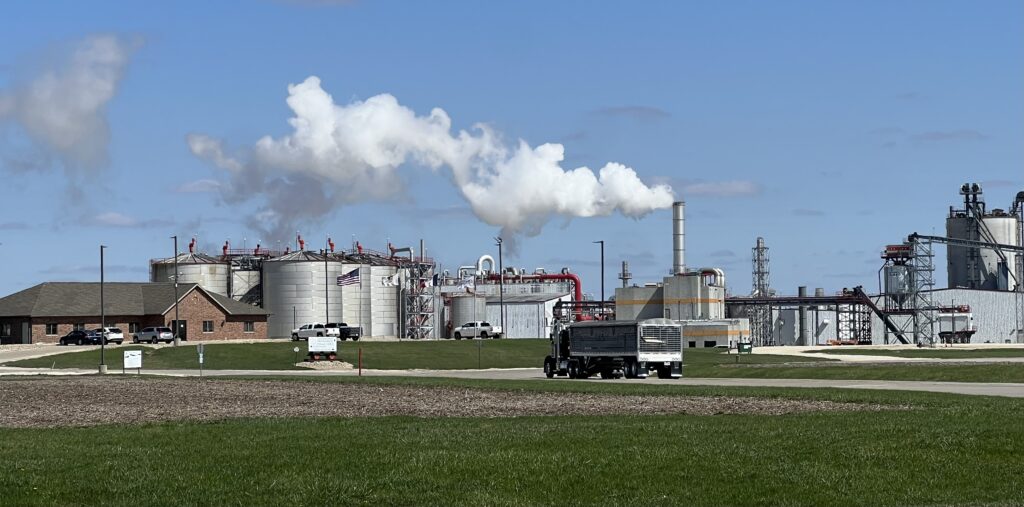
At the May city council meeting, many Galva residents learned for the first time about a land-use agreement made between Lapis Carbon Solutions and the city administrator. Lapis, in partnership with Big River Resources, are planning to inject liquified CO2 into the Mount Simon Sandstone that lies beneath Galva. Lapis Carbon Solutions submitted an application for a Class VI permit to the EPA in the first quarter of this year. If the permit is approved, the land-use agreement will allow Lapis to use the land for carbon sequestration.
At that meeting, Stodgel, who along with many residents oppose the project, stood in front of the Galva City Council and presented them with an official state audit to document clinical liability gaps and contractual breaches that she said renders the city currently unequipped to ensure public safety in the event of a CO2 release.
In her findings of the Ambulance Services Contract, the city is required to have two properly equipped passenger ambulances at all times. Stodgel said that audits and physical observations by her have revealed hours-long windows where the Galva bay is either empty or occupied by a non-emergency vehicle.
“When Galva residents pay for a dedicated service, they shouldn’t have to rely on a ‘scramble’ from Kewanee or Peoria for life-saving care,” said Stodgel.
Not only is Galva emergency services ill-equipped to deal with the fallout of a CO2 leak, but Stodgel said the city is structurally vulnerable. Galva is known for having trains stalled on the tracks, and if a train were to be stalled on the tracks during a CO2 release, it cuts off the most direct routes for emergency access, she said.
“This is why having two dedicated ambulances is a contractual necessity,” she said, adding that it can be catastrophic or even lethal when it comes to a disaster that would require immediate action on the scene.
Stodgel notes that even if first responders were able to make it to the scene on time, carbon-dioxide displaces oxygen, which would stall engines rendering vehicles immoble. Consequently, first responders would be trapped in the same oxygen deprived environment.
Lapis, during a public open house at Big River Resources in March, announced a gift of a thermal imaging drone to the Galva Fire Department. Stodgel said that while a thermal-imaging drone is a helpful situational awareness tool, it is not a rescue tool.
“A drone can identify a heat signature, but it cannot deliver oxygen, provide Advanced Life Support (ALS) interventions, or transport a patient to a hospital. For a project of this scale, a gifted drone is a poor substitute for the on-site staffing and ALS-certified equipment that Galva is already paying for but not consistently receiving,” she said.
Stodgel argues that approval of this carbon capture and storage project under current infrastructure conditions, constitutes a knowing disregard for medical, legal safety standards.
Stodgel said that Galva’s current resources are stretched thin and that residents need to understand that CO2 is a silent, heavy gas that requires a robust, immediate clinical response.
“A plan is only as realistic as the resources available to execute it,” said Stodgel. “Before a project like this moves forward, I believe it is essential to have a verified audit of ambulance response times and a guarantee that our ‘dedicated’ rigs remain in Galva 24/7, as our contract mandates.”
City Administrator David Dyer declined to answer questions about Stodgel’s findings but stated that they will be addressed at the June 1 council meeting by an Illinois professional emergency manager (IPEM) alongside the Galva fire chief.