A scion of a Kewanee Founder’s family, he sought to make a difference.
Corliss Wilkes Lay was born at 119 N. Burr Street in Kewanee on August 11, 1862. He was the oldest of five children. His grandfather, Nelson Lay, was one of the founders of Kewanee. His mother was Martha Morrell, and his father was Hiram T. Lay, who soon became a partner in Lyman & Lay Co., which grew into Kewanee’s largest mercantile store, a status it kept until its successor, Kewanee Dry Goods, was destroyed in 1942 in the great Kewanee Fire.
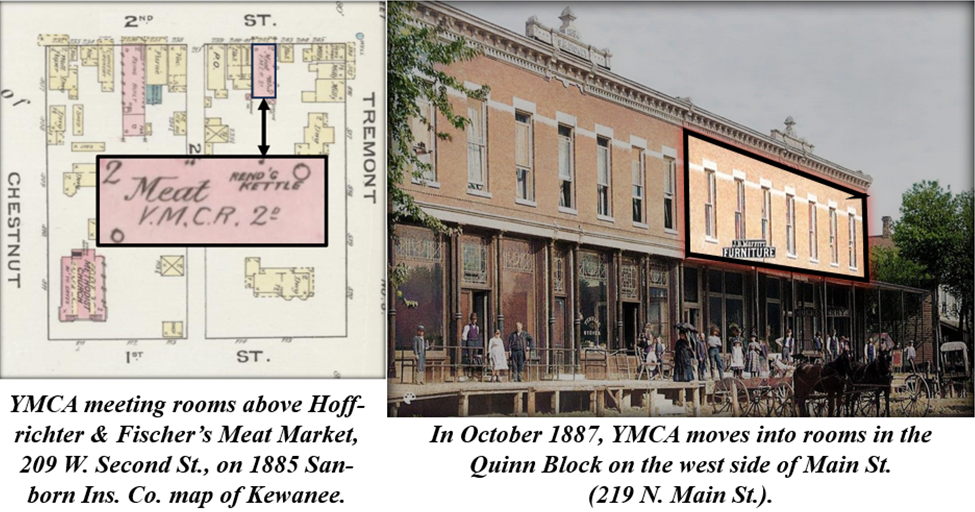
Corliss attended the old Kewanee Academy and later Knox Academy in Galesburg and then graduated from Knox College in Galesburg in 1887. In the interim, he was instrumental in starting a branch of the Young Men’s Christian Association in Kewanee in 1885, serving as its first president.
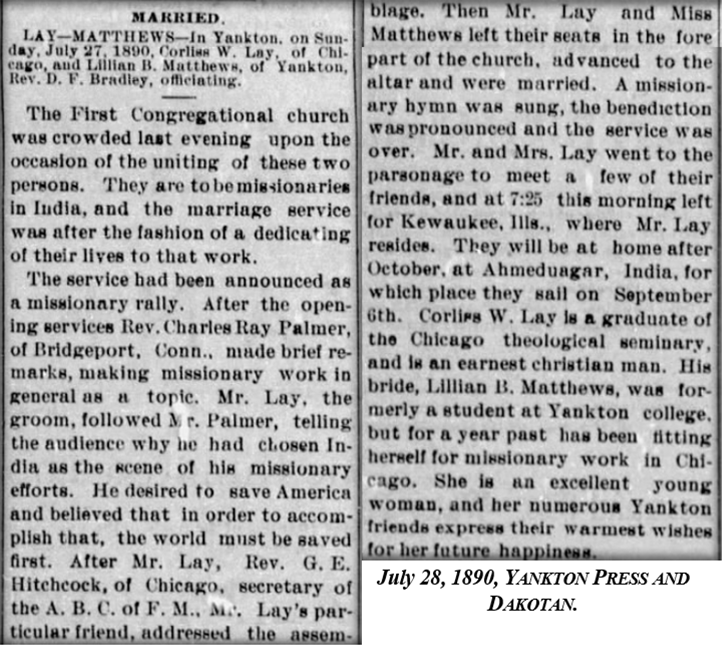
But Corliss had larger ambitions. He studied at the Yale Divinity School and graduated from the Chicago Theological Seminary in 1890. He was ordained as a Congregational minister in Yankton, South Dakota, on July 27, 1890. He was married that same day in the same church service to Lillian Belle Mathews of Yankton.
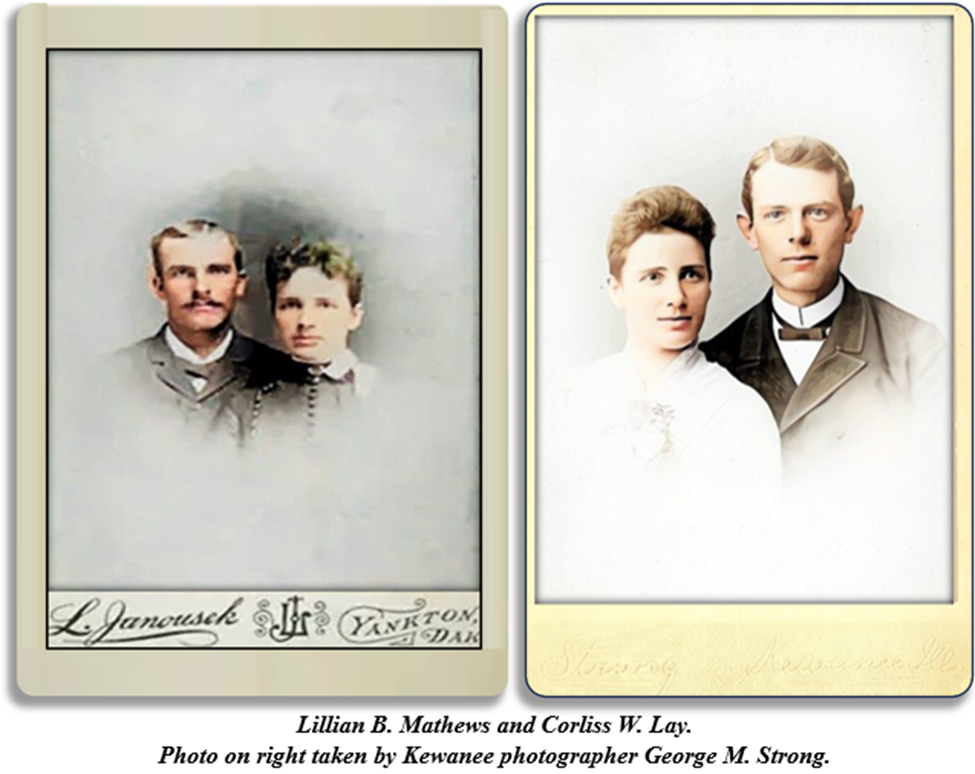
Corliss and Lillian had already decided to become missionaries to India. After their wedding, they traveled to Kewanee to say their goodbyes to Corliss’s family.
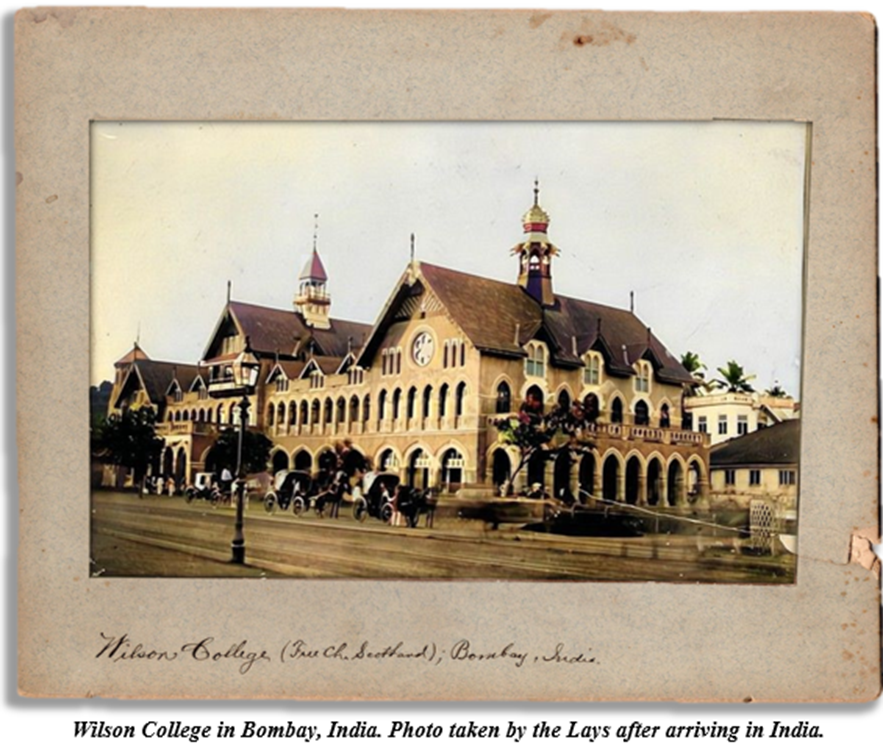
The Lays left Kewanee for Boston in late August 1890 after a going-away fête hosted by his parents. From Boston, they sailed to England in early September and spent time sightseeing on the British Isles and at other stops in Europe. They then traveled through the Suez Canal, making their way to Ceylon (now Sri Lanka), and sailed up the western coast of India to Bombay (now Mumbai), arriving at the beginning of October.
The American Board of Commissioners for Foreign Missions established its first foreign mission with the American Marathi Mission in Bombay in 1813. It was the first protestant mission in western India and spread into hundreds of villages. The mission center moved from Bombay to Ahmednagar in 1831 because it was closer to the center of Marathi County.
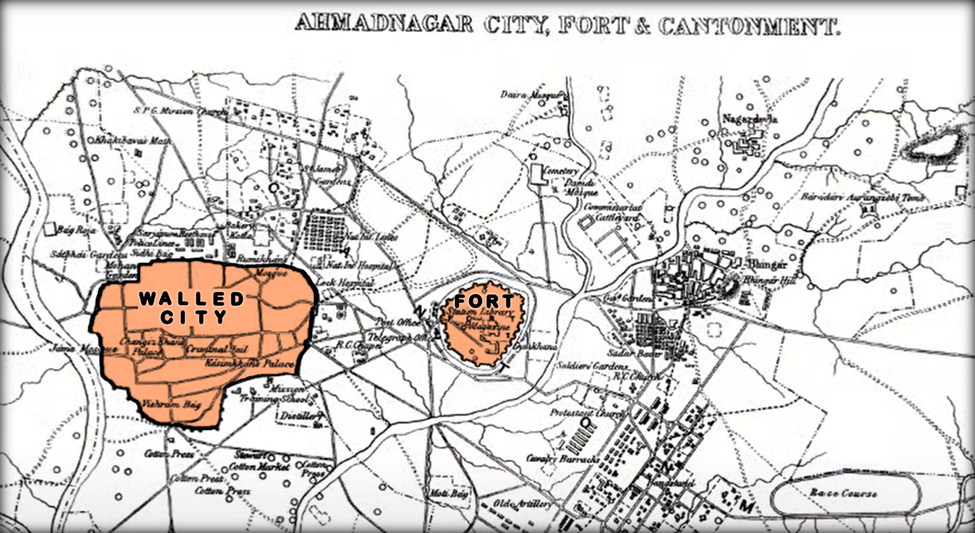
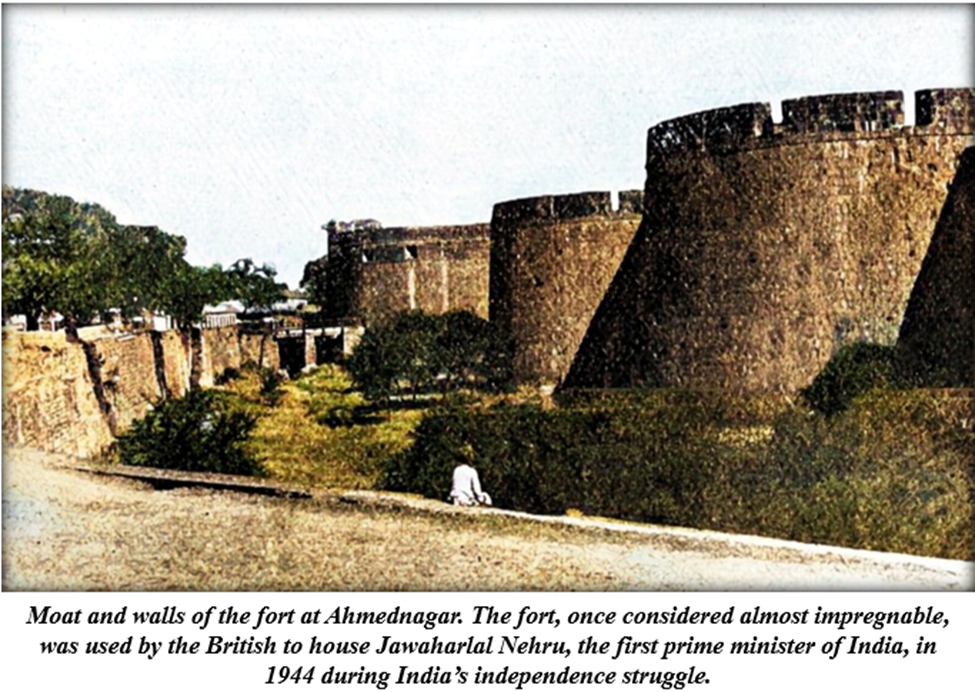
In 1803, Ahmednagar had been captured by a British force, and British occupation of Ahmednagar lasted around 150 years. The British ruled from the Ahmednagar fort which was built by Husain Nizam Shah in 1559 A.D. The Ahmednagar fort was often used as royal prison, both by the Marathas and the British.
Ahmednagar had a hot semi-arid climate and was hot throughout the year. The heat was sweltering during the pre-monsoon months from March to mid-June, while monsoon rainfall averaged less than a third of that received in Bombay and about a tenth what would have fallen on the crest of the mountains.
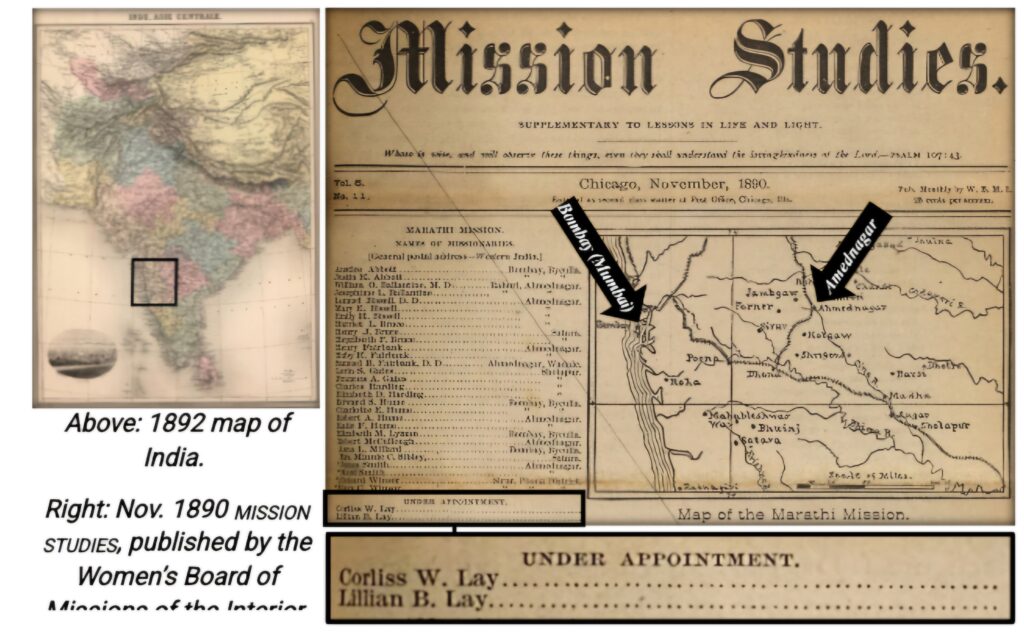
Corliss taught at the Marathi mission high school in Ahmednagar. Lillian taught through the mission as well. The Ahmednagar District, geographically about the size of Connecticut, had a population approaching 900,000 while the city had about 30,000 residents.
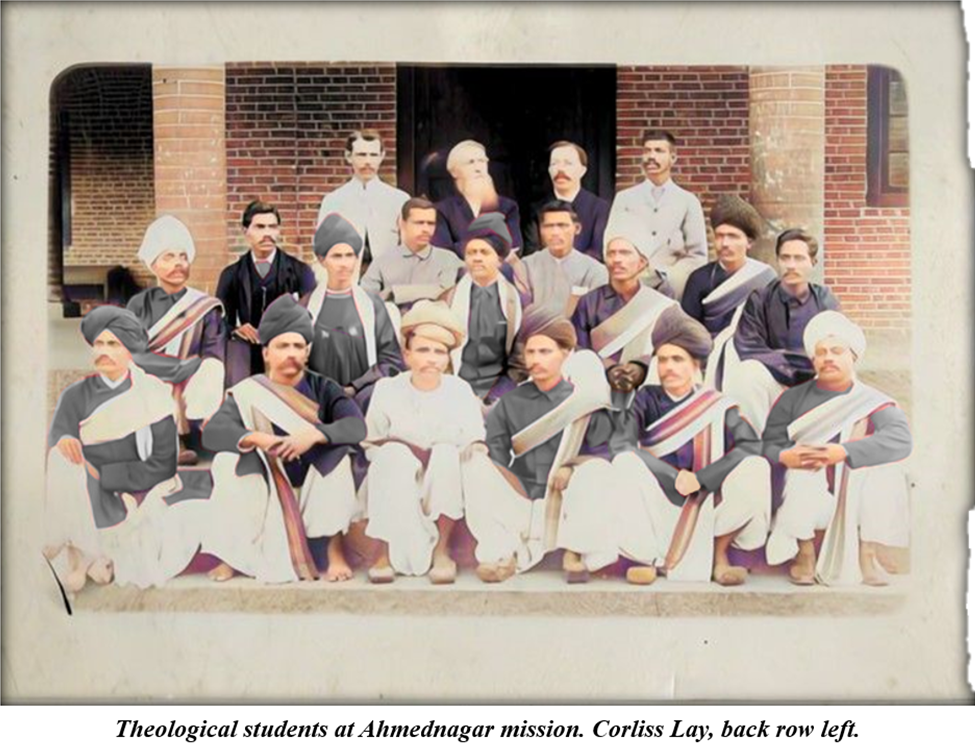
Corliss was instrumental in establishing the manual training department, a part of the curriculum of the high school, said by the Indian government to be the first of its kind in India. He also helped organize a modern Y. M. C. A. there.
The Lay’s first child, Edna, was born in India in January 1892, but died five months later and was buried there.
During their almost three years in India, Corliss and Lillian wrote numerous letters home, describing the sights, sounds, and experiences of India. Here are excerpts from some of their letters.
Corliss, 28 Oct. 1890: “I wish you could have ridden with us through the streets of Bombay … It was a sight you cannot imagine… The animals were strange, the trees were new, the people especially seemed to belong to another sphere, entirely naked children was a new sight and gave a strange shock at first … Another curious thing we saw was a hospital for sick and lame animals. Rich people send them there … Such a sorry collection of monkeys, cattle, cats, dogs, chickens, horses, pigeons, etc. you never saw.”
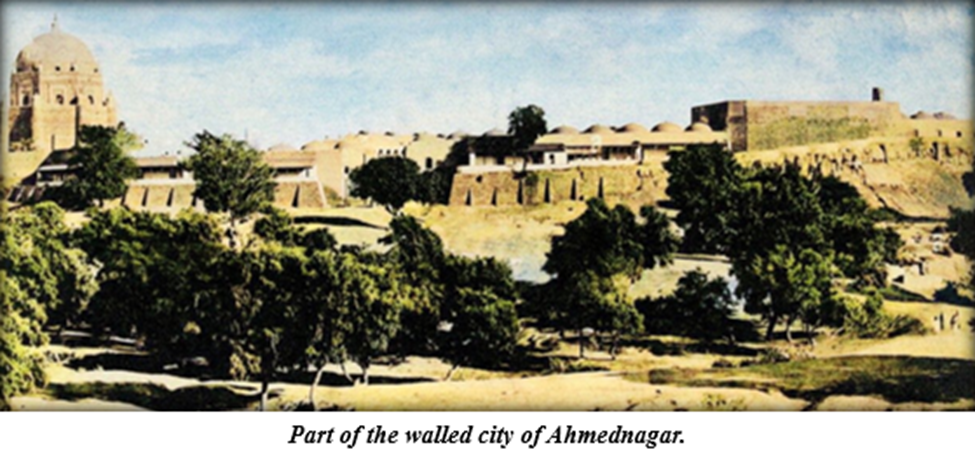
Corliss; 28 Oct. 1890: “We reached [Ahmednagar] at 8 a.m. and found 15 missionary people to welcome us… We were taken in ‘tonga’ (two-wheel of native make) carts two miles to the walled city of Ahmednagar, or Nuggar simply. … We entered the walls of mud and passed through the narrow streets. On either side were the homes of those whom we had come to teach. What poverty indeed, but far worse what filth. Surely these are not men and women but animals. Well, my heart sank. … we closed our eyes and noses…”
Lillian, 23 Nov. 1890: “We are settled in our own house, in a mission ‘bungalo,’ … There are some natives living in small houses outside whose duty it is to come in and do the work of the house… My duty just at present is to study the language and prepare myself to teach these natives… about half a mile out of the city is Fort Ahmednagar with a regiment of British soldiers… There are about a dozen missionary people here so we have quite a little society of our own. They get together quite frequently for a drive or for tea.”
Corliss, 10 Dec. 1890: “I saw a man…the other day scaring away birds with a ‘goplum’ (sling). I don’t believe he did anything but scare. There are but few guns here. Natives are not allowed to have them without license. A list is publicly published of those who are licensed to have fire arms.”
Lillian, 16 Jan. 1891: “Another class of people…here are the Goanese, so called from Goa on the coast of Bombay where Portuguese settled at an early day. At Goa rest bones of Francis Davier, a Catholic missionary of the 16th century. His bones are exposed every 20th year. This was the year. And there was a great festival there. The Goanese are … generally cooks.”
Lillian, 16 Aug. 1891: “Singing is something these people seem to take to and they have a great deal of it in their services… Corliss … has a class of the school boys in the church [Sabbath school] in the morning and then in the afternoon at the High School [Sabbath school]. He has these same boys teach the little children that come in from the streets and he says this department is becoming quite an important feature of that school.”
Corliss, Aug. 1891: “We have some Christian Englishmen ‘in camp’ but the soldiering is abominable. A native was murdered in camp lately, but the guilty ones will go free without doubt or ‘insufficient evidence.’ There are two kinds of justice here— one for a native and another for an Englishman. There is said to be some cholera in the city now and the soldiers are not allowed to come inside … There is always smallpox [in our school], but it is not worse than measles with them.”
Corliss (from Bombay), 31 Oct. 1891: “This has been a busy week in trying to get strong by running around this big city. Bombay has a population of 820,000 but since its working people are packed together like pigs in a sty, it does not cover so much ground as one might expect. The joining of the old and new makes it peculiar.”
Corliss, 13 July 1892: “In school things are moving slowly. About one-third of the boys are absent for sickness mostly fever and bowel trouble. … The class has dwindled down to about a dozen because, being extra, the boys who graduate this year are hard pressed for time. Then we lost three of the five Africans who were in the class by cholera. … I spoke about our young native Christian who was very sick … [his] brother is teacher of science in our H. School. Their name is Modok. The father was a connected Brahman and a powerful man intellectually. …”
Corliss, 13 July 1892: “We are hard at work now on the language. A pundit (learned man) comes every day and gives us an hour each. Our pundit is a teacher in our school and a Brahmin. But he belongs to the Bramo Somay, a society of advanced thinkers, who have worked away from paganism toward theism. We would rather have Christian teachers…to teach common school work, but good ones are scarce.”
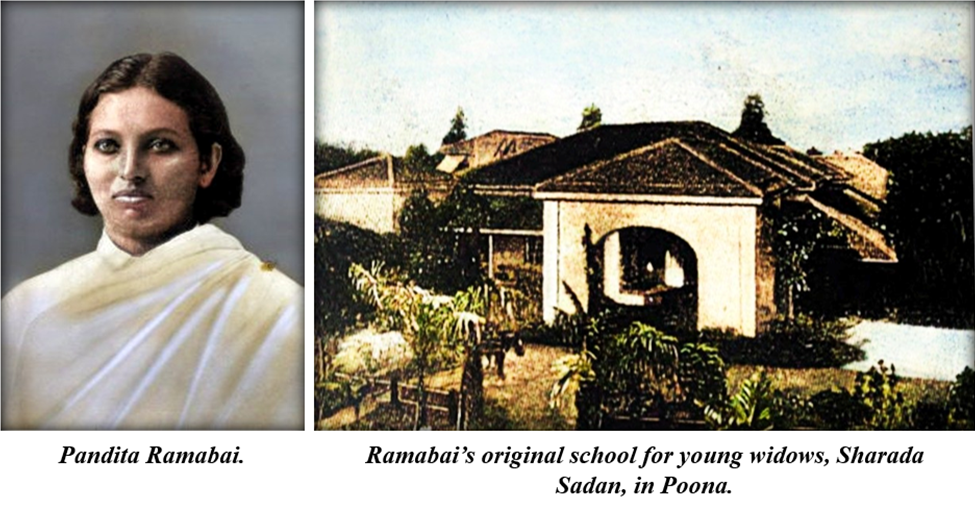
Corliss, 18 Sept. 1892 [describing visiting the school for Hindu widows run by Pandita Ramabai (1858–1922), a pioneer in the education and emancipation of women in India]: “She has her 45 young widows…all under 19 years, one has with her a daughter 3 years old. Pandita has just published a book in Marashi [Marathi], MY IMPRESSIONS OF THE UNITED STATES. I should like to read it, but they say her Marashi is very difficult. I may have to wait before being able to read it.”
Corliss, Oct. 1892: “While in Bombay I engaged a…[new] cook and he is a treasure. His wife is in Goa. This is the way with these cooks. They are a mixture of Portuguese and Indian blood, that which began when Francis Daniel[?] came to India to teach Christianity.” . . . .”
Lillian, 3 Nov. 1892 “I have just been having a native serving man make me a white wrapper and a pretty embroidered, white dress, which I received for a birthday present a short time ago. It is very thin white goods, embroidered by hand in madras. I made the skirt myself but had the man made the waist for two rubles.”
Corliss, 20 Nov. 1892 “I cannot particularize other loathsome things which make up the scene of a home in every Mahar Narda (quarter) of the 13 towns visited. You cannot realize the condition of the people of India … you must see it all to realize its conditions. … There is no school now in Supe, because the children don’t come. So it goes with our country schools, now full, now empty. The Mahars go off to another village to work during harvest time or they use their children for work in their own fields if…they have any. A child that can earn one ruple a month tending sheep or scaring birds away is too valuable to keep in school. Our work is almost entirely among the Mahars, so I must tell you of them. They in former times were the village servants. If a letter was to be carried from one official to another or money to be transported… If a cow died, they were the ones to carry it away and bury it. They were the watchmen of the city & also public servants. In return they had ‘52 hucks’ (privileges). The flesh of the dead animal was theirs to eat, its skin theirs to sell. A certain share…in the grain field was theirs … such a life did not tend to develop independently or honestly.”
Corliss, undated: “We have started a Y.M.C.A. here in Nagar. I hope it will prove a success. I feel a little doubtful about it. The conditions here are so different from at home. Leaders are few. I am to be President.” [He also describes the Y.M.C.A.’s progress over a number of letters and the various hurdles it faces.]
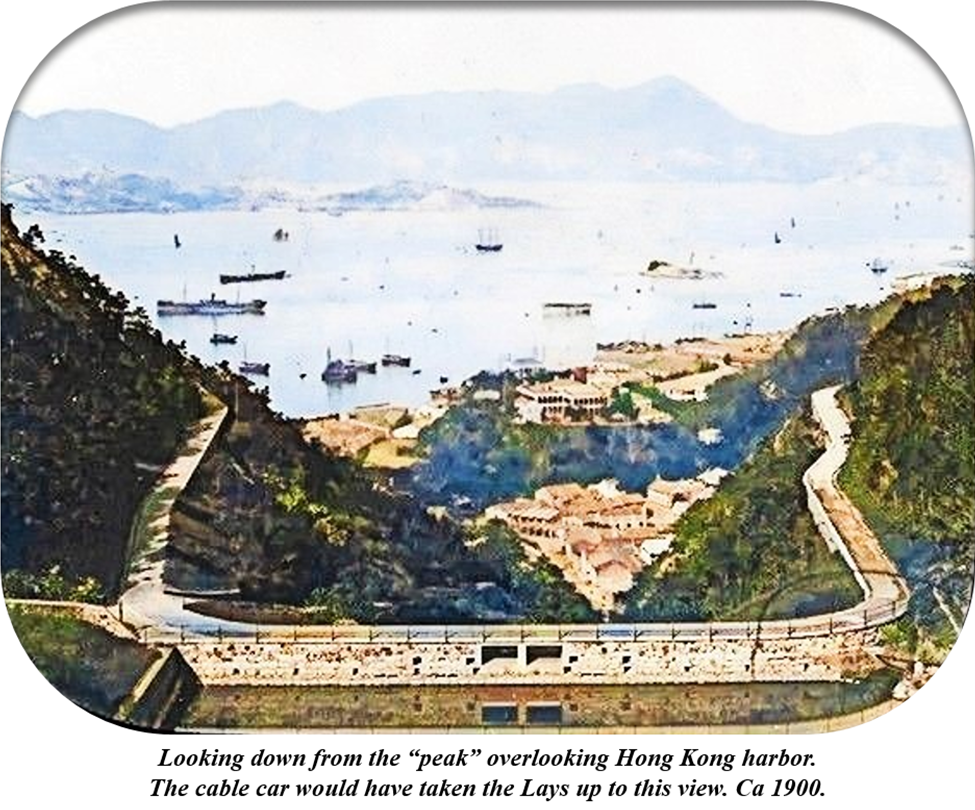
Lillian (from Hong Kong), 12 Apr. 1893 “Hong Kong is such a pretty place, it is built on a high island with the sea and small islands all around it. The city itself lies along the edge of the water, at the foot of the mountain but the residence houses are up on the side of the mountain and some at the very top. The only way to get up the mountains is to be carried up on the cable car. They have a car going to the top of the hill but it is so steep it is simple dreadful to ride up in it. … we stayed three days at a delightful hotel at the top of the hill. We climbed around on the mountain every day to different peaks where we could see the sea and islands all around us. I think it is the most picturesque place I ever saw.”
Due to Lillian’s poor health, they left India in May 1893, arriving in San Francisco in early July and then were released from quarantine in early August.
Corliss had been offered the position of secretary of Yankton College, he accepted, and they moved to Yankton. They had five more children, the first of which was born a little over a week after they had returned to the United States. The last was born in 1906 in Yankton.
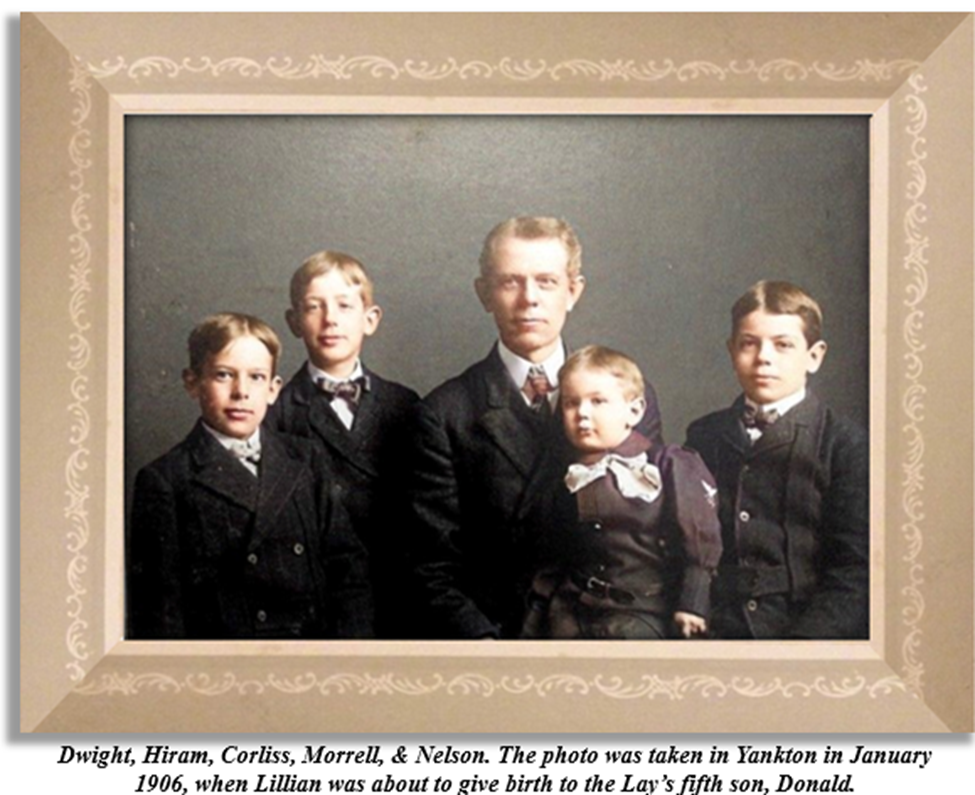
The family remained in Yankton until 1906, when they moved to Kewanee. Corliss bought part of the old Blish farm in northwest Wethersfield and built a home (later the Lindstrom place). He was active in farming and later became president of the Henry County Farm Bureau. Among many over civic endeavors, he and other Lay family members established a trust in support of the Kewanee Public Library.
In 1920, Corliss, Lillian and two sons moved to California. Lillian died in Long Beach in 1933. Corliss died in Claremont in 1941.
A young Kewaneean and his spouse traveled to the other side of the world in the service of others. His legacy was one he, his family and all Kewaneeans should be proud.