I’m constantly amazed at how the human mind works.
In this case, looking at an old, nostalgic photograph, my eye caught an innocuous, barely visible object. It piqued my interest, so I did some research. In the process, my mind jumped to a recent story. While separated by over 100 years, the two together may tell a tale, though I’m not sure of its meaning.
First, the photo.
It appeared on the Facebook page Kewanee Nostalgia a few days back. It was of the 1917 Independence Day celebration in Kewanee. For fun, I decided to colorize it. Then looking closer, I saw a barely-visible sign on a post along the parade route.
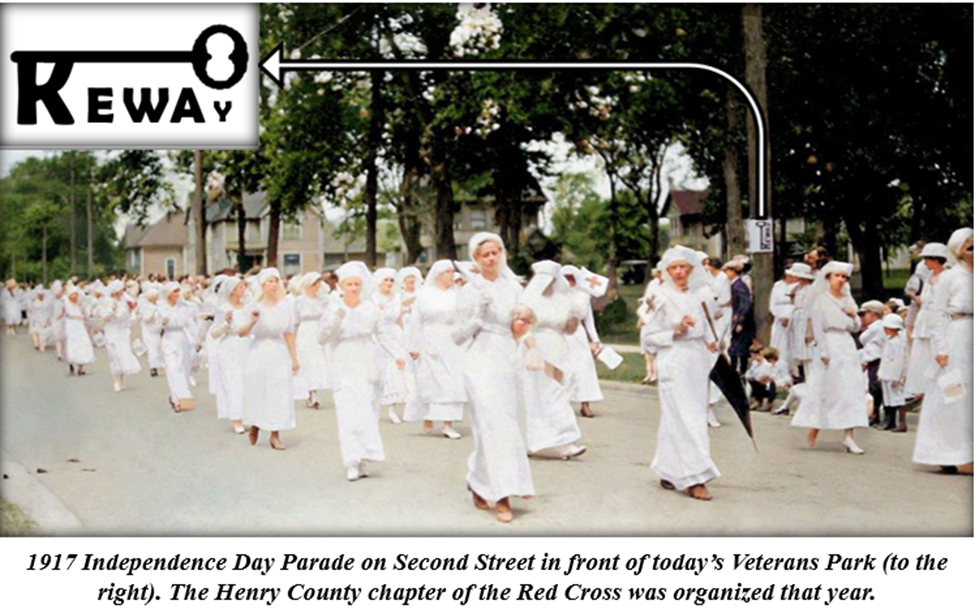
I decided to find out what it meant.
By the beginning of the 20th century, Kewanee was the economic engine of Henry County. Its burgeoning industries were growing, new ones were forming, and the retail sector was vibrant. The Chicago Burlington & Quincy Railroad connected the city to the rest of Illinois, the country and even the world.
Then the automobile arrived on the scene. Soon, it began replacing the horse and buggy as the preferred manner in which individuals could visit with each other, at least over short distances. Longer distances, however, posed problems.
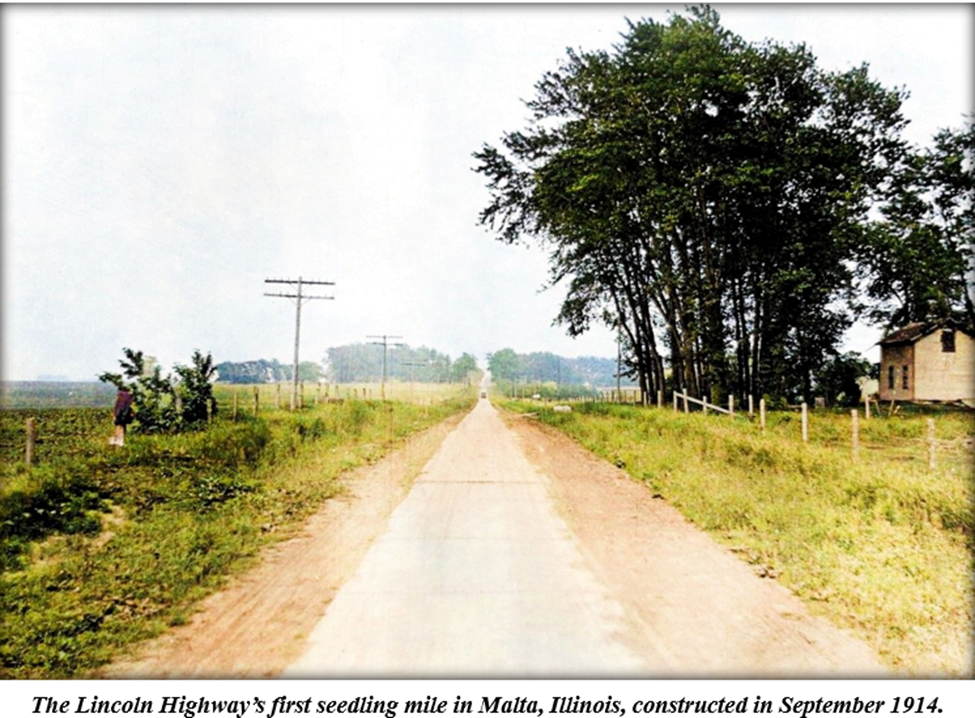
While there were market roads between towns, they often were impassable due to weather. Rutted, and regularly muddy when it rained, those roads made automobile travel between towns difficult. Exacerbating the problem, such roads were maintained, for better or worse, only by counties and townships, and the quality of any road could immediately change when crossing a jurisdictional border. And it was easy to get lost because there were few road signs anywhere.
The Federal-aid highway program began in 1916, but the United States’ entry into World War I in 1917 stalled any nationwide effort to develop better roads on a national scale. However, throughout the country, many cities hoping to draw more commerce began creating marketing campaigns using road signs to steer consumers to them. For instance, the September 26, 1912, Kewanee Daily Star Courier reported that
“[b]lazing the ‘Sunset Trail’ over the great automobile highway between the Atlantic and Pacific coasts is engaging the attention of many Automobile Clubs throughout the country.
“Kewanee motorists who have taken the trip to Chicago in automobiles speak very favorably of the ‘Blazed Sunset Trail.’
“The ‘Sunset Trail’ is a trunk line across northern Illinois from Chicago via Aurora and Ottawa and connecting at Davenport with the famous Iowa ‘River-to-River’ road. The highway is all graveled between Chicago and a point just beyond Sheffield and with stretches of gravel and dirt between Sheffield and Rock Island. It is only a question of time when the complete road will be fully graveled.”
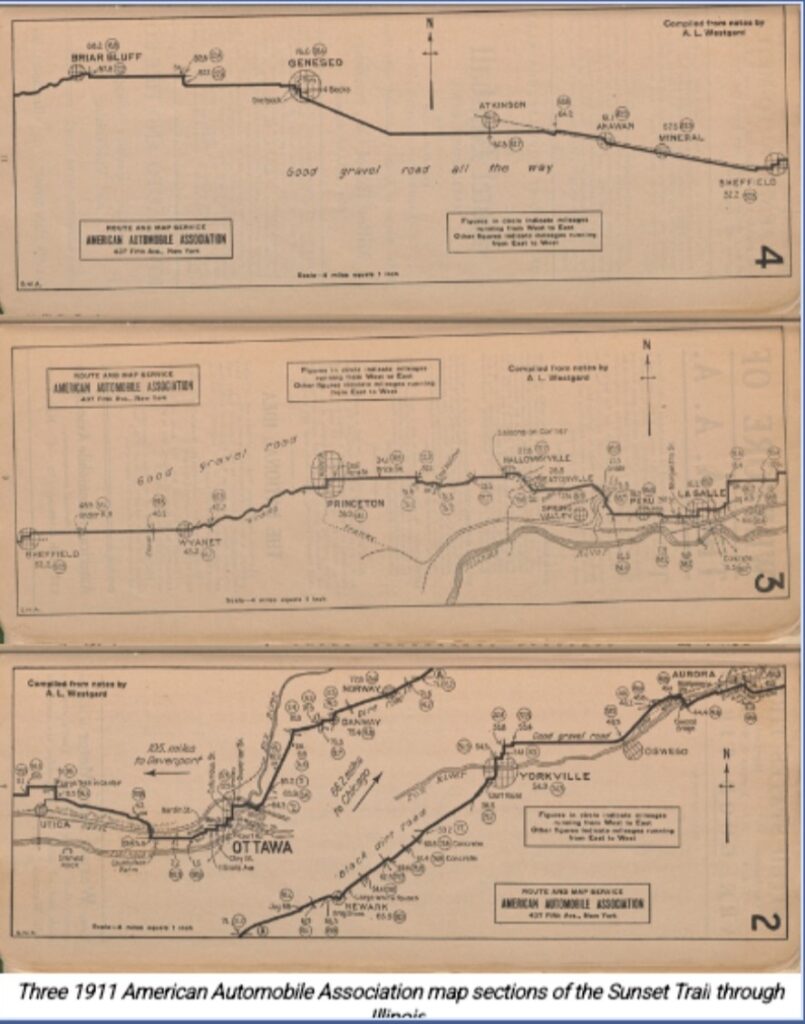
As Kewanee continued its meteoric growth, it, too, wanted better automobile connections within the region, connections that would continue to support the city’s growth and make it an-easy-to-find, attractive place to visit.
In 1917, a group of Kewaneeans organized a local post of the Travelers Protective Association of America, a nationwide fraternal benefit and service club originally created by and for traveling salesmen. The group met in the Parkside Hotel and endorsed a “Keeway Trail” association movement. Its goal was to mark an improved highway from Rock Island to Peoria, through Kewanee, and a connection with the Lincoln Highway in Sterling.
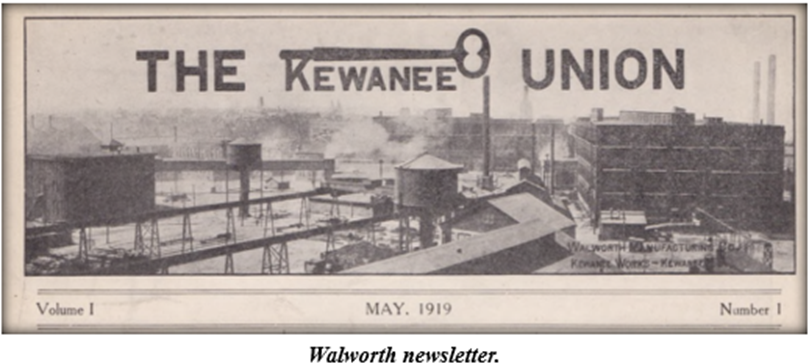
At a T. P. A. meeting in 1918, the chairman of the good roads committee reported that work on placing signs on the Keeway Trail continued and he hoped that other trails would be marked out of Kewanee “until a trail was blazed out of Kewanee in every direction.” The Keeway sign incorporated the Walworth “key” and arrows denoting the direction to the relevant city.
By the end of the year, it was reported that signs had been placed all the way to Peoria, Rock Island, and Sterling. Kewanee also learned that the Keeway Trail was marked on Rand McNally’s 1918 automobile map.
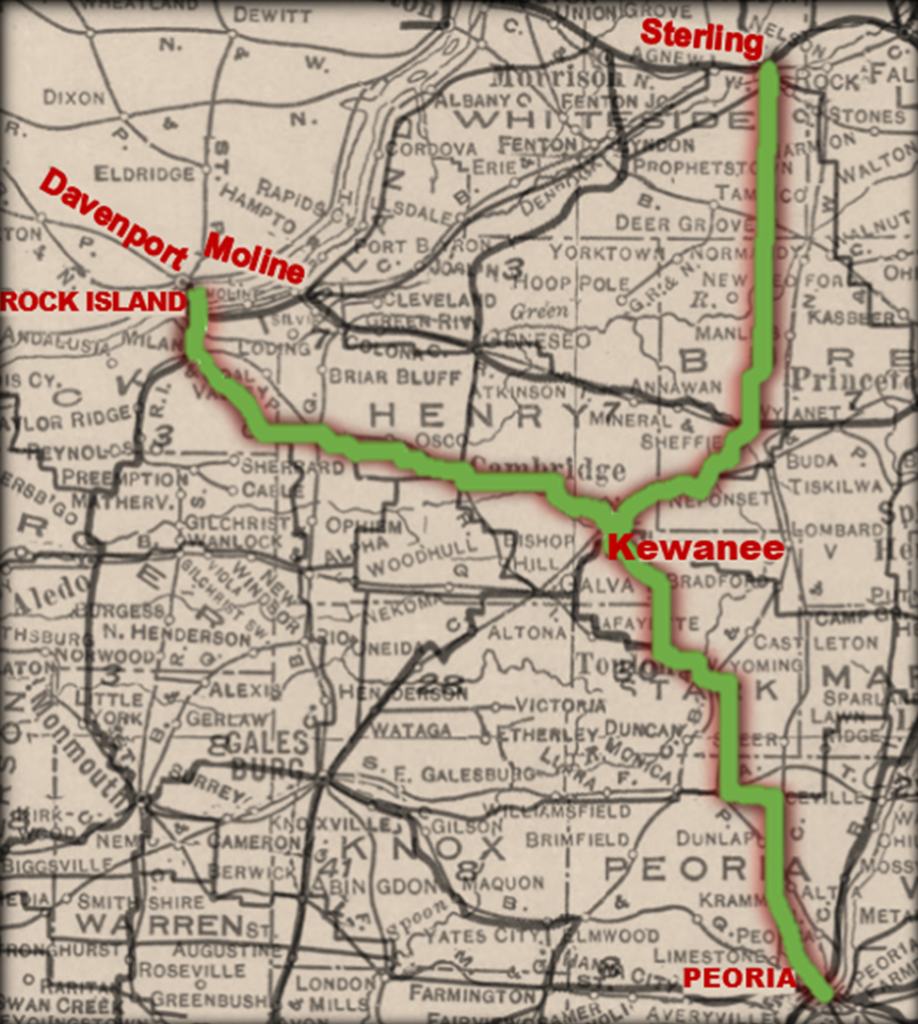
In early 1919, a member of the Peoria Association of Commerce told the Kewanee paper that “there are hundreds of telephone poles in Peoria with a big sign on them with the word Kewanee and believe me they are noticed and your town is spoken of and remembered because of those signs,” referring to the Keeway Trail signs.
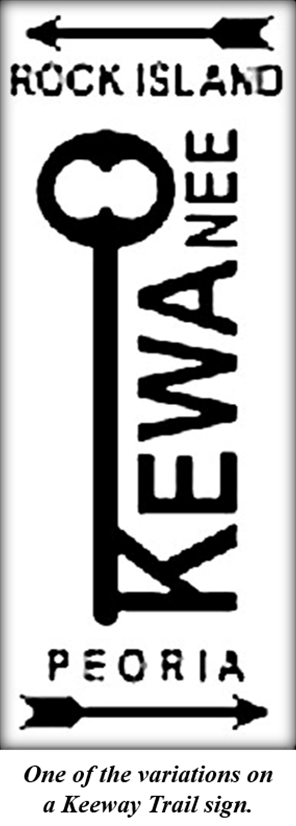
The Keeway Trail proved a valuable endeavor as consumers from Peoria, Sterling, and the Tri-Cities and those along the route knew the best way to Kewanee and its businesses. However, I couldn’t find evidence whether the trail was ever subject to oil and gravel improvements, and soon Federal and State money became available for quality road development of new and better routes.
So that’s the meaning of the sign.
Now the news story.
The lead paragraph in a March 20, 2024, The Kewanee Voice report by Michael Berry read, “[i]n a primary election with a very low turnout, Kewanee voters Tuesday, by a slim margin, rejected a proposal to add a half-cent sales tax to help fund street repairs.”
As I said at the beginning, my mind somehow connected these two stories, but I’m not sure why or what it all means. I know that nostalgia is suspect, often pulling out the fond memory while leaving behind the reality. I’m at best an amateur historian, I certainly didn’t live in the first decades of the 20th century, and I no longer live in Kewanee, so I don’t think I have standing to make any comparisons let alone draw any conclusions.
So, I’ll stick to researching and writing about long-ago times and leave it to others to dowse for the meaning of the past for today.