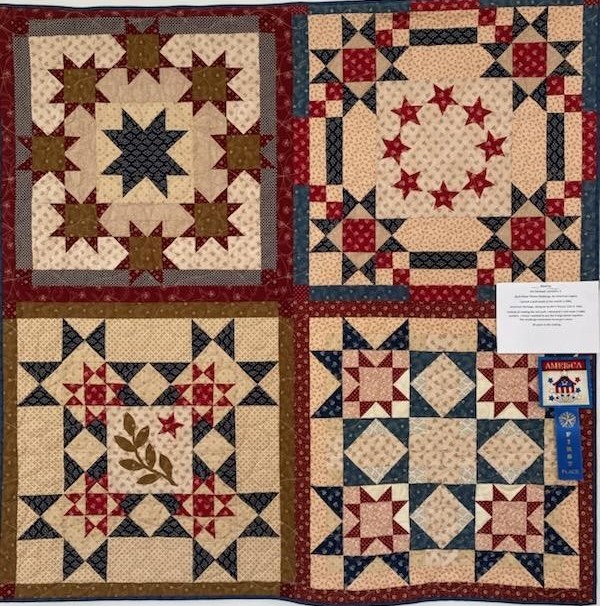
This year, in keeping with the country’s birthday celebration, the Prairie Queen Quilt Club is celebrating its 36 years with the theme “Quilting: An American Legacy.” The quilt show will take place on Friday and Saturday, May 15-16, from 9 a.m. to 4 p.m. Admission is $5.
The quilts are divided into five categories, and those who attend on Friday vote for their favorites. Homemade ribbons are given to the winners.
In the mid 1980’s, a popular tradition began when quilt shop owners Betty Robinson and Marilyn Nelson were asked to host a quilt show by the Bishop Hill Historical Society. Their efforts quickly became a favorite of the village and its visitors, drawing bigger entries each year. In 1990, they passed the baton to the Prairie Queen Quilt Club, which continues today to showcase beautiful, hand sown quilts at the Colony School.
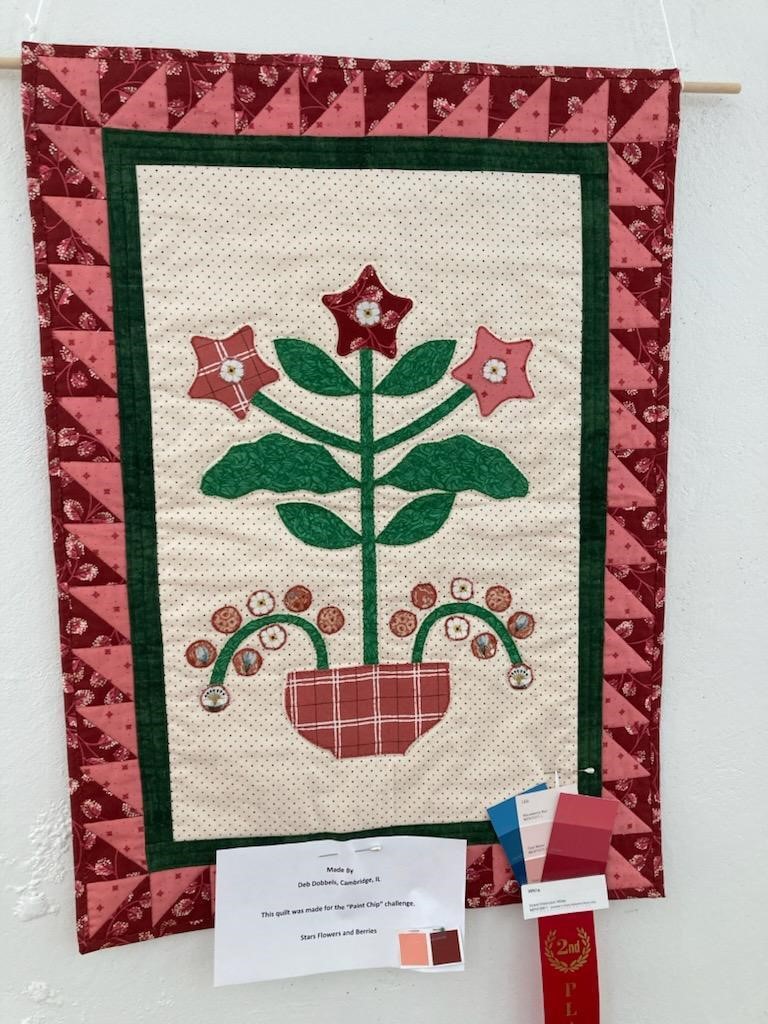
Each year, the club creates and donates “charity quilts” to local organizations. This year, Freedom House and the Kewanee Help Center are the beneficiaries.
Club president Lorna Brown said that nearly 100 quilts will be on display, with entries coming from all over Henry County, Galesburg, Knoxville and Davenport. All are hand sewn, with familiar patterns such as Log Cabin, Rail Fence and Rose of Sharon. Some are constructed as Crazy Quilts, while others are decorated with special appliques, each with its own theme and story.
Brown said that a quilt provides a lasting legacy and is often passed down through generations. Some are made for celebrations such as weddings, anniversaries or birthdays. Others can represent family history or special memories.
In the United States, quilting has deep roots in the 18th and 19th centuries, when women across social classes created quilts for warmth, decoration, and major life events. Early American quilts were usually made from wool or imported English cotton and were valued for their warmth and durability.
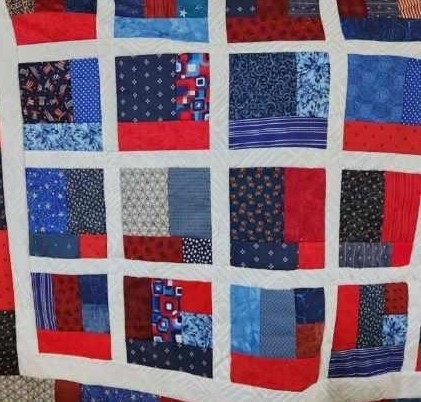
Quilting flourished as America expanded westward. They became essential household items for families on the move. They were often the only decorative objects women could bring into their frontier homes.
Early quilting in America also provided a way for marginalized communities, such as Native and African Americans, to preserve their history and share their stories. Modern quilt historians emphasize how these traditions celebrated the identity and contributions of communities whose voices were otherwise suppressed.
Today, quilting remains a vibrant art form supported by organizations and guilds such as the Prairie Queen Quilt Club.
“We hope to make certain that quilts continue to be recognized as both artistic and historical treasures,” said Brown. “They are a priceless reminder of our history and need to be preserved.”
The Quilt Club meets four times a year, on the third Tuesdays of April, June, August and October. Those interested in the Club are encouraged to go to the Prairie Queen Quilt Club Facebook page for information. There will also be informational brochures at the Quilt Show.
“We always welcome quilters,” said Brown. “Quilts are reminders of our past and a gift to the future.”