Levi J. North came to Kewanee in 1860. But the event we’re talking about happened a dozen years earlier.
North was born in Turin, New York, in 1821. When he was five, his family moved to Mt. Vernon, Ohio. His education was generally limited to log cabin schools. At some point, North discovered art but, because his family was poor, he was generally self-taught.
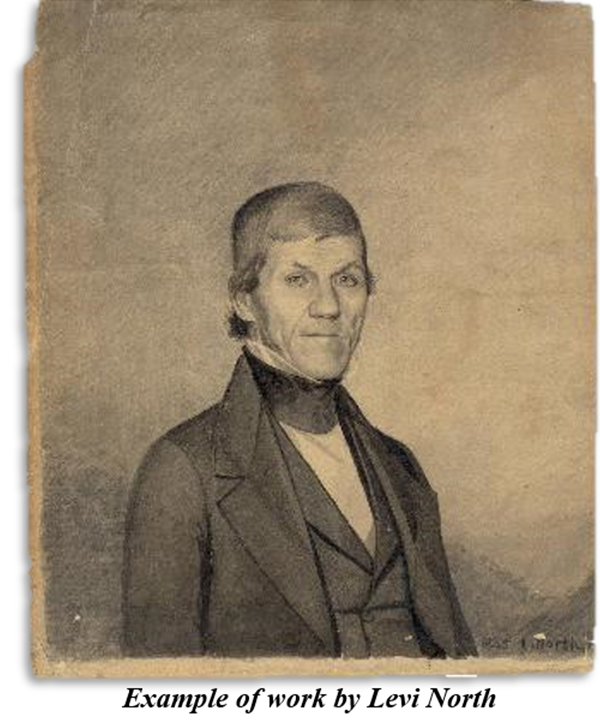
In the winter of 1841-42, North attended a session of the Ohio legislature, and became fascinated by legal questions. He began reading the law and was admitted to the bar in 1845. However, North continued painting as a vocation.
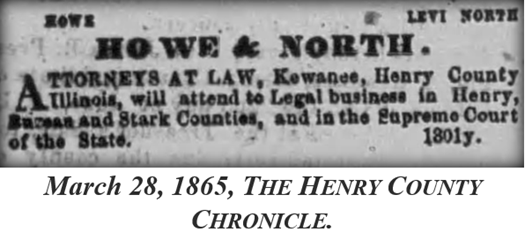
In 1847, he drifted to Peoria, Illinois. After a year, he moved to Princeton where he was variously employed, including as a clerk for a local judge. In 1860, North moved to Kewanee and joined in partnership with John H. Howe in the practice of law.
North was a staunch abolitionist, and was always ready to debate slavery and any other issue.
In 1848, North took a trip around the Great Lakes on the Globe, a steamship. That’s where he met Lincoln.
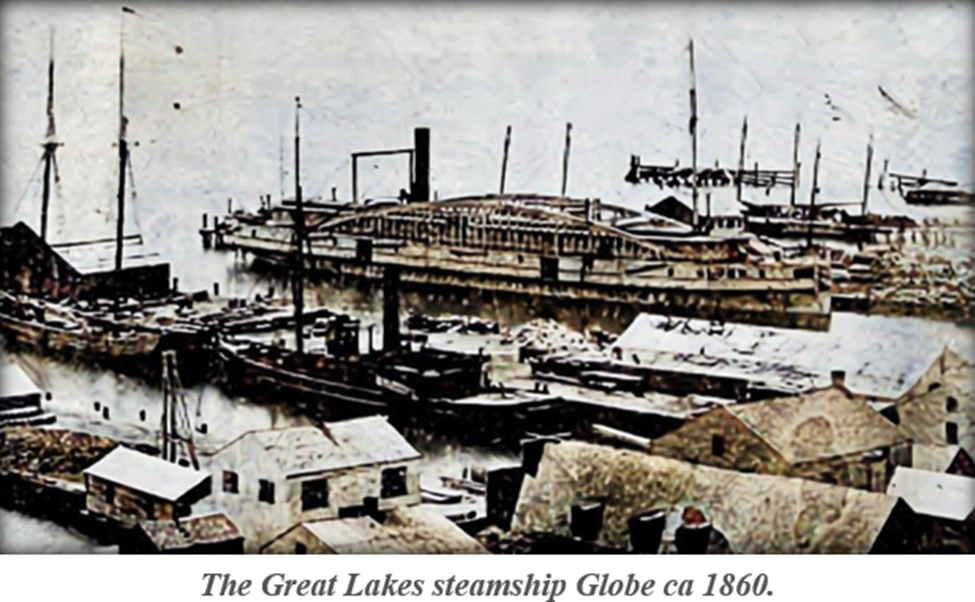
At that time, Lincoln was serving his lone term as a U. S. Representative. After Congress adjourned in August 1848, Lincoln stayed on in Washington to work on campaign documents on behalf of Zachary Taylor. In September he went to New England and made ten speeches for the Whig cause. He was then joined by Mrs. Lincoln, sons Robert and Edward, and they took passage for Chicago on the Globe at Buffalo, New York.
Henry County historian Henry Kiner told part of the story. To while away the weary hours on the steamer, a political debate in the cabin was planned. The subject would be slavery. The steamer “trembled with the white hot lightnings of his oratory.” Next, a slavery man tried to make his case. Then, the master of ceremonies was introduced as the next speaker against slavery, a member of congress from Illinois. “He was a tall, awkward, shambling man, with high cheek bones, and an eye that glowed with fire, or twinkled with irresistible fun. And his name was Abraham Lincoln.”
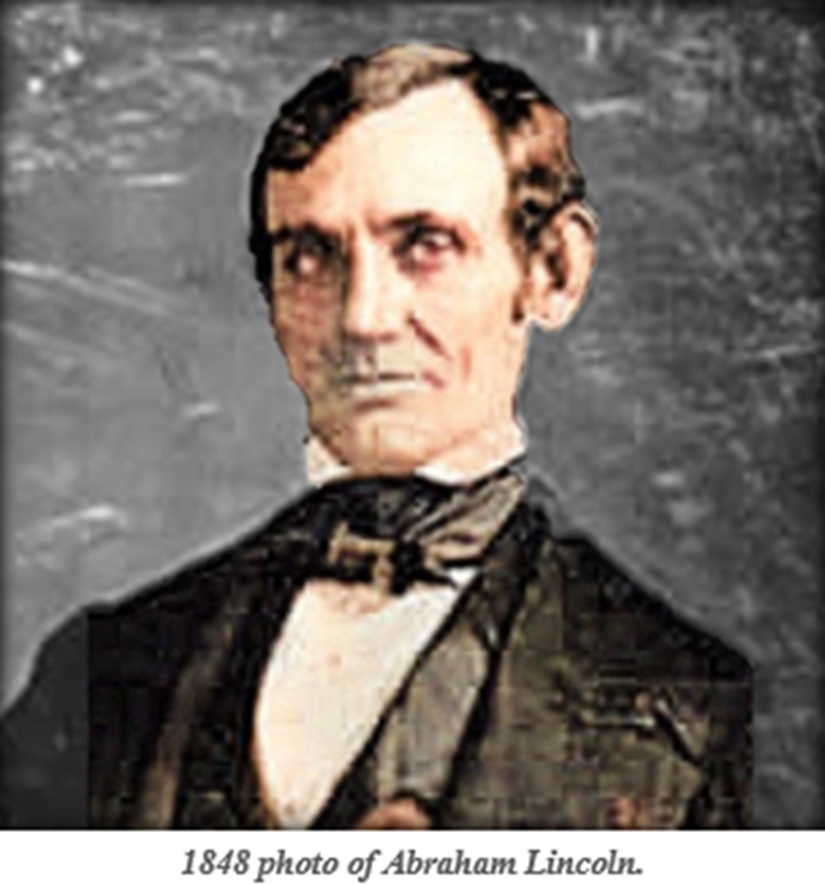
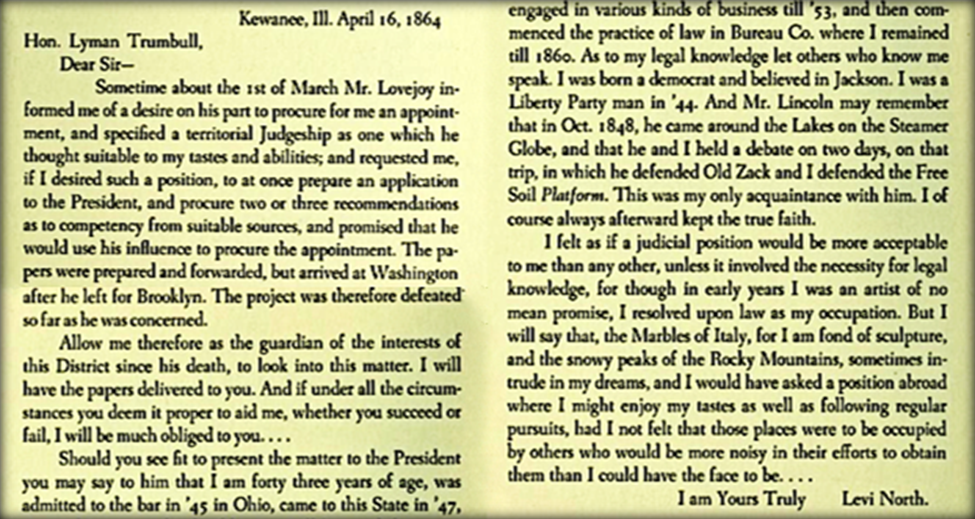
Sixteen years later North, now practicing law in Kewanee, wrote Lyman Trumbull, an Illinoian and Lincoln ally, soliciting a political appointment. In the letter, he asked Trumbull to remind Lincoln of their meeting:
“Mr. Lincoln may remember that in Oct. 1848, he came around the Lakes on the Steamer Globe, and that he and I held a debate on two days, on that trip, in which he defended Old Zack and I defended the Free Soil Platform.”
That letter did not net North the position he sought.
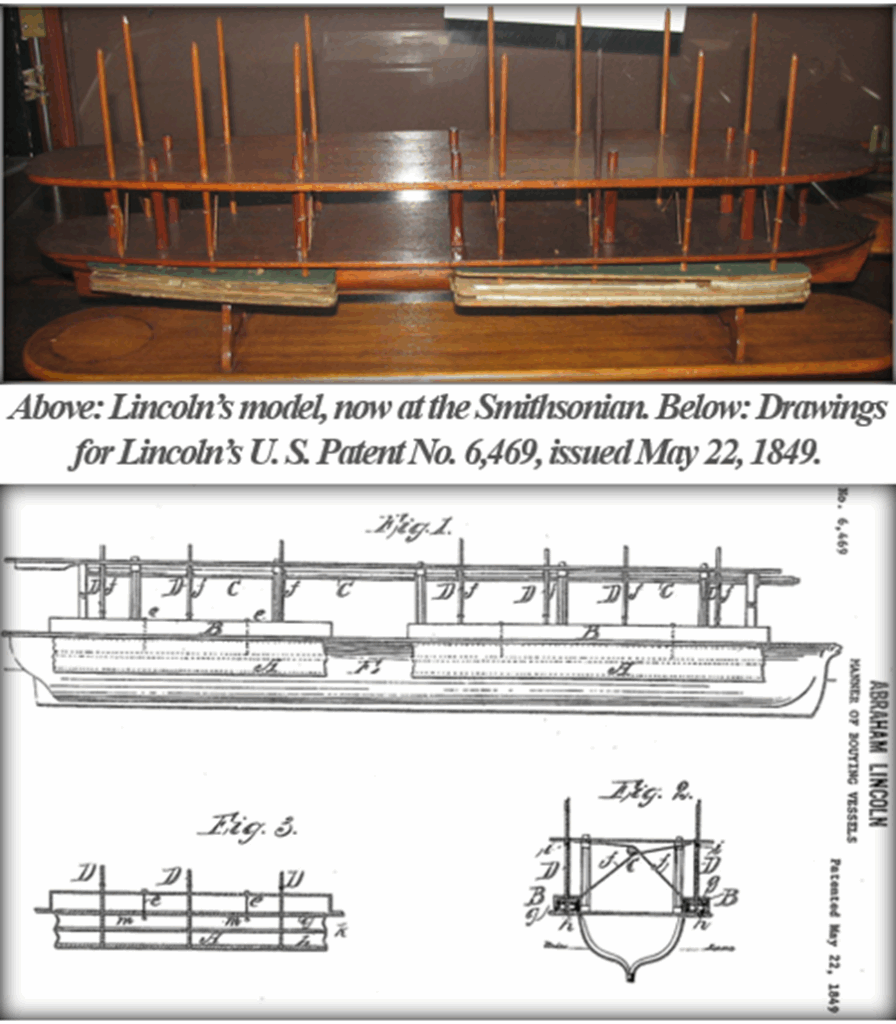
The Great Lakes cruise, however, revealed a little-known fact about Lincoln: he was an inventor.
During the exceptionally dark evening of September 28, the Globe passed another ship which had run aground on the shore of an island. As Lincoln watched the efforts being made to refloat the steamer by using various buoys, his thoughts turned to a riverboat experience he had had 17 years earlier in Illinois dealing with a river grounding and his attempts to use ballast to free his vessel. He had an idea.
Lincoln tinkered with it off and on over the rest of the congressional session. Then, on March 10, with a model he had made under his arm, Lincoln walked over to the U. S. Patent Office and filed his specifications and application for a patent.
North represented Henry County in the legislature in the early 1870s, contributed a revision of Illinois statutes, and later wrote a respected treatise on probate court.
North died in Kewanee in 1901.